Seafood
Mussels
Also called blue mussels, moules
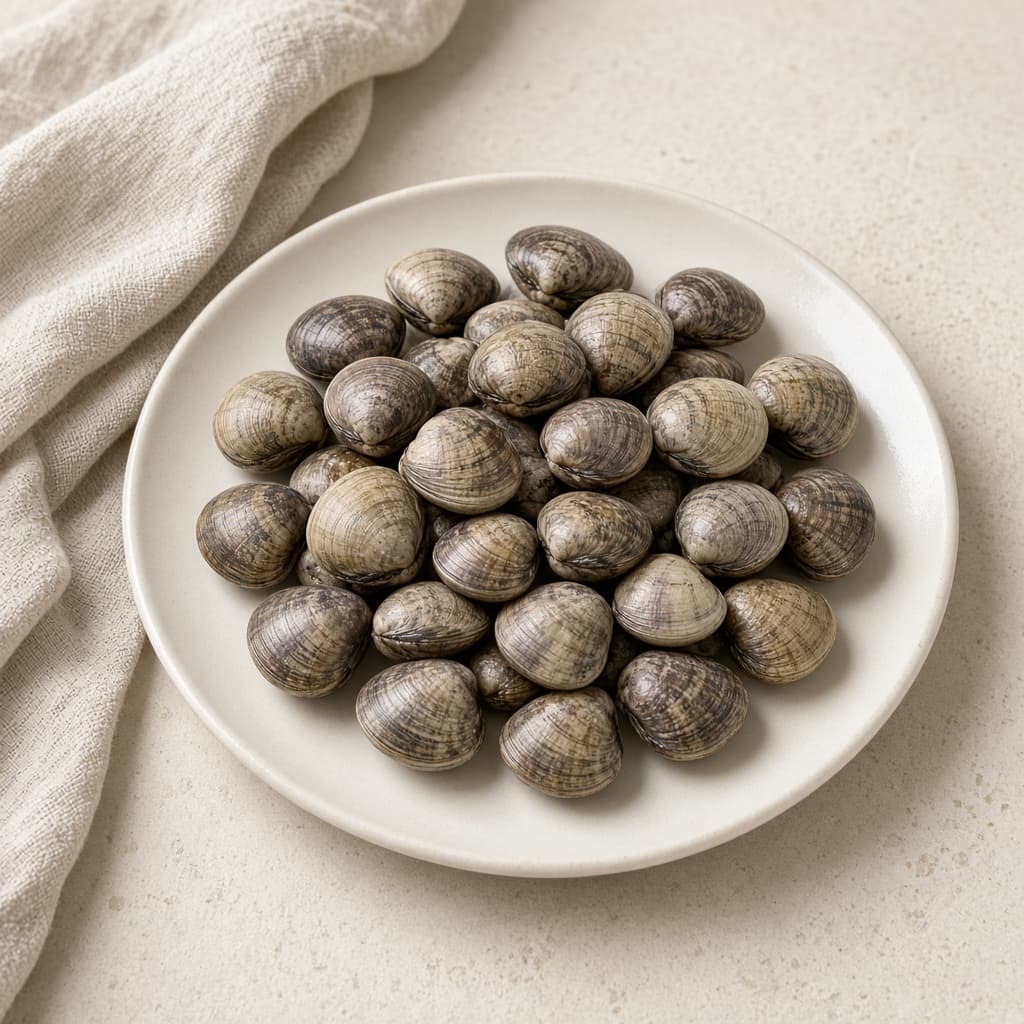
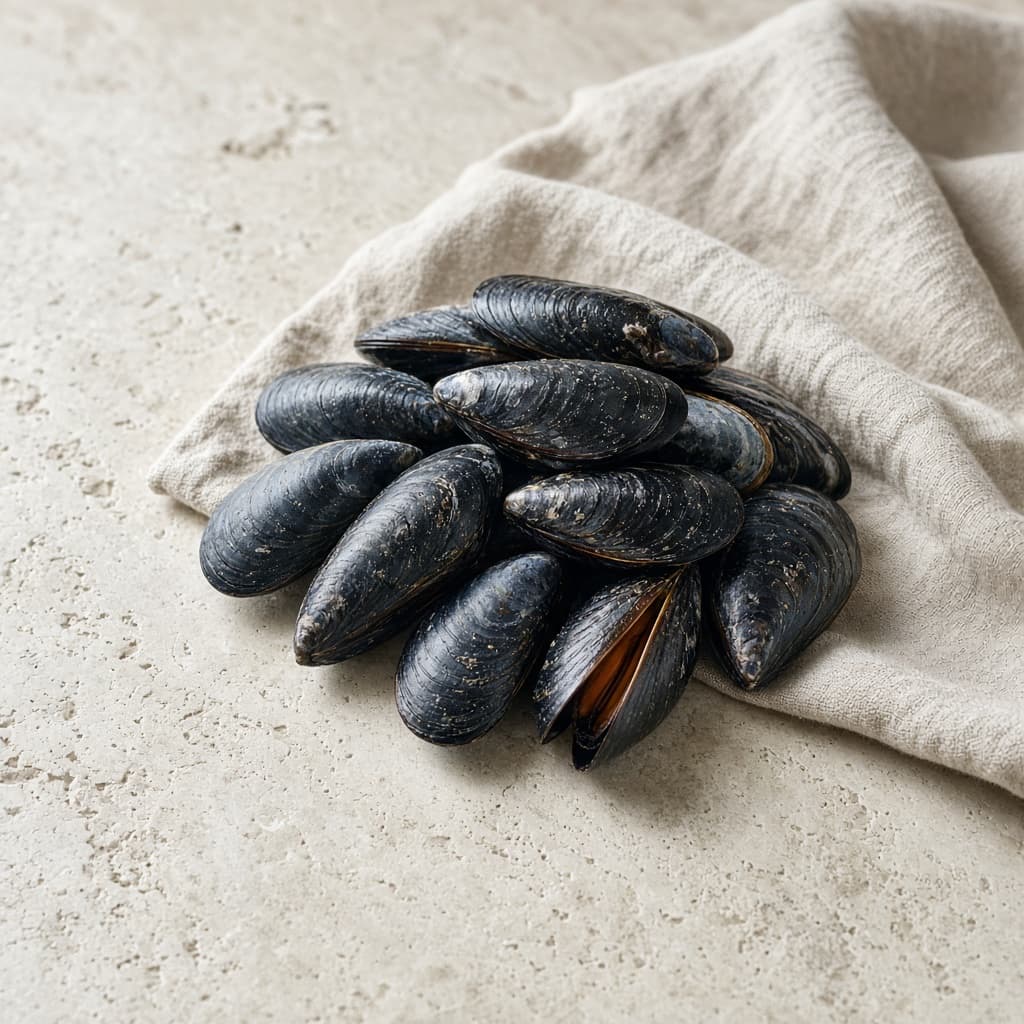
Blue mussels and their farmed cousins, cooked in a pot until the shells open. Moules-frites is the reference: a pile of bivalves in wine, shallot and steam, not a garnish on a pasta. They are not clams — smaller, sweeter, with a beard you must pull.
Origin
Coastal Europe, especially the North Sea and Atlantic, now farmed worldwide on ropes. Belgian and northern French pots made the wine-and-cream versions famous; the animal is older than the frites.
Flavour
Briny, sweet, a little iodine, with a liquor that should taste like clean sea. Off mussels smell of ammonia or swamp. Overcooked meat shrinks to rubber erasers.
How to use it
Rinse, pull the beard toward the hinge, and knock off barnacles. Discard any with cracked shells or that stay open when tapped (if they will not close, they are dead). Steam in a covered pot with dryish white wine, shallot and parsley — a few minutes, until they open. Discard any that stay shut after cooking. Do not salt the pot as if it were pasta water; their liquor is already saline. Serve immediately; reheated mussels are a gamble. Clams can stand in only if you accept a chewier, less sweet pot.
Storage
Fridge, on ice or in a bowl covered with a damp cloth, never in a sealed bag of tap water. Cook the day you buy them. A bag that smells sharp at the shop should stay at the shop.
Recipes using it
Checking your allergy settings…