Seafood
Octopus
蛸
Also called tako, pulpo, polvo, boiled octopus, yudedako
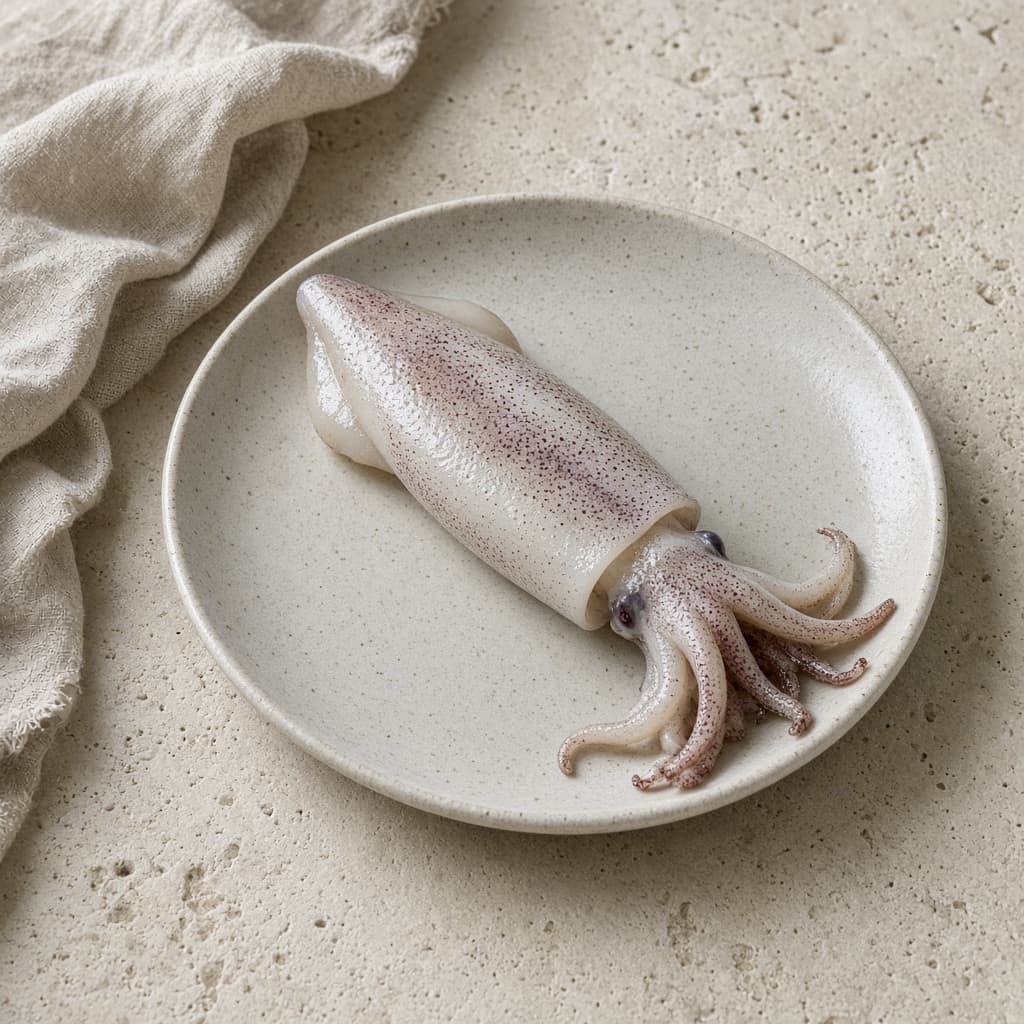
A cephalopod with eight arms and no shell, eaten for its firm, springy flesh. For takoyaki and Japanese salads it is bought already boiled, the arms red-purple outside and white inside, ready to slice.
Origin
Caught along coasts worldwide. Japan, Korea, Spain, Portugal and Greece eat the most; much of the frozen octopus sold abroad comes from Morocco, Mauritania and Southeast Asia.
Flavour
Mild, sweet and lightly briny. Texture is the point: it should be firm with a little spring, not rubbery. Either long, slow cooking or a quick dip of already tenderised octopus gets it there.
How to use it
Pre-boiled octopus needs only slicing: chunks for takoyaki, thin slices for vinegared salads, or warm pieces with oil and paprika in the Galician way. Raw octopus needs tenderising, by freezing and thawing and then simmering for 45 minutes to an hour, until a skewer slides into the thickest part of an arm.
Storage
Boiled octopus keeps two or three days in the fridge, wrapped. Raw octopus keeps a day; freezing it helps, because the ice breaks down the tough fibres.
Recipes using it
Takoyaki
たこ焼き
Osaka octopus balls: a thin dashi batter cooked and turned in a takoyaki pan until crisp outside and soft inside, finished with sauce, mayonnaise and bonito flakes.
Medium
Polvo à lagareiro
Octopus boiled until tender, roasted until the edges catch, then drowned in hot garlic olive oil with punched roast potatoes.
Medium