Fruit
Orange
Also called navel orange, orange zest
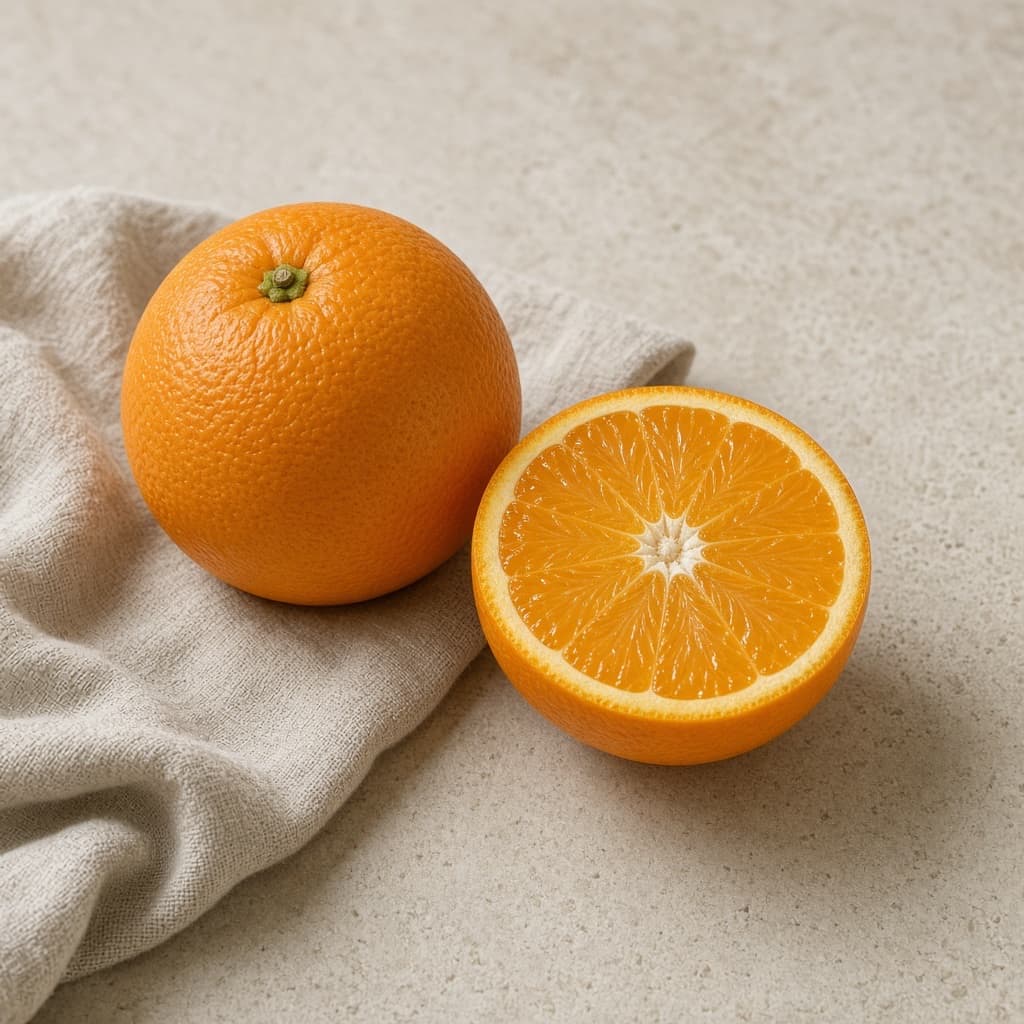
A sweet citrus — navel, Valencia, blood — used as juice, zest and slices, not as orange-blossom water (a different page) and not as a bottled 'orange drink'. The peel's oil is the perfume; the pith is bitter; the flesh is the salad.
Origin
First domesticated in China, then moved through the Islamic Mediterranean into Europe and the Americas. Brazil, Spain and the eastern Mediterranean still set a lot of the flavour people mean by 'an orange'.
Flavour
Sweet, floral, acidic. Blood oranges add berry. The pith is bitter on purpose — leave a little for a salad, strip it for a clean juice. Bottled juice tastes cooked and flat.
How to use it
Zest before you juice; the oil lives in the skin. A strip of peel in carnitas or a pork pot is perfume, not a snack — fish it out if it is pithy. Slices beside feijoada cut the black-bean richness. For orange salad, supreme the segments or slice thin and dress with oil and a drop of orange-blossom, not a cup of juice. Do not boil juice for long if you want it to taste of orange; it turns marmalade-bitter. Bottled juice is a last resort in a marinade, not a salad.
Storage
A week on the counter, longer in the fridge. Soft spots spread. Zest freezes well; juice oxidises in a day. Do not store cut oranges uncovered.
Recipes using it
Checking your allergy settings…