

Pantry
Tamarind
Also called tamarind paste, tamarind water
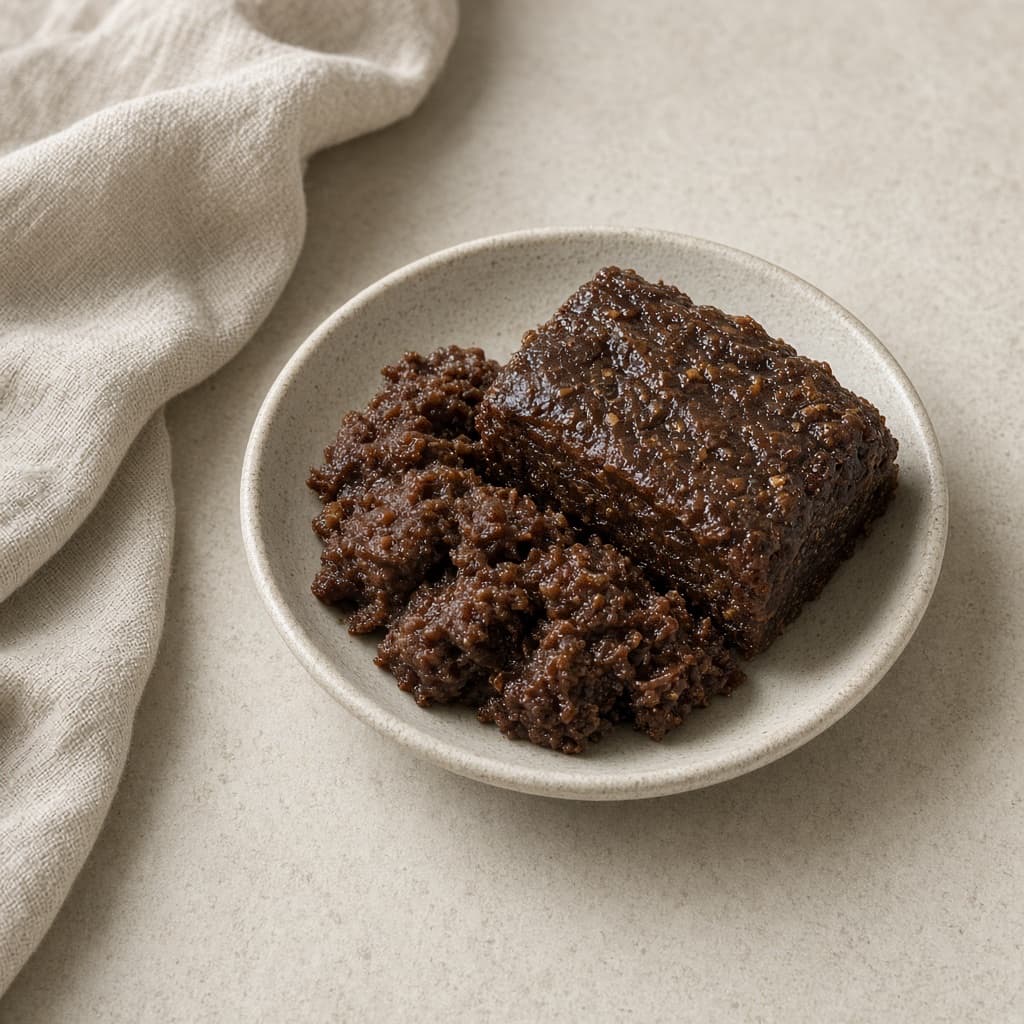
The tart, sticky pulp of Tamarindus indica pods. Block tamarind still has seeds and fibre; paste is already strained. It is fruit sour, not vinegar sour.
Origin
The tree is African in origin and became essential in South and Southeast Asian cooking, then in the Caribbean and Mexico.
Flavour
Sour, fruity, slightly caramel, with a date-like sweetness underneath. Cheap concentrate can taste metallic or burnt.
How it is made
Ripe pods are cracked, the pulp is pressed from the seeds, and it is packed as a block or cooked down into a paste.
How to use it
Soak a knob of block tamarind in warm water, then squeeze and strain the brown liquor — that water is the ingredient, not the fibres. Add it to pad thai sauce with palm sugar and fish sauce so sour, sweet and salt land together; the noodles should taste of tamarind, not of ketchup. For Kerala fish curry, the sour goes in during the simmer so it infuses the oil. Too much tamarind makes a dish thin and mouth-puckering; fat and sugar are the correct answers, not more fish sauce.
Storage
Block keeps for months in a cupboard, well wrapped so it does not dry to concrete.
Recipes using it
Checking your allergy settings…