

Pantry
Yeast
Also called instant yeast, dried yeast
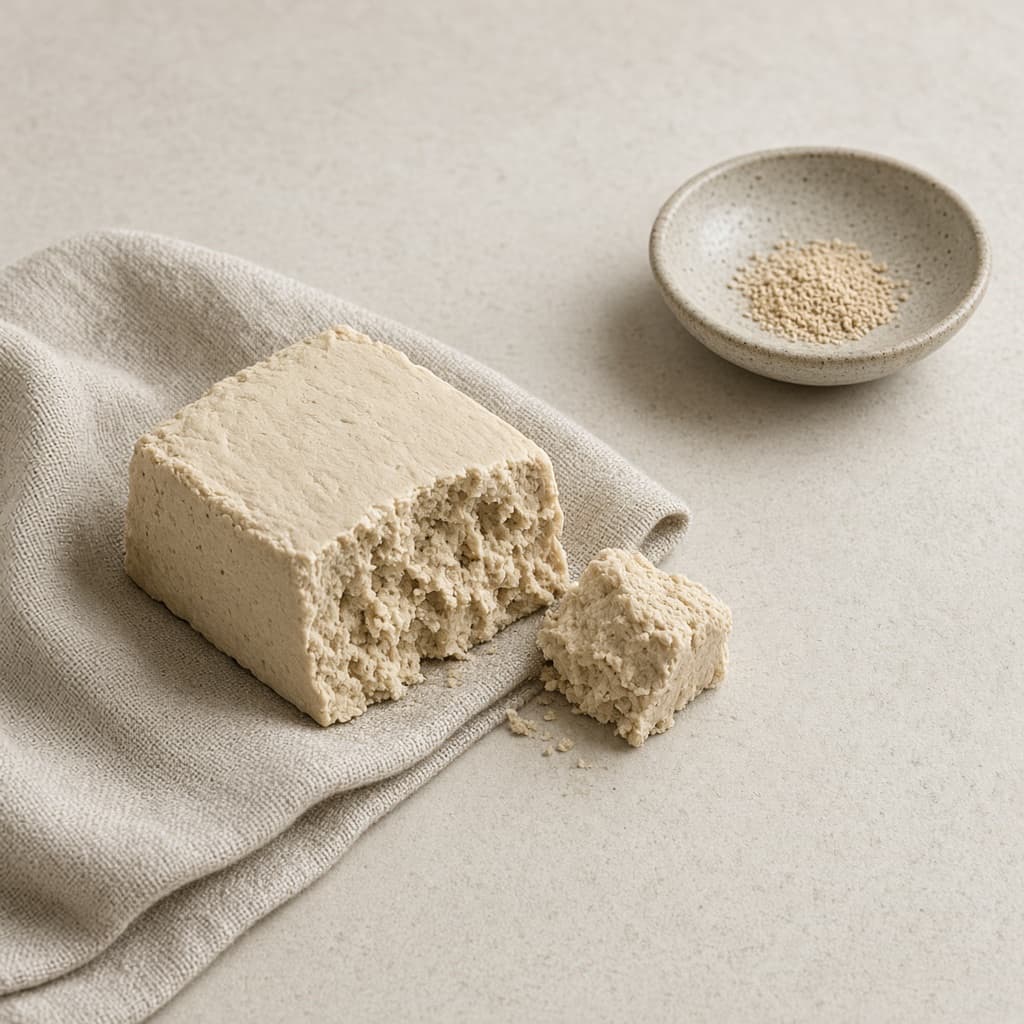
A living fungus, usually Saccharomyces cerevisiae, sold as instant granules, active dried pellets or a compressed fresh cake. It eats sugars in dough and throws off gas and flavour.
Origin
Bakers and brewers captured wild yeasts for thousands of years. Commercial isolated strains date from nineteenth-century Europe. Instant yeast is a later, finer, more shelf-stable form.
Flavour
A fast, hot rise tastes yeasty and one-note. Water that was too hot leaves an acrid smell and a dough that never rises.
How it is made
Selected strains are grown on molasses, then dried into granules or pressed into cakes.
How to use it
Water above about 50°C kills yeast; lukewarm is enough. Keep dry yeast from sitting in a pile of salt or sugar before flour surrounds it. Instant yeast can go into the flour; active dried is happier bloomed in warm liquid until it foams — if it does not foam, it is dead. Rich doughs with butter, egg and sugar need more yeast or more time because fat coats the flour. Baking powder will not give you the same crumb.
Storage
Unopened sachets live in a cool cupboard. Proof a pinch if you doubt the tin.
Recipes using it
Checking your allergy settings…