


Dubu-kimchi
두부김치
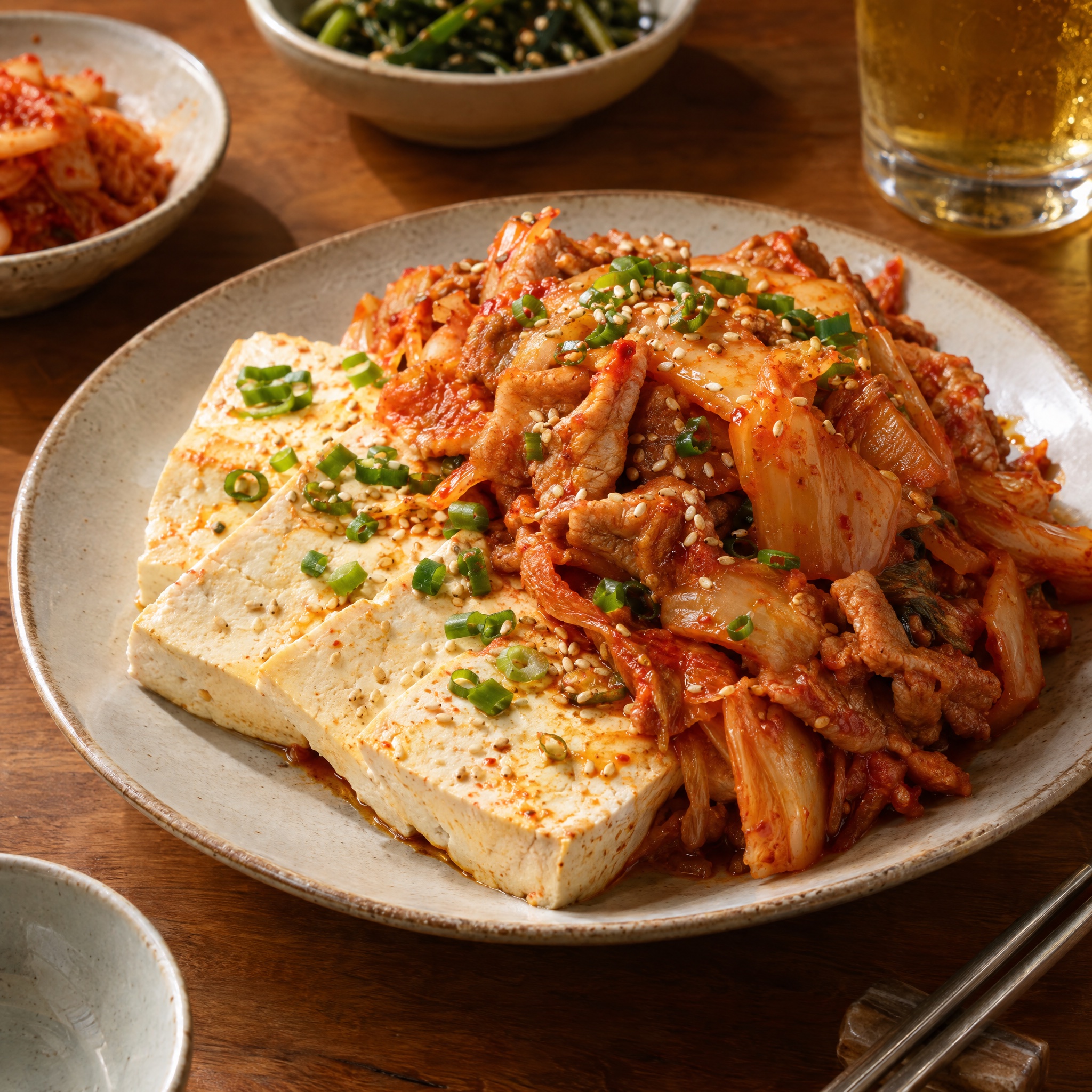
Warm tofu with stir-fried kimchi and pork — a drinking-table plate that is also a real dinner with rice.
Recipe by I Want Some Food · Reviewed by the editorial kitchen. Native name preserved: 두부김치.
0 people cooked this in the public kitchen yet. Kitchen-tested by I Want Some Food. Not a purchased rating.
- Prep
- 10 min
- Cook
- 15 min
- Rest
- None
- Total
- 25 min
- Difficulty
- Easy
- Spice
- Medium heat
- Cost
- Weeknight budget$8–16 USD · indicative, not a store price
About
Dubu-kimchi is a contrast plate: bland, hot tofu and a pile of sour kimchi stir-fried with a little pork. You put them together on the spoon. It is anju, and it is also what you cook when the kimchi is loud and the tofu is about to expire. Warm the tofu through in salted water or a dry pan; it should be hot and bland. Stir-fry sour kimchi with a little pork until the kimchi turns jammy and the liquid reduces. Done is a contrast on the spoon: white tofu, red tangle, no watery pink pool. Firm tofu holds for drinking tables; softer tofu is possible if you handle it less; under-reduced kimchi makes the plate soggy in two minutes.
Ingredients
- Tofu, medium, sliced thick400 g
- Kimchi250 g
- Pork, thin belly or shoulder150 g
- Gochugaru4.9 ml
- Soy sauce4.9 ml
- Garlic2 clove
- Toasted sesame oil4.9 ml
- Sesame seed4.9 ml
Scaling multiplies the written quantities. Baking still prefers a scale.
Steps
Step 1
Simmer tofu slices in salted water 3 minutes. Drain carefully. Keep warm.
4 minStep 2
Stir-fry pork, then kimchi, garlic and gochugaru until the kimchi is cooked and a little jammy, 6–8 minutes. Soy and sesame oil.
8 minStep 3
Plate tofu, heap kimchi on or beside, spring onion and sesame seeds.
Adapt this recipe
The canonical recipe stays intact. Personal versions are labelled. Serving changes are maths, not AI.
Adaptations · 0 / 15 used. Resets 10 October.
Substitutions
Pork → Tinned tuna
A pantry version. Add the tuna at the end.
Tips
- No pork is still dubu-kimchi. Add a splash of kimchi juice for body.
- A raw egg yolk on the kimchi is a late-night extra.
History & culture
Pojangmacha and home soju tables. The tofu should be unseasoned. The kimchi does the talking. Pojangmacha and home soju tables treat it as the classic anju pairing. Lunch sets use it as a cheap protein plate. Camps divide on soft versus firm tofu; the kimchi side is not up for debate. Unseasoned tofu is the rule — if you sauce it, the contrast dies.
A practical pairing that became a menu item. We are not inventing a dynasty for it. Bland hot tofu next to stir-fried sour cabbage became a printed anju item in twentieth-century drinking rooms. Factory tofu made the white half cheap and reliable. We are not inventing a Joseon named plate. Date it as bar-house cooking that home kitchens copied because the jar was already open.
Traditional
Provenance: Editorial adaptation.
Questions about this recipe
Answers taken from this dish's times, amounts, swaps and tips — not a chatbot.
How long does Dubu-kimchi take?
25 min all in — 10 min prep, 15 min cook. Cook and rest follow the method. Leftover storage and optional extra waits are not included.
How many does it serve?
The recipe is written for 3 plates. Scale the ingredient list on the page if you are cooking for a different number.
How hard is it?
Easy.
How spicy is it?
Medium heat.
What allergens should I watch?
This recipe is labelled for Soy, Fish, Sesame. Labels are informational — check the packets in your kitchen. This is not medical advice.
Does it fit a diet?
The published recipe is labelled Gluten-free, Dairy-free, Nut-free.
What does it cost to cook?
Weeknight budget — about $8–16 USD, as a grocery budget for this recipe, not a restaurant price.
What equipment do I need?
Frying pan, Saucepan.
How much salt do I put in?
This recipe does not list salt as its own ingredient. Saltiness comes from Kimchi — 250 g; Soy sauce — 1 tsp. Taste at the end rather than adding a number we did not write.
How much kimchi?
250 g of Kimchi.
How much gochugaru?
1 tsp of Gochugaru.
How much soy sauce?
1 tsp of Soy sauce.
How much toasted sesame oil?
1 tsp of Toasted sesame oil.
What can I use instead?
Pork → Tinned tuna. A pantry version. Add the tuna at the end.
Any tips from this recipe?
No pork is still dubu-kimchi. Add a splash of kimchi juice for body. A raw egg yolk on the kimchi is a late-night extra.
Can I use an air fryer?
This method is not written for an air fryer. The core technique on the page still applies.
Similar dishes
Checking your allergy settings…