


Samgyeopsal
삼겹살
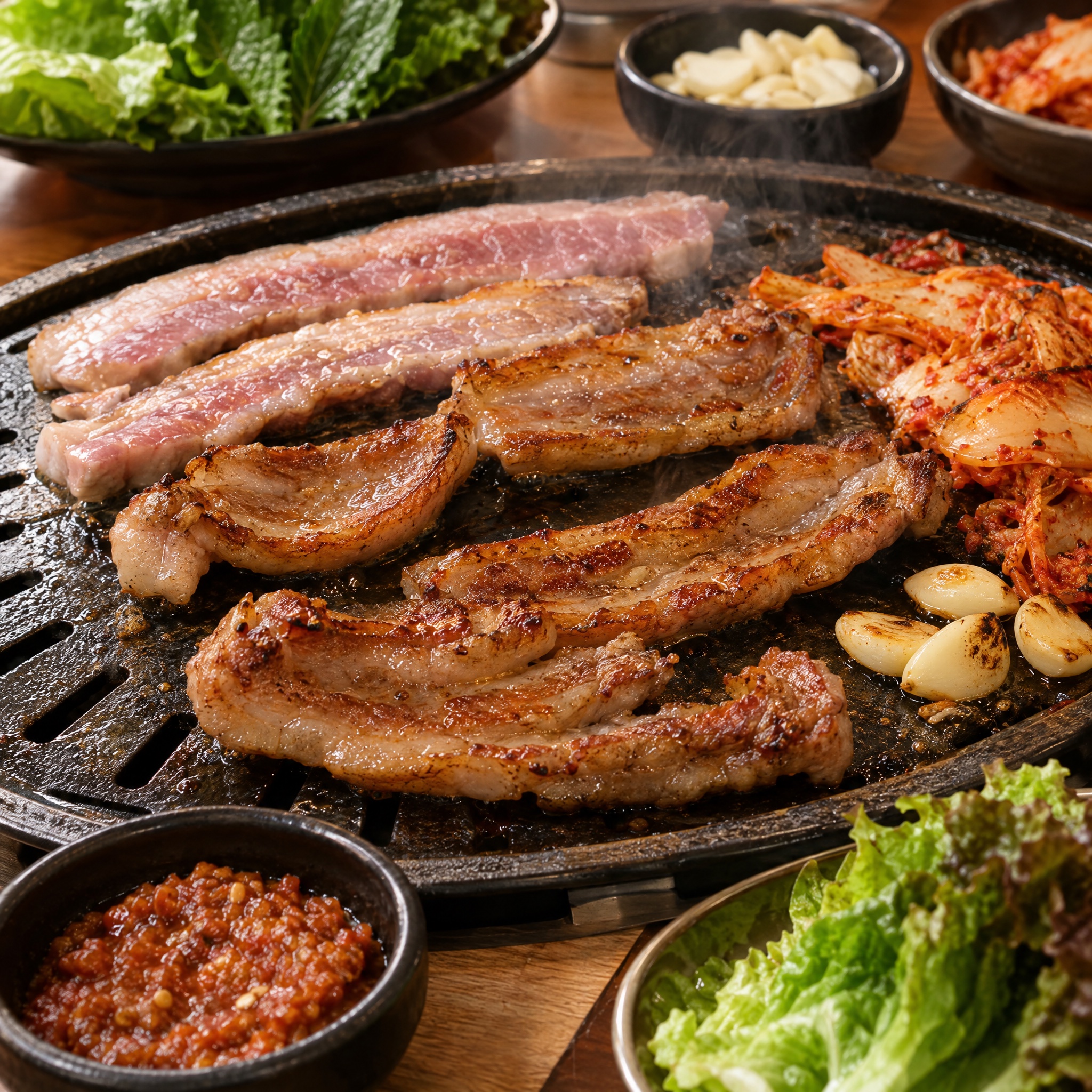
Thick pork belly grilled at the table, wrapped in lettuce with ssamjang, garlic and a bit of rice.
Recipe by I Want Some Food · Reviewed by the editorial kitchen. Native name preserved: 삼겹살.
0 people cooked this in the public kitchen yet. Kitchen-tested by I Want Some Food. Not a purchased rating.
- Prep
- 15 min
- Cook
- 25 min
- Rest
- None
- Total
- 40 min
- Difficulty
- Easy
- Spice
- No chilli
- Cost
- A bit special$16–28 USD · indicative, not a store price
About
Samgyeopsal is a method more than a sauce. You render thick pork belly until the fat is gold and the edges crisp, then you wrap it. No marinade required. The work is in the sides: ssamjang, sliced raw garlic and chilli, grilled kimchi, rice. If you boil the belly you have made a different dinner. Ask for thick-cut belly, about a centimetre, with the skin on if the butcher will do it. Start in a not-quite-screaming pan so the fat renders before the meat toughens, then raise the heat to crisp the edges. Done is gold, translucent fat and meat that is cooked through without turning to leather. Salt at the table if you want; a marinade is a different dinner; drain poured-off fat or the pan will fry in a puddle.
Ingredients
- Pork, skinless belly, 1 cm slices700 g
- Lettuce16 leaf
- Ssamjang89 ml
- Garlic, thin sliced, raw or quickly grilled8 clove
- Fresh chilli, sliced (optional)2
- Kimchi, grilled on the side200 g
- Rice, uncooked, to serve300 g
- Toasted sesame oil, mixed with a pinch of salt for dipping (optional)30 ml
Scaling multiplies the written quantities. Baking still prefers a scale.
Steps
Step 1
Pat the belly dry. Heat a dry heavy pan or grill. Lay slices in a single layer.
2 minStep 2
Cook until the fat renders and both sides are browned and blistered, 3–5 minutes a side. Cut into bite-size with kitchen scissors at the table.
15 minStep 3
Grill kimchi in the pork fat until the edges char. Serve everything at once: meat, lettuce, ssamjang, garlic, rice.
5 minTip: One bite: lettuce, a smear of ssamjang, meat, garlic, maybe rice. Do not build a burrito.
Adapt this recipe
The canonical recipe stays intact. Personal versions are labelled. Serving changes are maths, not AI.
Adaptations · 0 / 15 used. Resets 10 October.
Substitutions
Pork belly → Pork collar or shoulder slices
Leaner. Do not overcook.
Tips
- If the pan floods with fat, pour some off. You want fry, not poach.
- Salt-sesame oil dip is the old-school alternative to ssamjang.
History & culture
This is the default Korean barbecue order for a group. People cook their own slices. At home, a cast-iron pan in the middle of the table is the whole restaurant. Hoesik end-of-year tables default to this order because nobody has to agree on a marinade. Jeju black pig is a regional flex; ordinary belly is the national default. Camping grills and flat-pan restaurants both count. People cook their own slices, which is the social rule more than any sauce.
Pork belly as a national grill meat is modern abundance talking. It is still the plate people mean when they say 'let's do Korean BBQ' without looking at a menu. Pork belly as the default Korean barbecue meat is late-twentieth-century abundance, not the historic luxury protein — that was beef. Table-grill restaurants after the war taught the country to cook it themselves in public. We do not need a dynasty story for unsalted belly and lettuce. The plate people mean by 'Korean BBQ' without opening a menu is this modern habit.
Traditional — Unsmoked, skin-off belly, about 1 cm thick. Do not confuse it with streaky bacon.
Provenance: Editorial adaptation.
Questions about this recipe
Answers taken from this dish's times, amounts, swaps and tips — not a chatbot.
How long does Samgyeopsal take?
40 min all in — 15 min prep, 25 min cook. Cook and rest follow the method. Leftover storage and optional extra waits are not included.
How many does it serve?
The recipe is written for 3 trays. Scale the ingredient list on the page if you are cooking for a different number.
How hard is it?
Easy.
How spicy is it?
No chilli.
What allergens should I watch?
This recipe is labelled for Soy, Sesame, Wheat. Labels are informational — check the packets in your kitchen. This is not medical advice.
Does it fit a diet?
The published recipe is labelled Dairy-free, Nut-free.
What does it cost to cook?
A bit special — about $16–28 USD, as a grocery budget for this recipe, not a restaurant price.
What equipment do I need?
Frying pan, Tongs.
How much salt do I put in?
This recipe does not list salt as its own ingredient. Saltiness comes from Kimchi — 200 g (grilled on the side). Taste at the end rather than adding a number we did not write.
How much kimchi?
200 g (grilled on the side) of Kimchi.
How much toasted sesame oil?
2 tbsp (mixed with a pinch of salt for dipping, optional) of Toasted sesame oil.
What can I use instead?
Pork belly → Pork collar or shoulder slices. Leaner. Do not overcook.
Any tips from this recipe?
If the pan floods with fat, pour some off. You want fry, not poach. Salt-sesame oil dip is the old-school alternative to ssamjang.
Can I use an air fryer?
This method is not written for an air fryer. The core technique on the page still applies.
Similar dishes
Checking your allergy settings…