


Oyakodon
親子丼
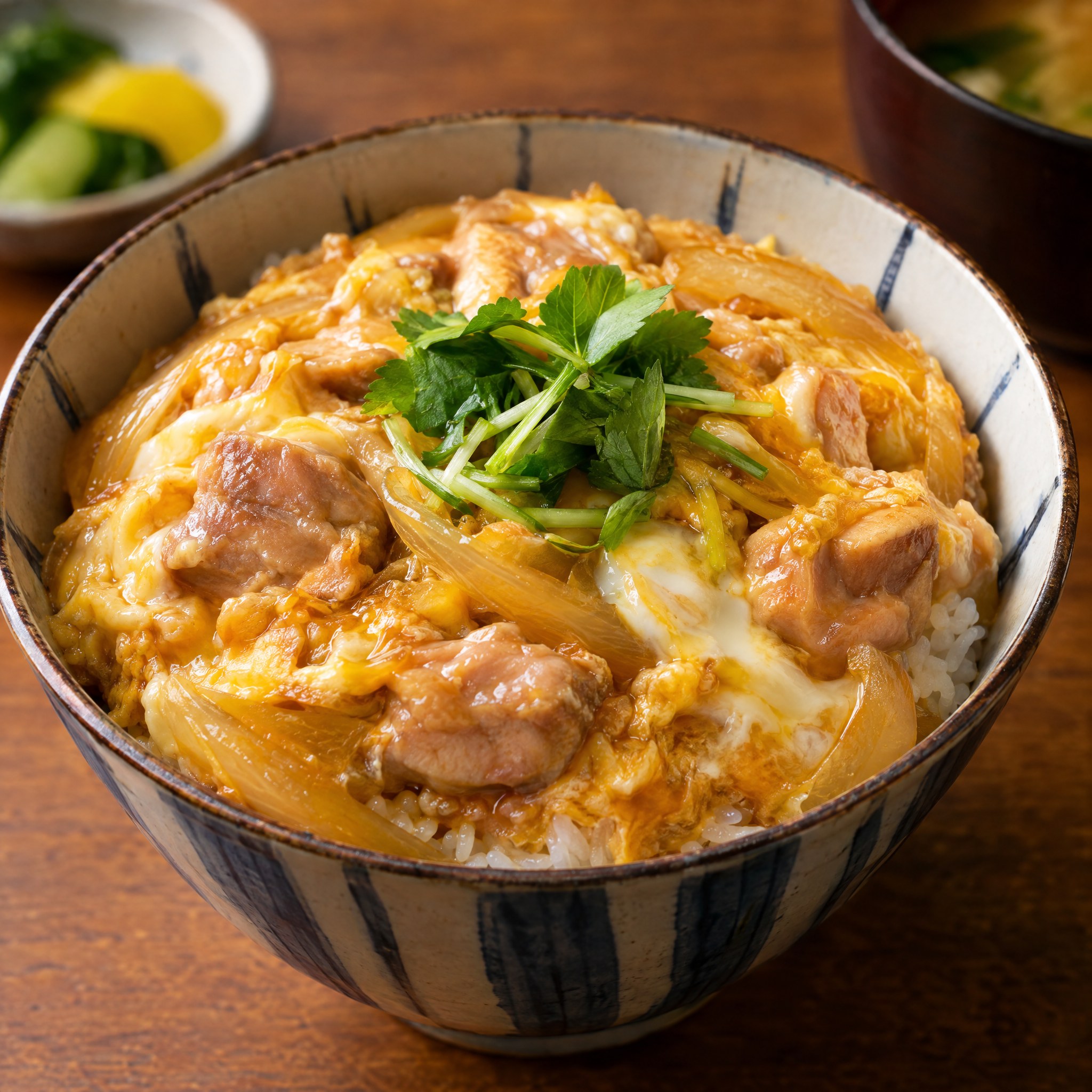
Chicken and egg on rice — the parent-and-child bowl, simmered in one pan until the egg is just set.
Recipe by I Want Some Food · Reviewed by the editorial kitchen. Native name preserved: 親子丼.
0 people cooked this in the public kitchen yet. Kitchen-tested by I Want Some Food. Not a purchased rating.
- Prep
- 10 min
- Cook
- 15 min
- Rest
- None
- Total
- 25 min
- Difficulty
- Easy
- Spice
- No chilli
- Cost
- Weeknight budget$8–16 USD · indicative, not a store price
About
Oyakodon is chicken simmered in a sweet-savoury dashi-soy broth, then egg stirred in off a hard boil so it sets creamy over hot rice. The name is the joke: chicken and egg, parent and child. If the egg is rubber, you waited too long. Crowding the pan with cold chicken drops the broth so far that the egg scrambles instead of setting in ribbons. Keep the simmer modest — a rattle, not a rolling boil — and pour the beaten egg around the chicken, not in one lump in the centre. Lid on for under a minute. Wet rice makes the bowl soupy; drain it well. If you only have large onions, slice them thin enough to collapse in the same window as the meat. Leftover donburi reheats badly; eat it now.
Ingredients
Scaling multiplies the written quantities. Baking still prefers a scale.
Steps
Step 1
In a small pan, simmer dashi, soy, rice wine, sugar, onion and chicken until the chicken is just cooked, 6–8 minutes.
8 minStep 2
Beat eggs loosely — you want streaks, not a uniform scramble. Pour over the chicken, cover, and cook 30–60 seconds until the edges set and the centre is still jammy.
1 minStep 3
Slide over hot rice. Spring onion. Eat immediately.
Adapt this recipe
The canonical recipe stays intact. Personal versions are labelled. Serving changes are maths, not AI.
Adaptations · 0 / 15 used. Resets 10 October.
Substitutions
Dashi → Water plus a splash more soy
Flatter, still a bowl.
Tips
- A donburi-sized pan is easier than a wide skillet — the broth should stay around the chicken.
- Mitsuba on top is the restaurant leaf. Spring onion is the home leaf.
History & culture
Lunch counters and home kitchens. One pan, one bowl. It is comfort without being a project. The bowl is a one-person lunch dressed as care. Office canteens still put it next to the curry and the ginger pork because it reads as homemade even when it is not. Families teach children to leave a little broth for the last spoon of rice. That is manners more than recipe. Restaurants that over-sweeten it are chasing the same comfort as a chain gyudon, which is a different bowl.
Donburi shops in the late 19th century made this a Tokyo classic. The recipe is stable because it is short. Once donburi shops proved you could sell a hot topping on rice without a full teishoku tray, oyakodon settled into the lunch economy of growing cities. It did not require a specialist grill or a long stock. That economy is why the method stayed short. Later 'fluffy egg' styling is restaurant theatre; home pots were always closer to a savoury custard over rice than to a French omelette.
Traditional
Provenance: Editorial adaptation.
Questions about this recipe
Answers taken from this dish's times, amounts, swaps and tips — not a chatbot.
How long does Oyakodon take?
25 min all in — 10 min prep, 15 min cook. Cook and rest follow the method. Leftover storage and optional extra waits are not included.
How many does it serve?
The recipe is written for 2 bowls. Scale the ingredient list on the page if you are cooking for a different number.
How hard is it?
Easy.
How spicy is it?
No chilli.
What allergens should I watch?
This recipe is labelled for Eggs, Soy. Labels are informational — check the packets in your kitchen. This is not medical advice.
Does it fit a diet?
The published recipe is labelled Gluten-free, Dairy-free, Nut-free.
What does it cost to cook?
Weeknight budget — about $8–16 USD, as a grocery budget for this recipe, not a restaurant price.
What equipment do I need?
Frying pan, Saucepan.
How much salt do I put in?
This recipe does not list salt as its own ingredient. Saltiness comes from Soy sauce — 2 tbsp. Taste at the end rather than adding a number we did not write.
How much soy sauce?
2 tbsp of Soy sauce.
How much sugar?
1 tsp of Sugar.
What can I use instead?
Dashi → Water plus a splash more soy. Flatter, still a bowl.
Any tips from this recipe?
A donburi-sized pan is easier than a wide skillet — the broth should stay around the chicken. Mitsuba on top is the restaurant leaf. Spring onion is the home leaf.
Can I use an air fryer?
This method is not written for an air fryer. The core technique on the page still applies.
Similar dishes
Checking your allergy settings…