

 Taste Japan
日本
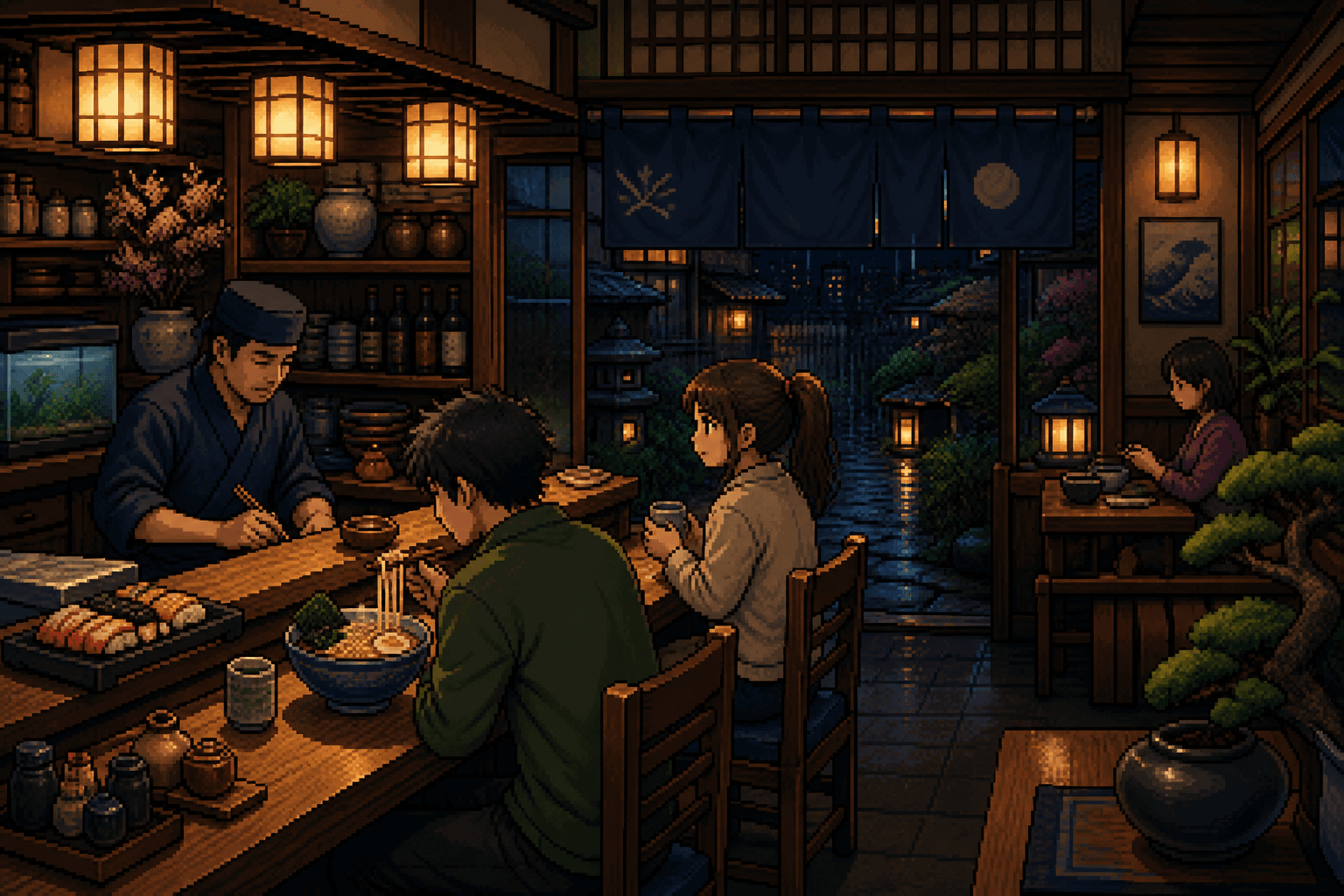
Season, texture and restraint sit in Japanese pots as seriously as soy. Rice is the quiet centre of the meal; everything else is a conversation with weather, water and the nearest coast.
Kansai still prefers a paler soy and a lighter dashi; Kanto cooks darker and saltier. Hokkaido leans on potatoes, dairy and crab; Kyushu on pork-bone broth; Okinawa on pig, bitter melon and a pantry that never quite became mainland. Weeknight nimono is simmered until the seasoning lives inside the vegetable. Shoyu ramen is broth, tare and alkaline noodles — a shop craft, not a souvenir. Onigiri remains the packed lunch that tastes like a decision. Tamagoyaki is rolled in a rectangular pan because the layers matter; yakitori over binchotan is salt-or-tare and the right cut. Okonomiyaki in Osaka is mixed at the table, while katsu curry is a Meiji hybrid that now feels domestic.
34 recipes · 1 cuisine
Essential dishes
Checking your allergy settings…
Showing 18 of 21. Search all Japan recipes
More dishes
Further Japan listings, including shorter editorial recipes and imported methods.
Checking your allergy settings…
Regional cuisines
Think you know Japan food?
31 quiz dishes. Optional — Passport stamps still come from cooking.
Take the Japan food quizFood history
Kaiseki and Buddhist shojin ryori organised taste around season and restraint long before restaurants wrote the rules down. Portuguese frying became tempura; Chinese noodle houses left a template for what later became ramen. After the nineteenth-century opening to foreign trade, wheat, dairy and meat entered ordinary cooking, producing katsu, curry rice and the neighbourhood bowl. None of those layers cancelled the others. A simmered mackerel one night and a packaged curry roux the next is not a contradiction — it is how the country actually eats.