

Velveting
A brief marinade — often starch, a little oil, sometimes egg white — that keeps stir-fried meat tender at wok heat.
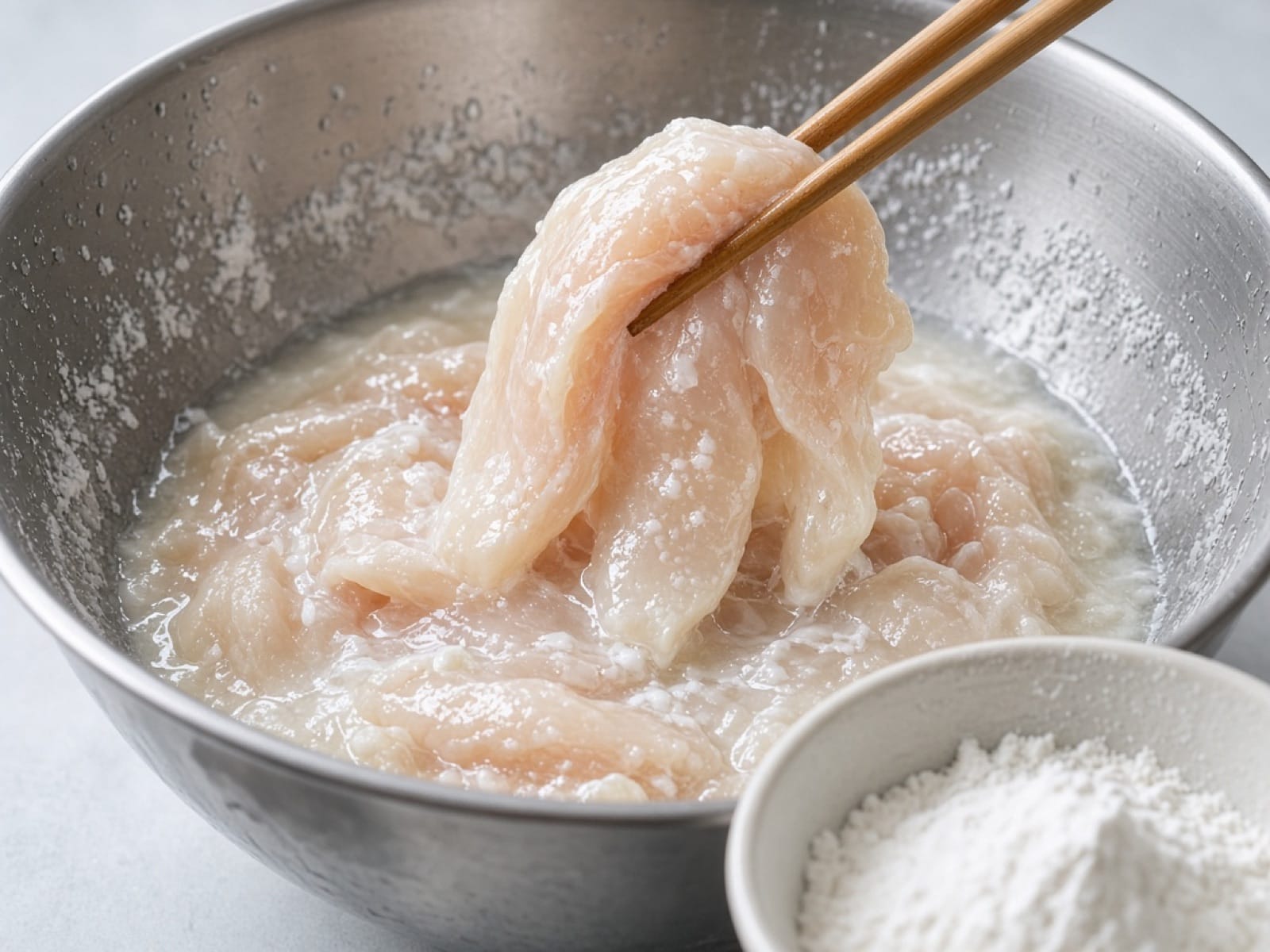
Why it works
Starch gelatinises into a thin coat that holds moisture when the pan is hotter than a home hob wants to admit. It is a texture technique, not a flavour disguise, and it is why mapo tofu's minced beef can stay soft while the chilli oil stays fierce. A little oil in the marinade helps the coat stay flexible. Egg white, when used, sets into an even thinner jacket. Skip it and slice carefully if you do not want the extra step.
How to do it
- Slice meat thin against the grain so the coat has less work to do.
- Toss with starch, a pinch of salt, and a little oil. Some kitchens add egg white or a splash of Shaoxing.
- Rest 15–20 minutes so the starch hydrates. Dusty meat in a hot pan becomes glue.
- Pass quickly through hot oil or simmering water until the colour just changes, then drain.
- Stir-fry with the sauce at the end. The velveted meat only needs to finish, not cook from raw in a crowded wok.
Common mistakes
- Too much starch, which turns gummy and pastes the pan.
- Overcrowding so the meat steams in its coat and never sears.
- Treating velveting as a substitute for fresh meat. Old mince still tastes old.
- Dumping velveted meat into a watery sauce and boiling the coat off.
Recipes using this
Checking your allergy settings…