

Mapo tofu
麻婆豆腐
Sichuan tofu in a chilli-bean sauce with minced pork, Sichuan pepper, and enough oil to carry the mala.
Recipe by I Want Some Food · Reviewed by the editorial kitchen. Native name preserved: 麻婆豆腐.
1 person cooked this in the public kitchen. Kitchen-tested by I Want Some Food. Not a purchased rating.
- Prep
- 15 min
- Cook
- 20 min
- Rest
- None
- Total
- 35 min
- Difficulty
- Medium
- Spice
- Hot
- Cost
- Weeknight budget$8–16 USD · indicative, not a store price
About
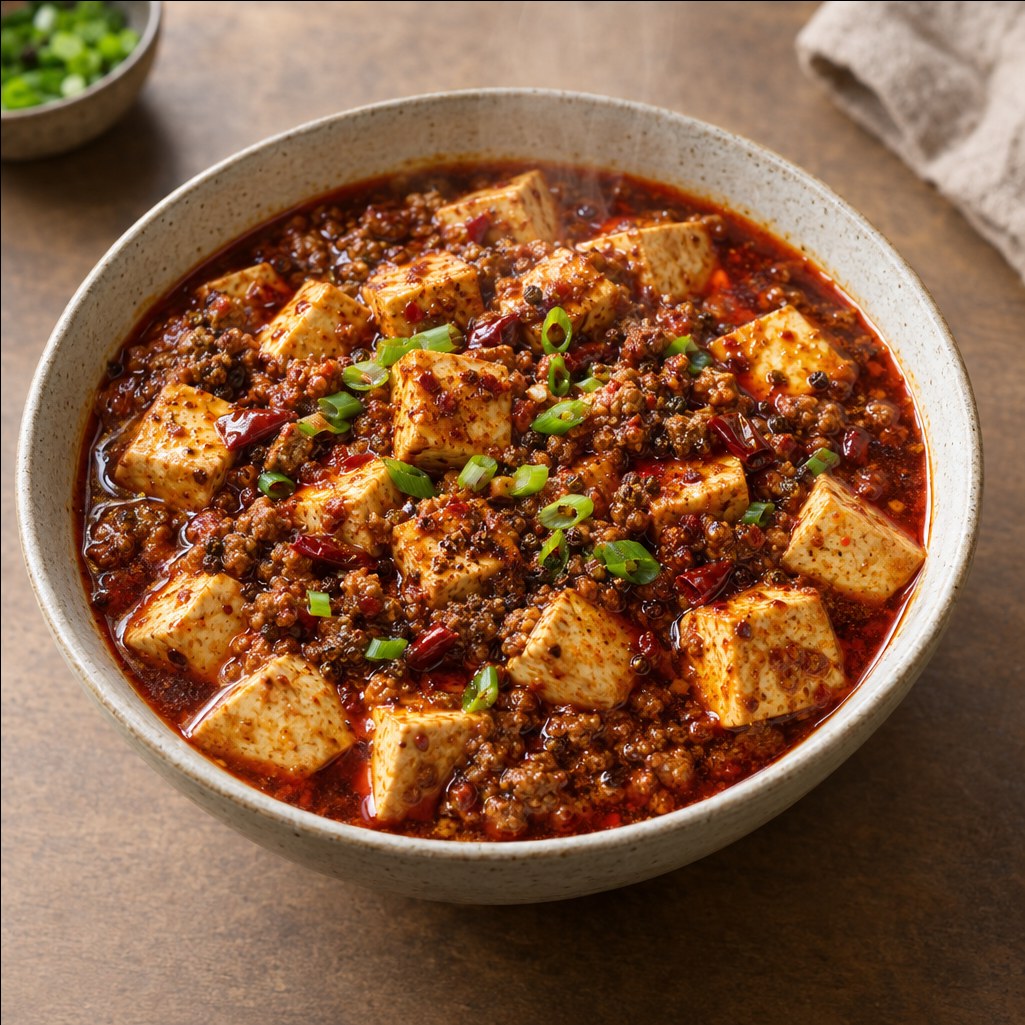
Mapo tofu should tingle. Doubanjiang is fried until the oil turns red; Sichuan pepper is toasted; tofu stays wobbly; a little starch makes the sauce cling. It is Chengdu home cooking that restaurants made famous. If it is only 'spicy mince with cubes', you skipped the mala. Pixian doubanjiang is the paste you want; generic chilli-bean jars are milder and sweeter. Fry it in oil until the oil turns red and the raw fermented smell cooks off before any stock goes in. Soft tofu, not firm, and a little starch slurry so the sauce clings. Done is wobbly cubes in a shiny, numbing gravy — if you only taste heat without tingle, the Sichuan pepper was stale or missing.
Ingredients
- Tofu, soft or medium, cubed, briefly soaked in salted water400 g
- Pork, minced120 g
- Doubanjiang30 ml
- Sichuan pepper, toasted and ground, plus a few whole for oil4.9 ml
- Garlic, minced3 clove
- Ginger, minced10 g
- Soy sauce4.9 ml
- Fresh chilli, chilli flakes or extra oil, optional4.9 ml
- Water200 ml
- Rice, uncooked, to serve300 g
Scaling multiplies the written quantities. Baking still prefers a scale.
Steps
Step 1
Toast Sichuan pepper in a dry pan until fragrant, 1 minute. Grind. Cube tofu and sit it in warm salted water.
5 minStep 2
Heat oil in a wok. Fry minced pork until it renders and browns. Add doubanjiang and fry until the oil is red and smells cooked, 2 minutes.
6 minWatch: Raw doubanjiang tastes harsh. Cook it.
Step 3
Add garlic, ginger and a pinch of chilli. Splash in water and soy. Slide in tofu. Simmer gently 4–5 minutes. Do not stir like scrambled eggs — nudge.
6 minStep 4
If you want a clinging sauce, mix 1 tsp cornflour with 1 tbsp water and drizzle in while nudging. Add ground Sichuan pepper and spring onion.
3 minStep 5
Serve over rice. There should be red oil on top. That is not a mistake.
Adapt this recipe
The canonical recipe stays intact. Personal versions are labelled. Serving changes are maths, not AI.
Adaptations · 0 / 15 used. Resets 10 October.
Substitutions
Pork → Finely chopped shiitake
Brown hard for savoury depth.
Doubanjiang → Gochujang plus extra chilli
Korean-adjacent, not Sichuan. Different fermented base.
Tips
- Pixian doubanjiang is worth ordering once. Generic chilli bean paste is saltier and less complex.
- Vegetarian: skip pork, fry mushrooms, and use a little extra doubanjiang oil.
History & culture
Named, in the usual story, for a pockmarked woman who cooked it in Chengdu. Versions exist without pork (vegetarian mapo) and with beef. The numbing-heat pairing is the Sichuan part that does not translate to 'add more chilli flakes'. Chengdu lunch shops still serve it over rice as a one-bowl meal. Japanese mabo tofu is a milder cousin that travelled on its own. Beef versions exist; pork is common; vegetarian mapo drops the mince and should not drop the mala. Banquet plates go heavier on oil; home pots can be leaner without becoming a different dish.
Chilli is a New World crop Sichuan adopted completely. Mapo tofu as a named dish is Qing-era Chengdu food that global Chinese restaurants exported, sometimes without Sichuan pepper — which is how it became 'spicy tofu' instead of mapo. The named Chengdu plate is Qing-era urban food, usually tied to a shop rather than a mythic inventor we can verify. Capsicum reached Sichuan and stayed; the mala pairing is the local grammar. Overseas menus in the twentieth century often dropped the peppercorn, which is why diners met heat without numbness. That edit is how the dish lost its name in translation.
Traditional — Soft tofu, Pixian-style doubanjiang, whole Sichuan pepper. Fermented black beans are welcome if you have them.
Provenance: Editorial adaptation. Original editorial adaptation for I Want Some Food. Photograph: I Want Some Food generated editorial photography (Editorial supply).
Questions about this recipe
Answers taken from this dish's times, amounts, swaps and tips — not a chatbot.
How long does Mapo tofu take?
35 min all in — 15 min prep, 20 min cook. Cook and rest follow the method. Leftover storage and optional extra waits are not included.
How many does it serve?
The recipe is written for 3 people. Scale the ingredient list on the page if you are cooking for a different number.
How hard is it?
Medium.
How spicy is it?
Hot.
What allergens should I watch?
This recipe is labelled for Soy, Wheat. Labels are informational — check the packets in your kitchen. This is not medical advice.
Does it fit a diet?
The published recipe is labelled Dairy-free.
What does it cost to cook?
Weeknight budget — about $8–16 USD, as a grocery budget for this recipe, not a restaurant price.
What equipment do I need?
Wok, Saucepan.
How much salt do I put in?
This recipe does not list salt as its own ingredient. Saltiness comes from Soy sauce — 1 tsp. Taste at the end rather than adding a number we did not write.
How much soy sauce?
1 tsp of Soy sauce.
What can I use instead?
Pork → Finely chopped shiitake. Brown hard for savoury depth. Doubanjiang → Gochujang plus extra chilli. Korean-adjacent, not Sichuan. Different fermented base.
What should I watch for?
Raw doubanjiang tastes harsh. Cook it.
Any tips from this recipe?
Pixian doubanjiang is worth ordering once. Generic chilli bean paste is saltier and less complex. Vegetarian: skip pork, fry mushrooms, and use a little extra doubanjiang oil.
Can I use an air fryer?
This method is not written for an air fryer. The core technique on the page still applies.
Similar dishes
Checking your allergy settings…