

 Taste Cambodia
Kroeung paste, prahok and a steam that smells of lemongrass. Cambodian cooking is Khmer, not a milder Thai, and the Mekong is a larder.
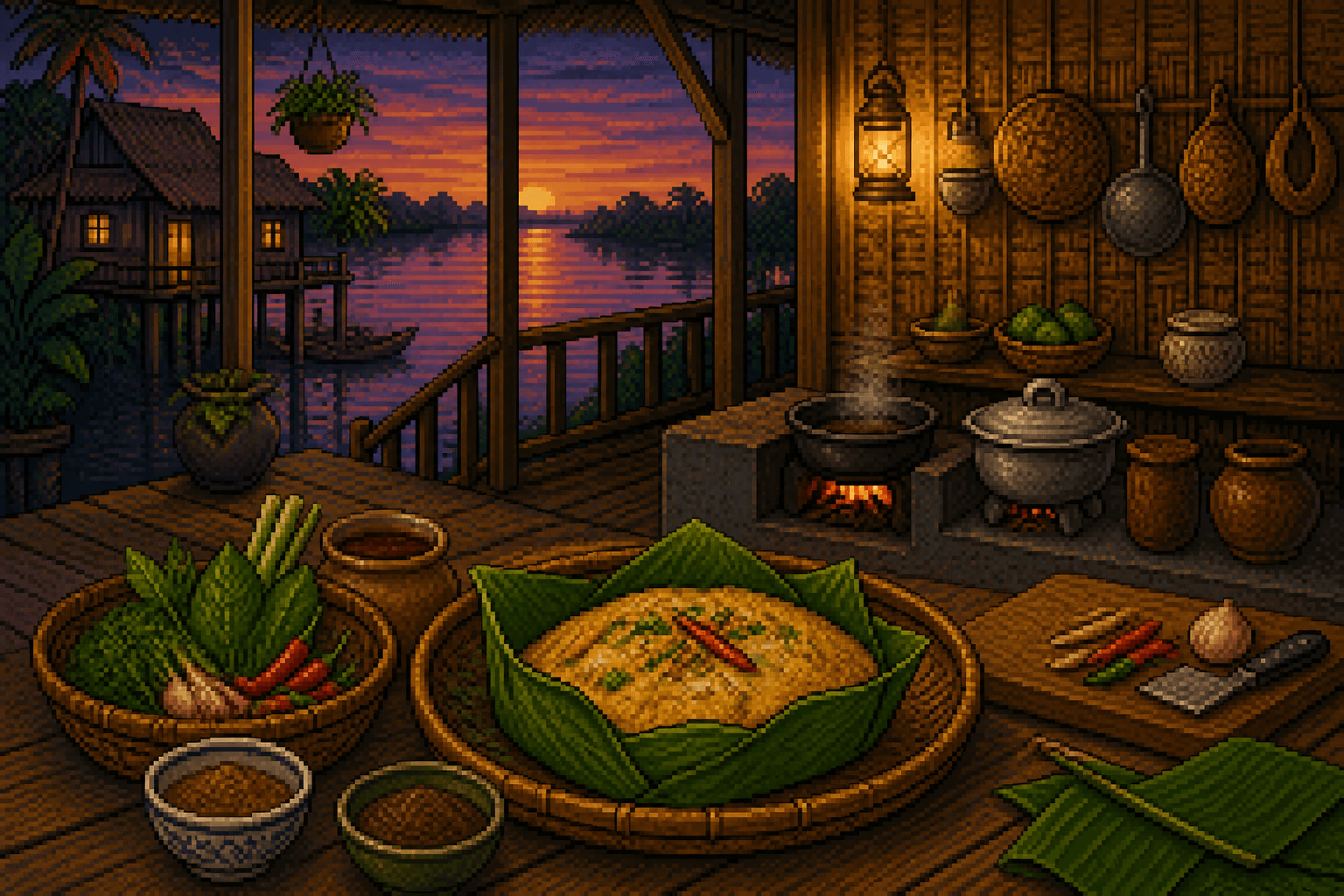
Fish amok is a mousse-like curry of freshwater fish, coconut, and kroeung — lemongrass, galangal, turmeric, kaffir lime — steamed in banana leaf until it just sets. It should taste herbal and savoury, not a sweet yellow soup. Prahok, the fermented fish paste, seasons soups and dips more often than visitors expect. Nom banh chok is a breakfast noodle with green fish gravy; kampot pepper is a coastal pride. Phnom Penh's river fish and Battambang's rice belt cook differently from the Cardamom hills. Rice is the centre; the amok is a special-occasion texture.
16 recipes · 1 cuisine
Essential dishes
Checking your allergy settings…
More dishes
Further Cambodia listings, including shorter editorial recipes and imported methods.
Checking your allergy settings…
Regional cuisines
Think you know Cambodia food?
16 quiz dishes. Optional — Passport stamps still come from cooking.
Take the Cambodia food quizFood history
Angkor-era rice and fish, Indianised spice pastes, Chinese noodles, and a French colonial market that left bread and coffee without replacing prahok. The Khmer Rouge famine and the destruction of cooks and recipes is part of the modern story; revival cooking in Phnom Penh restaurants is a reconstruction as well as a tradition. Thai and Vietnamese neighbours share ingredients and argue about them. Amok's steamed-set texture is Khmer even when coconut appears next door. Honesty means naming that rupture without turning every plate into a tragedy essay, and still describing the paste.
Common ingredients
Techniques
- steaming in banana leaf
- kroeung pounding
- prahok ferment
- coconut simmering
- rice cooking