Spice
Turmeric
Also called haldi, fresh turmeric
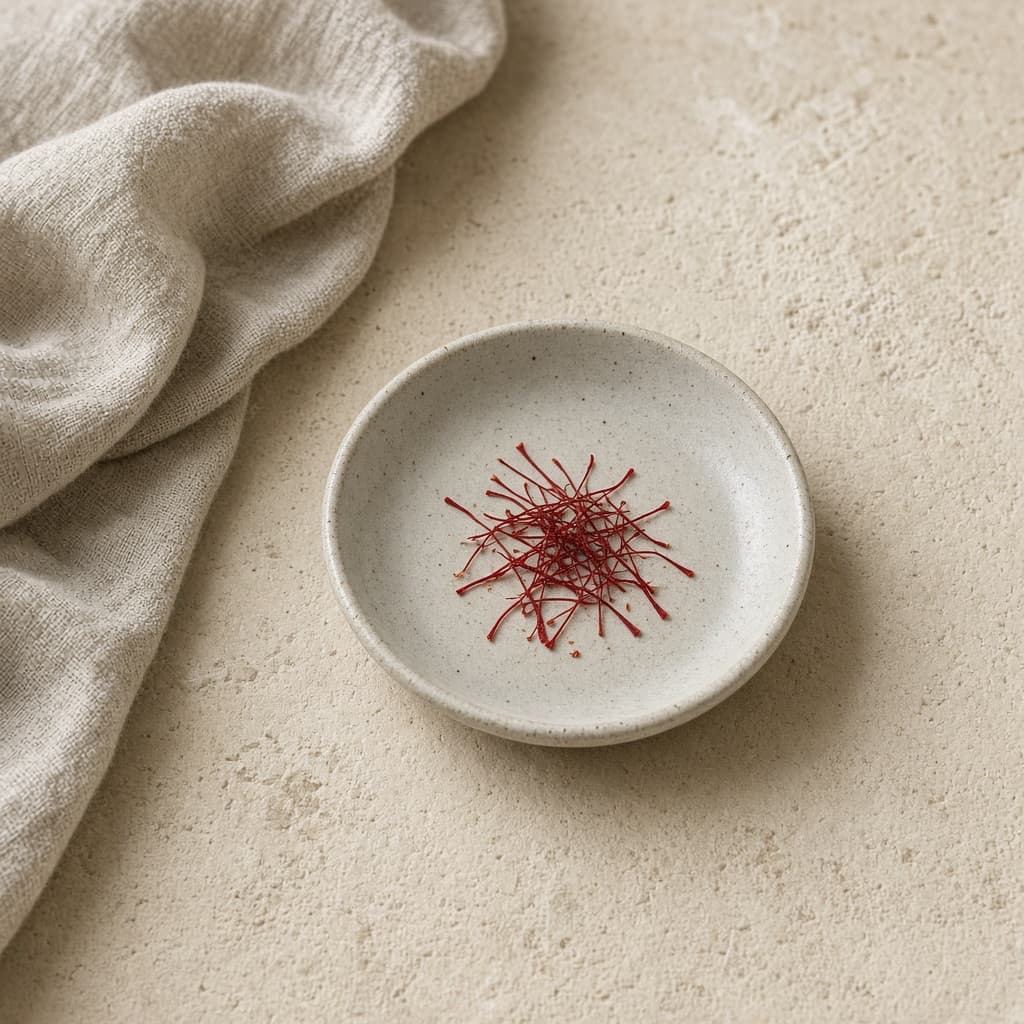
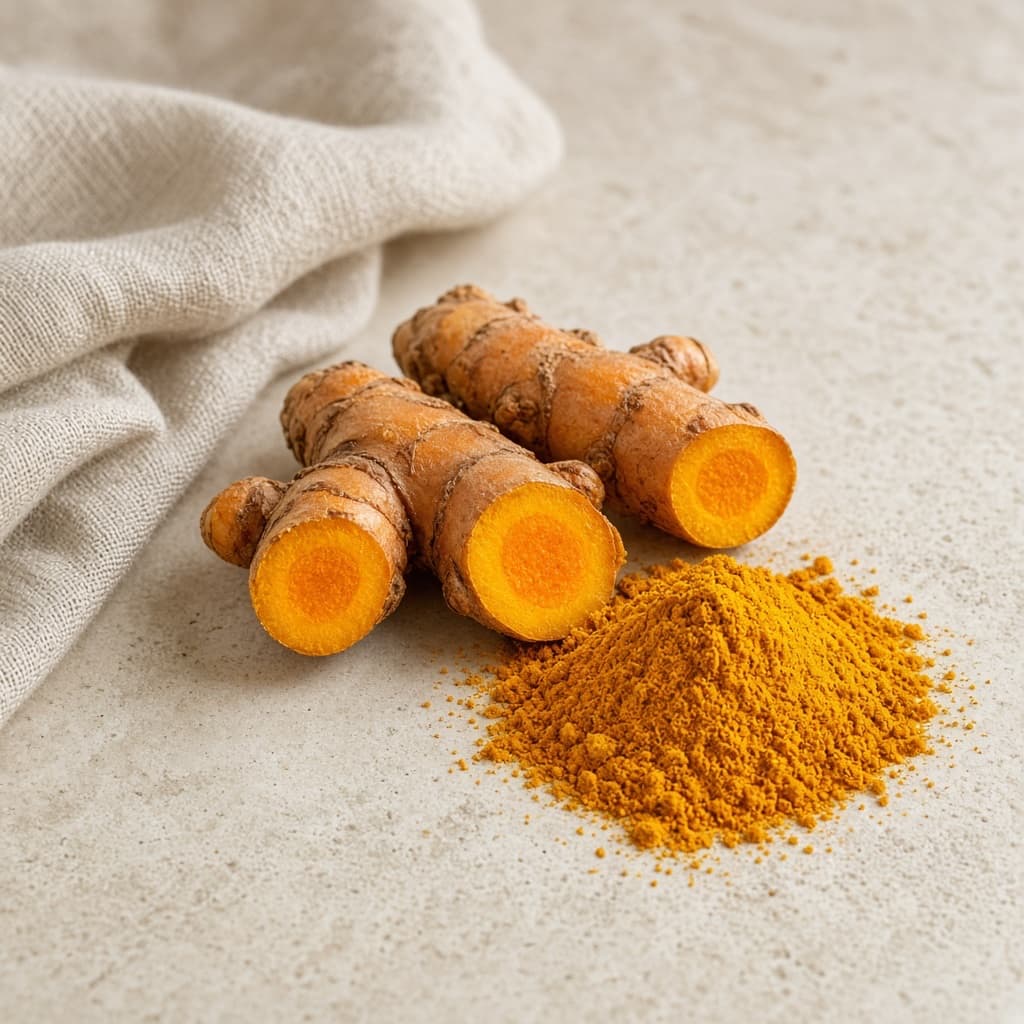
The orange-yellow rhizome of Curcuma longa, usually sold dried and ground as the colour of khichuri, amok and a thousand curries. Fresh turmeric looks like a small, loud ginger. It is a stain more than a heat, and it is not saffron, though both dye a pot yellow.
Origin
South and Southeast Asia, where the fresh root and the dried powder are everyday. It moved into North African, Caribbean and 'golden latte' pantries later. The supermarket jar is almost always the dried ground root.
Flavour
Earthy, slightly bitter, warm, faintly peppery. Fresh is juicier and more citrus-peel. Raw powder in a cold dressing tastes dusty; bloomed in fat it tastes like the curry you meant.
How to use it
Fry it in oil or ghee with the onions until the raw smell goes — a minute, not a scorch. A little goes far in aloo gobi, masala dosa masala, fish amok or khichuri; a heaped tablespoon in a small pot is medicinal. Fresh turmeric, grated, wants the same fat and will dye the board. It does not replace saffron's perfume. Bicarb can push the colour redder; acid keeps it yellower. Wear a shirt you do not love.
Storage
Ground turmeric in a dark jar; it fades to khaki. Fresh roots in the fridge, like ginger, or frozen. A damp spoon in the powder cakes it into a brick that still stains but tastes tired.
Recipes using it
Checking your allergy settings…