
 Taste Cyprus
Κύπρος
An island in the eastern Mediterranean whose food sits between Greece, Turkey and the Levant and belongs fully to none of them.
Cypriot food is charcoal, lemon, olive oil and crushed coriander seed. The meal that explains it is the meze: twenty or more small plates arriving in waves, from olives, tahini dip and grilled halloumi through snails, sausages and stewed pulses to grilled pork, lamb and chicken. Pork is eaten far more than on the Greek mainland, cured in wine as well as grilled. Bulgur is as common as rice. Halloumi is everywhere, at breakfast with watermelon and in pastries at Easter. Vegetables are cooked soft with tomato and oil. Carob, almonds, rose water and grape must sweeten things.
4 recipes · 1 cuisine
All dishes 4
- 2 hr

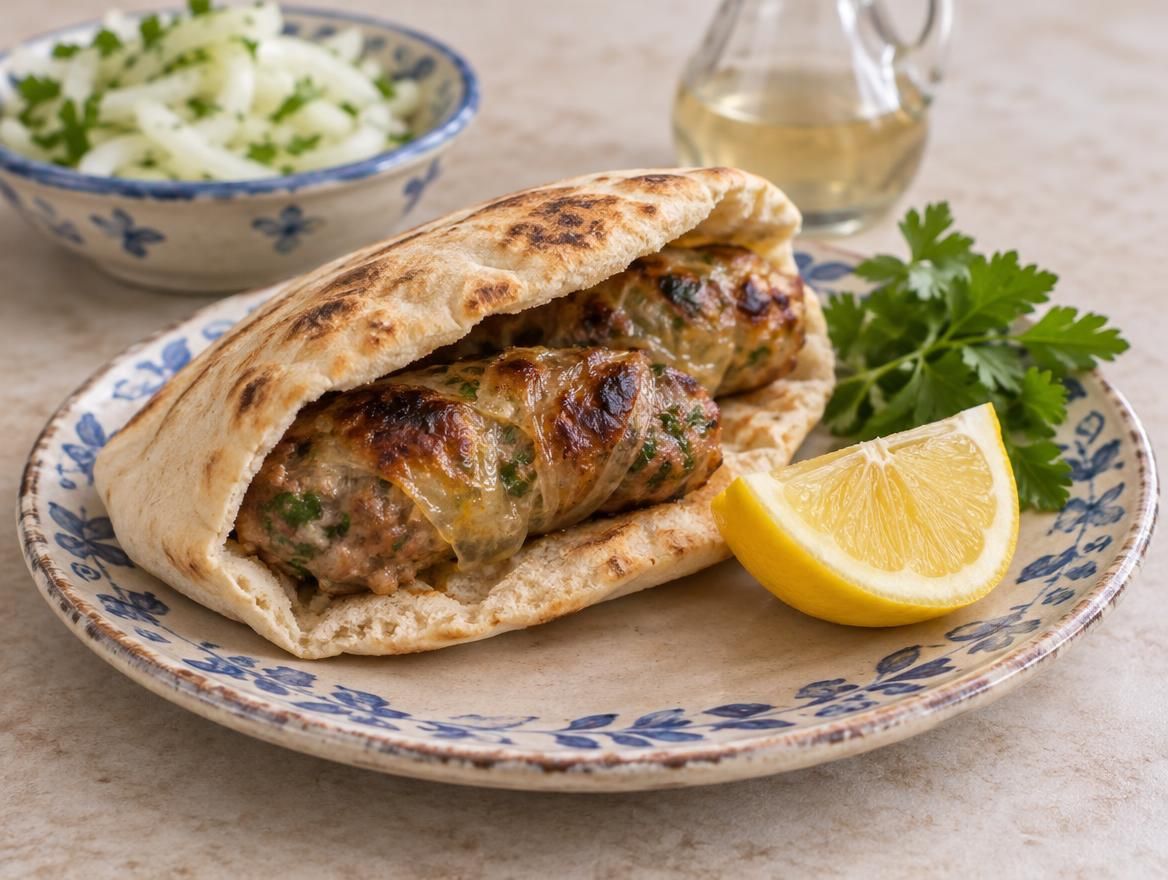
Sheftalia
Σιεφταλιά
Cypriot skinless sausages of minced pork, onion and parsley wrapped in caul fat and grilled until the fat melts and browns. Eaten in pitta with lemon.
Medium
- 9 hr 45 min

Afelia
Αφέλια
Cypriot pork marinated overnight in dry red wine, browned, then braised with crushed coriander seeds until the wine has cooked down to a dark glaze.
Easy
- 15 min

Grilled halloumi
Χαλλούμι στη σχάρα
Thick slices of halloumi cooked in a hot dry pan or on the grill until browned and soft, dressed with olive oil, lemon and dried mint and eaten at once.
Easy
- 3 hr 50 min

Flaounes
Φλαούνες
Cypriot Easter pastries: a yeasted dough scented with mastic and mahleb, folded around a risen filling of cheese, egg, mint and sultanas, crusted with sesame.
A bit of work
Regional cuisines
Think you know Cyprus food?
4 quiz dishes. Optional — Passport stamps still come from cooking.
Take the Cyprus food quizFood history
Cyprus has been ruled in turn by Byzantines, French Lusignan kings, Venetians, Ottomans and the British, and each left something in the pot. The Byzantine and Greek base supplies olive oil, wine, pulses and the Orthodox fasting calendar. Lusignan and Venetian centuries left pastries and pasta dishes with Latin names. Ottoman rule brought kebabs, stuffed vegetables, yoghurt and syrup sweets, shared today by Greek and Turkish Cypriots under different names. Proximity to Syria and Lebanon shows in the tahini, bulgur and pitta. The island's own contributions are halloumi, crushed coriander with wine, and the caul-wrapped sausage.