

 Taste Iran
ایران
A plateau country with a cuisine of perfumed rice, herb-heavy stews, sour fruit and grilled meat that has barely changed in centuries.
Iranian cooking centres on rice, cooked the chelow way with a crisp tahdig, and on khoresh, the slow stews that go over it: ghormeh sabzi with herbs and dried lime, fesenjan with walnuts and pomegranate, gheimeh with split peas. Kebabs are the restaurant and picnic food. Souring comes from dried limes, barberries, pomegranate, sumac and unripe grape juice; perfume comes from saffron, rose water and cardamom. Fresh herbs are eaten raw by the handful with cheese and flatbread. Yoghurt is on every table, and tea is drunk all day.
7 recipes · 1 cuisine
All dishes 7
- 3 hr 10 min

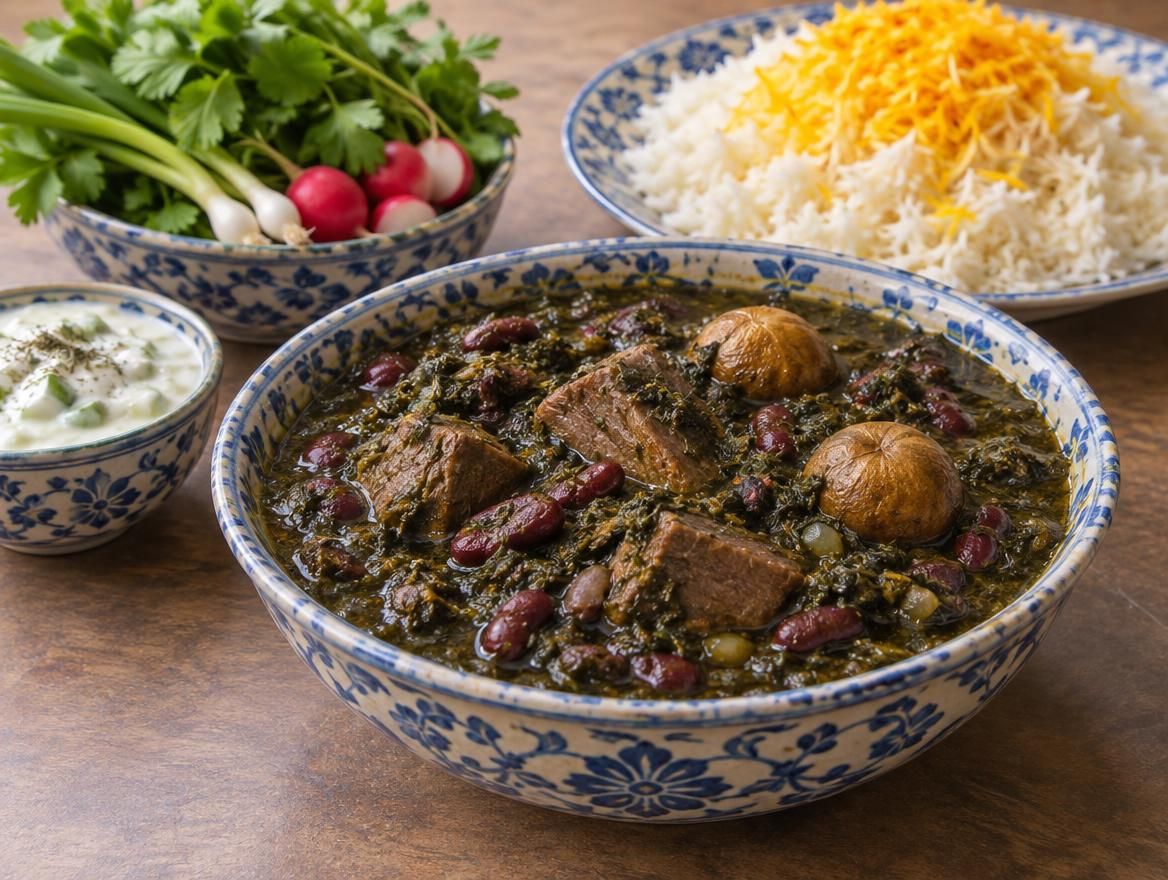
Ghormeh sabzi
قورمه سبزی
Iran's dark green herb stew: lamb, kidney beans and a mountain of fried herbs soured with dried limes.
Medium
- 2 hr 35 min

Fesenjan
فسنجان
Chicken braised in a thick, dark sauce of ground walnuts and pomegranate molasses. Sweet, sour and rich.
Easy
- 2 hr 30 min

Tahdig
ته دیگ
Persian steamed basmati with a golden, crackling crust from the bottom of the pot. The crust is the prize.
Medium
- 2 hr 35 min

Kebab koobideh
کباب کوبیده
Iran's ground meat kebab: lamb and onion kneaded smooth, pressed on wide skewers and grilled, served with rice and sumac.
Medium
- 2 hr 55 min

Zereshk polo ba morgh
زرشک پلو با مرغ
Saffron chicken braised in a tomato and onion sauce, served on basmati jewelled with sour barberries.
Medium
- 2 hr 40 min

Ash reshteh
آش رشته
Thick Persian noodle soup of beans, lentils, herbs and spinach, topped with kashk, fried onion and mint oil.
Medium
- 1 hr 5 min

Mirza ghasemi
میرزا قاسمی
Smoky aubergine mashed with garlic, tomato and egg from the Caspian coast. Eaten with bread or rice.
Easy
Regional cuisines
Think you know Iran food?
7 quiz dishes. Optional — Passport stamps still come from cooking.
Take the Iran food quizFood history
Persian court cooking under the Achaemenids and Sasanians spread sweet-and-sour meat dishes, rice and sugar across the Middle East and later into Mughal India. The Safavid era in the 16th century fixed the chelow rice method and the polo tradition. Caspian provinces added garlic, aubergine and fish; Azerbaijan added dumplings and kufteh; the Gulf coast added spice and dates. Tomatoes and potatoes arrived in the 19th century and were absorbed without displacing the old pantry.
Common ingredients
Techniques
- par-boiling and steaming rice
- slow khoresh braising
- charcoal kebab grilling
- frying herbs dark
- souring with dried fruit