
 Taste Israel
ישראל
A country on the eastern Mediterranean whose kitchens were assembled from the home cooking of Jewish communities from dozens of countries, alongside the local Arab table.
Israeli food is a meeting of immigrant kitchens. Jews from Iraq, Yemen, Morocco, Tunisia, Libya, Poland, Romania, Ethiopia and elsewhere brought their home cooking, and street stalls turned parts of it into national habits: sabich from Iraqi Sabbath breakfasts, jachnun and malawach from Yemen, shakshuka from North Africa. These sit beside dishes shared across the Levant, such as hummus, falafel and chopped salad, which are far older than the state and are cooked throughout the region. Daily eating is heavy on vegetables, tahini, eggs, dairy, pickles and bread, and much of it follows kosher rules.
3 recipes · 1 cuisine
All dishes 3
- 50 min

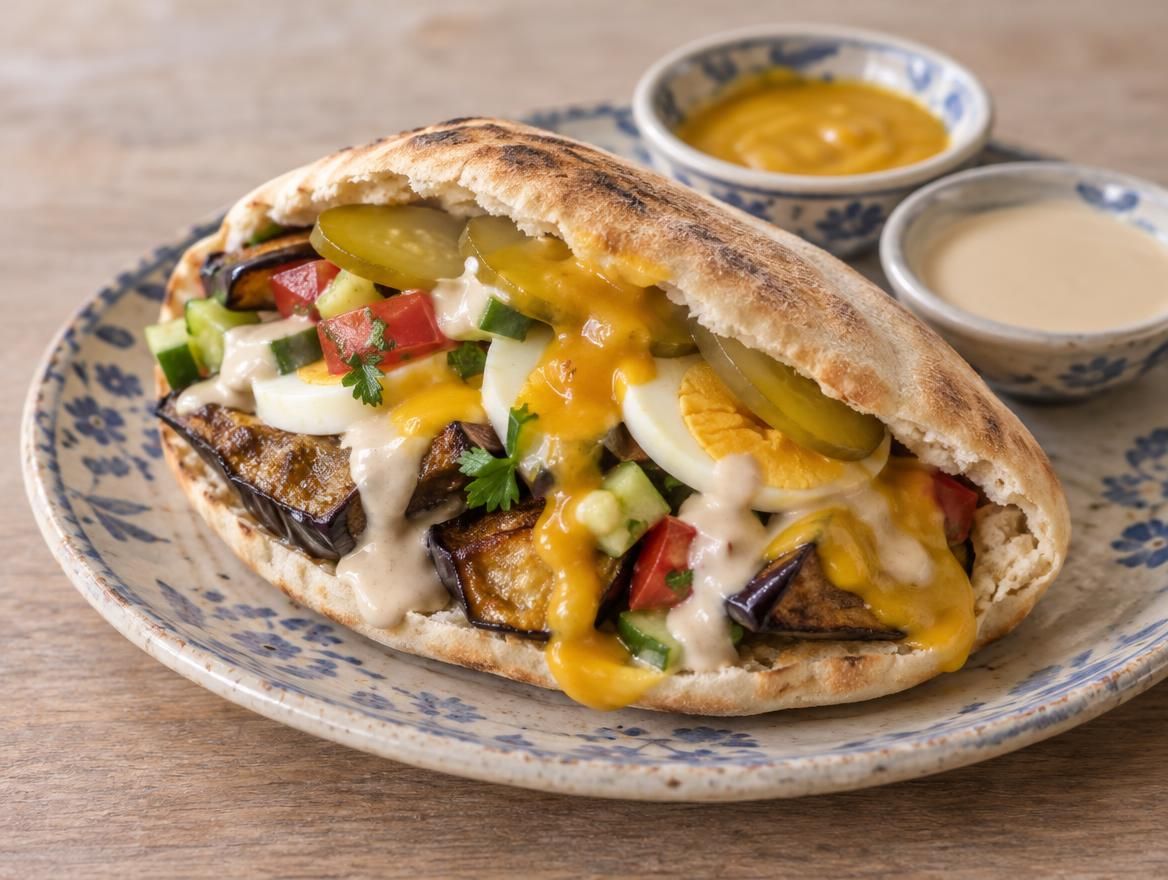
Sabich
סביח
Pita stuffed with fried aubergine, hard-boiled egg, tahini, chopped salad, pickles and amba, the sour mango sauce that makes it.
Easy
- 13 hr 15 min

Jachnun
ג'חנון
Yemenite Jewish pastry of thin, buttered dough rolled up and baked overnight until dark amber. Eaten with grated tomato, a hard egg and zhug.
MediumMedium heat
- 45 min

Jerusalem mixed grill
מעורב ירושלמי
Chicken hearts, livers and thigh meat fried hard with onions, cumin, turmeric and coriander, then packed into pita with tahini.
Easy
Regional cuisines
Think you know Israel food?
3 quiz dishes. Optional — Passport stamps still come from cooking.
Take the Israel food quizFood history
Early communal farm kitchens were austere and ran on vegetables, dairy and bread; the breakfast of salad, eggs and soft cheese survives from that time. Mass immigration around the middle of the 20th century, during years of rationing, put many cooking traditions side by side in the same neighbourhoods and markets. Sabbath law, which forbids lighting a fire, shaped a whole family of overnight dishes. In recent decades restaurant cooks have treated this mixture, together with local Arab and wider Levantine produce and technique, as a cuisine in its own right.