Grain
Pita
خبز عربي
Also called pitta, khubz, Arabic bread, pocket bread
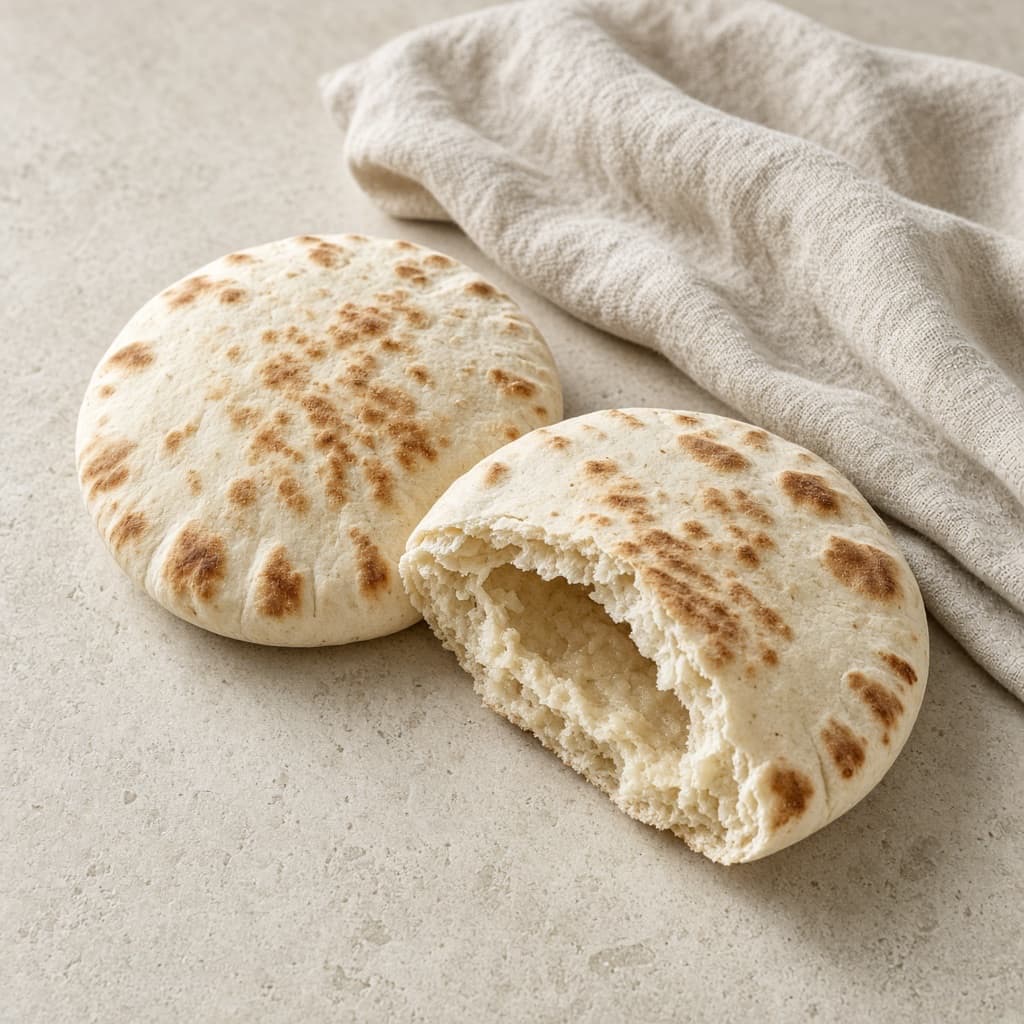
A Levantine wheat flatbread cooked hot enough that steam blows a pocket between the layers. Soft when fresh, it is also the fried shard in fattoush. Pitta, khubz and pocket bread sit in the same family; supermarket rounds vary from balloon-thin to almost a wrap.
Origin
Baked across the Levant and eastern Mediterranean, travelling with Arabic, Greek, Turkish and Armenian kitchens. The factory pocket loaf is a milder hearth bread.
Flavour
Mild wheat, a faint sour if the dough fermented, and a toasted blister when the oven is fierce. Stale pita tastes flat until oil and salt wake it.
How it is made
A soft dough is rolled thin and hit with fierce heat. Steam separates the skins in under a minute; cool air collapses the balloon into a pocket.
How to use it
Warm on a dry pan so it flexes. Day-old cubes fried in olive oil become fattoush croutons — stale is the point. Split for shawarma, souvlaki or fatteh and toast the cut face. If a loaf never puffed, tear and scoop. A cardboard packet wants a sprinkle of water and a hot pan, not the microwave.
Storage
A bag on the bench for a day. Freeze extras, separated by paper, and reheat from frozen on a dry pan. The fridge stales it faster than the freezer.
Recipes using it
Checking your allergy settings…