
 Taste Kazakhstan
Қазақстан
A vast steppe country whose cooking comes from herding: boiled meat, broth, fermented milk and fried bread.
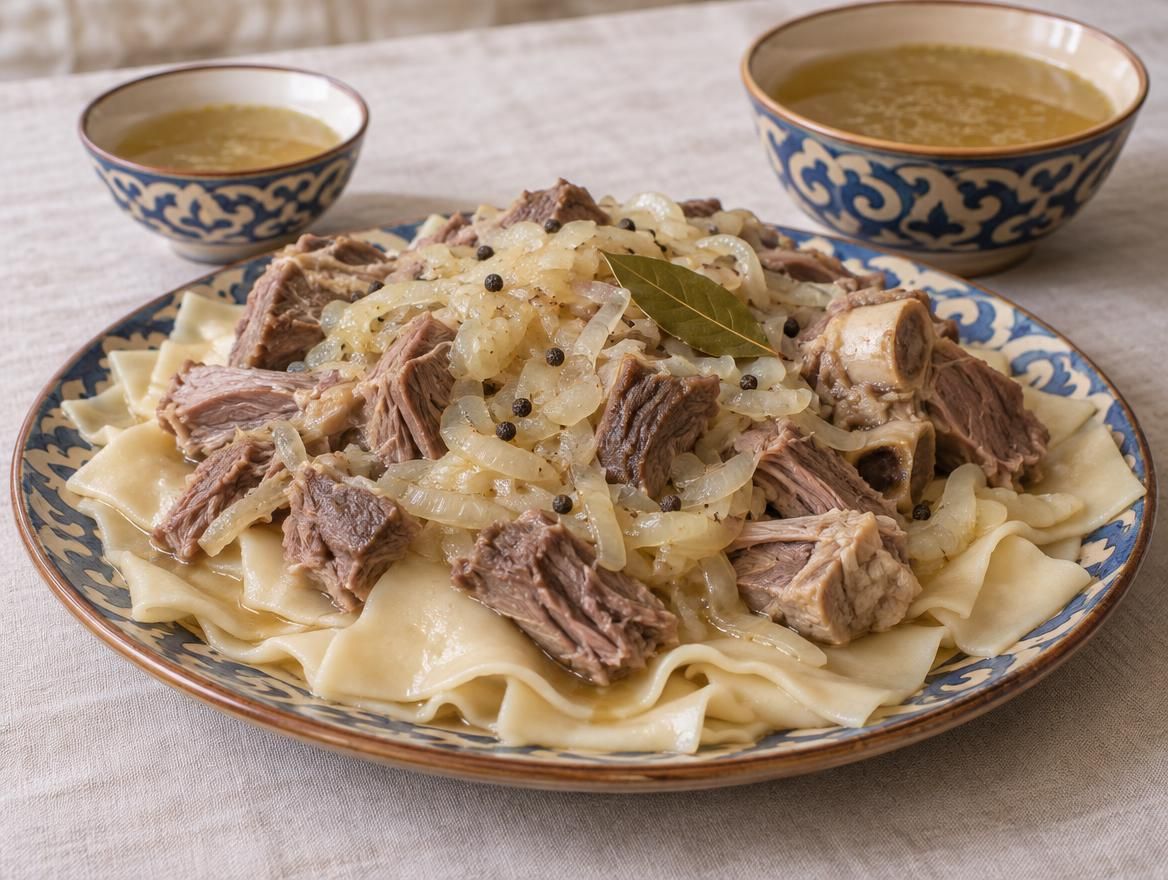
Kazakh food is the food of people who lived with their animals. Meat is boiled more often than roasted, and the broth is valued as much as the meat. Beshbarmak, boiled meat over flat noodles with onion sauce, is the dish for guests. Horse is the prized meat, cured into kazy sausage, followed by mutton and beef. Dairy is drunk and dried: kumis from mare's milk, shubat from camel's milk, and hard salty balls of kurt. Baursak, fried dough, is the bread of the festive table, and tea with milk goes on all day.
2 recipes · 1 cuisine
All dishes 2
- 4 hr 15 min

Beshbarmak
Бешбармақ
Slow-boiled lamb or beef pulled from the bone, served over wide hand-cut noodle sheets with an onion sauce, and the broth in bowls alongside.
Medium
- 2 hr

Baursak
Бауырсақ
Small pillows of yeast dough fried until puffed, hollow and golden. The bread of the Kazakh guest table, eaten with tea, honey or broth.
Easy
Regional cuisines
Think you know Kazakhstan food?
2 quiz dishes. Optional — Passport stamps still come from cooking.
Take the Kazakhstan food quizFood history
For most of their history Kazakhs were nomadic pastoralists moving herds across the steppe, and cooking was shaped by what could be carried, kept and cooked in one pot. Grain and vegetables came by trade with settled neighbours to the south. Russian settlement and then forced settlement under Soviet rule in the twentieth century changed the diet sharply, adding bread, potatoes, cabbage and dishes from Russian, Uyghur, Korean and Uzbek communities who also live in the country. The older meat and milk dishes remain the food of hospitality and ceremony.