
Uzbek
Oʻzbek taomlari
The cooking of Central Asia's oasis cities: rice and lamb from the kazan, bread and pastry from the tandoor, noodles, dumplings and green tea.
Uzbek cuisine belongs to settled farming and trading towns, not to the open steppe. Its rice dishes are related to Persian pilafs, its noodles and steamed dumplings arrived from the east along the trade roads, and its mutton and dairy habits are shared with Turkic herders. Each oasis developed its own style, so Samarkand layers its plov while Ferghana fries and mixes it. The Soviet period added potatoes, tomatoes and peppers, and made Uzbek dishes standard fare in canteens from the Baltic to the Pacific.
Generous use of lamb and its tail fat, onions and carrots in quantity, and a narrow, deliberate set of spices: cumin, coriander seed, black pepper, barberries, dried chilli. Food is cooked hard in a cast-iron kazan or baked on the wall of a clay tandoor. Flavours are savoury and round, seldom hot. Fresh herbs, raw onion, vinegar and sharp tomato salads cut the richness, and bread and green tea accompany everything.
Countries and regions
Tashkent · Samarkand and Bukhara · Ferghana valley · Khorezm
Dishes 4
- 1 hr 35 min

Lagman
Lagʻmon
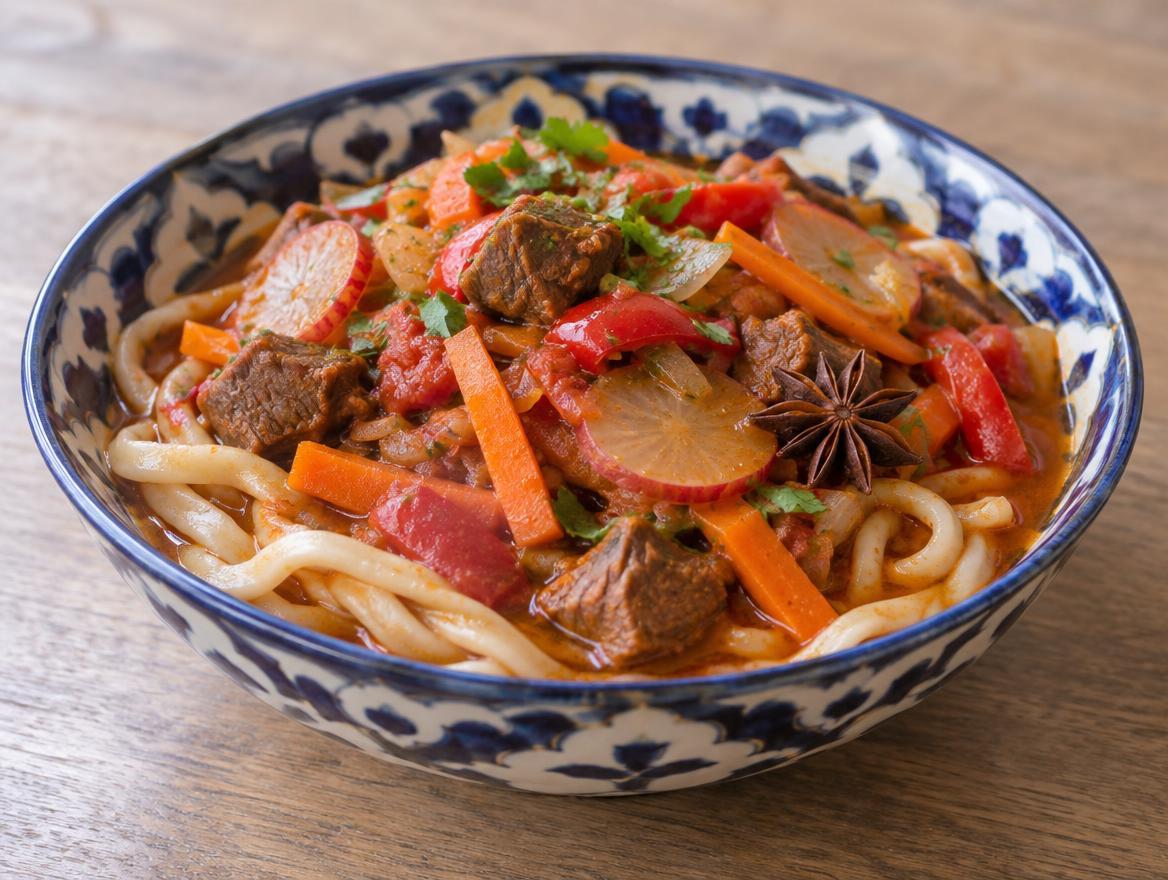
Thick wheat noodles under a soupy lamb, pepper, tomato and radish stew scented with cumin and star anise. Uzbekistan's noodle bowl.
UzbekistanMedium
- 2 hr 20 min

Samsa
Somsa
Flaky baked pastries filled with hand-chopped lamb, lamb fat and a great deal of onion, seasoned with cumin. Baked hot in a home oven.
UzbekistanMedium
- 2 hr 35 min

Shurpa
Shoʻrva
A clear lamb broth simmered on the bone with large pieces of carrot, potato, tomato and pepper. Served with herbs and flatbread.
UzbekistanEasy
- 2 hr 38 min

Lamb Pilaf (Plov)
Lamb Pilaf
Lamb Pilaf (Plov) from Uzbekistan.
UzbekistanMedium