

 Taste Saudi Arabia
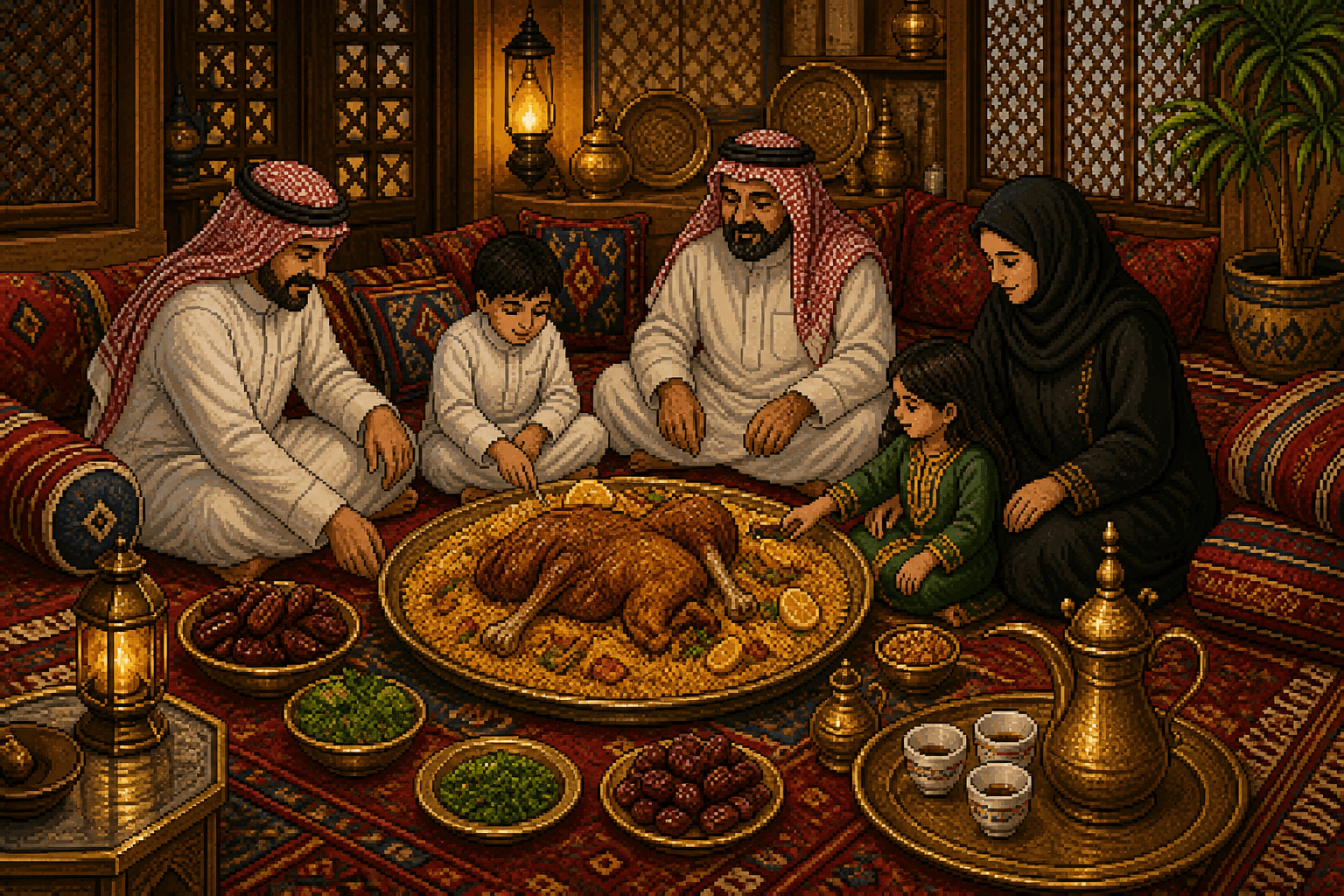
Rice trays, lamb and a spice logic built on cardamom, dried lime and hospitality that still thinks in whole animals. Kabsa is the plate the rest of the world can name.
Kabsa is spiced rice with meat — usually chicken or lamb — cooked so the grains stay separate and stained with tomato and baharat. The tray is the point: nuts, raisins, onion, a daqqous tomato sauce on the side. Hejazi cooking around Jeddah and Mecca leans toward Red Sea fish, sambusas and a more international Hajj pantry; Najdi cooking inland is rice, meat and dates; the Eastern Province shares Gulf rice and seafood with Bahrain and Kuwait. Mutabbaq, jareesh and saleeg are the other weekdays. Coffee (qahwa) is cardamom-green and small. Dates are not dessert so much as furniture.
11 recipes · 1 cuisine
Essential dishes
Checking your allergy settings…
More dishes
Further Saudi Arabia listings, including shorter editorial recipes and imported methods.
Checking your allergy settings…
Regional cuisines
Think you know Saudi Arabia food?
10 quiz dishes. Optional — Passport stamps still come from cooking.
Take the Saudi Arabia food quizFood history
Bedouin meat-and-date cooking, Red Sea trade, and a twentieth-century oil economy that pulled South Asian, Levantine and Filipino cooks into city kitchens. Kabsa's exact family tree overlaps with Yemeni mandi and Gulf machboos; arguing for a single inventor is less useful than describing the rice-and-meat tray. Tomato is relatively recent in the inland pot. Hajj cities have always eaten with visitors. Home cooking still buries meat under rice, finishes with ghee, and treats bread as a second starch rather than a European side.