Spice
Ají amarillo
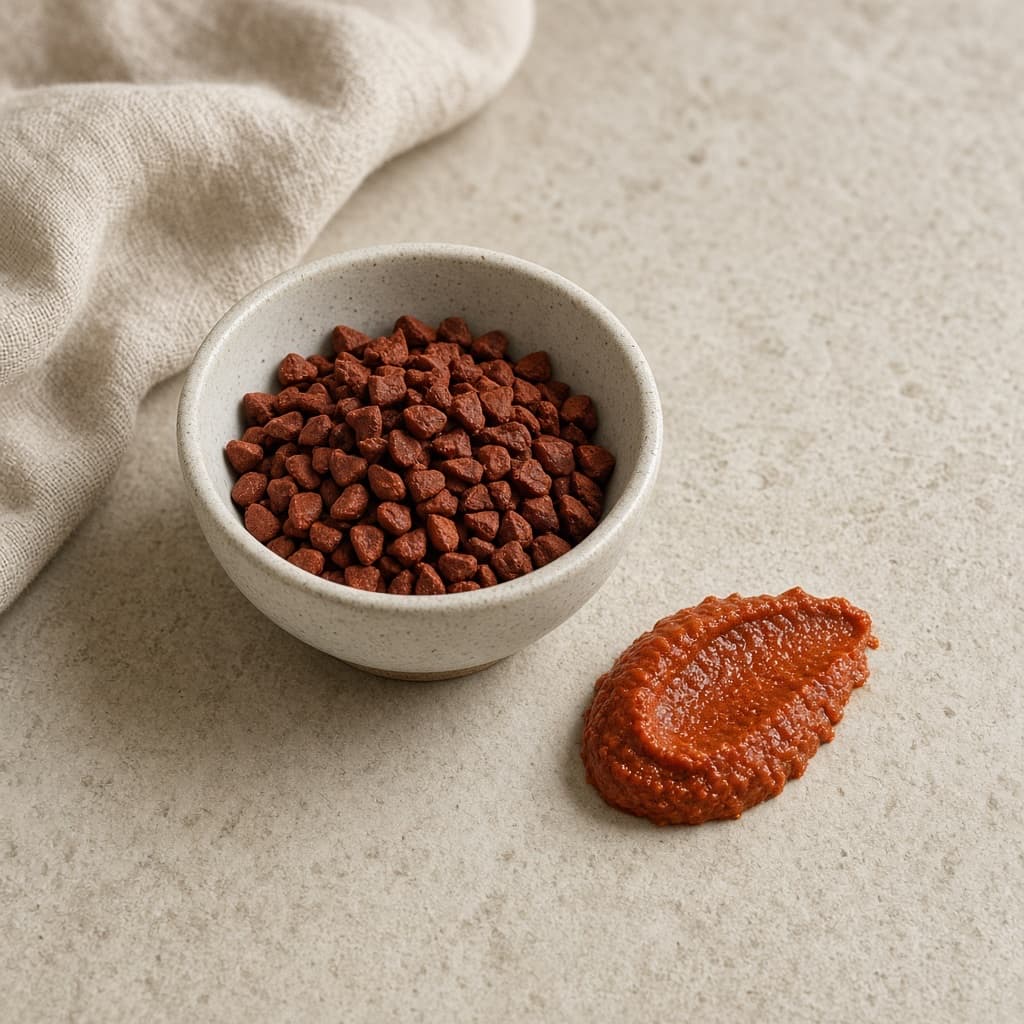
Also called yellow chilli paste, ají amarillo paste
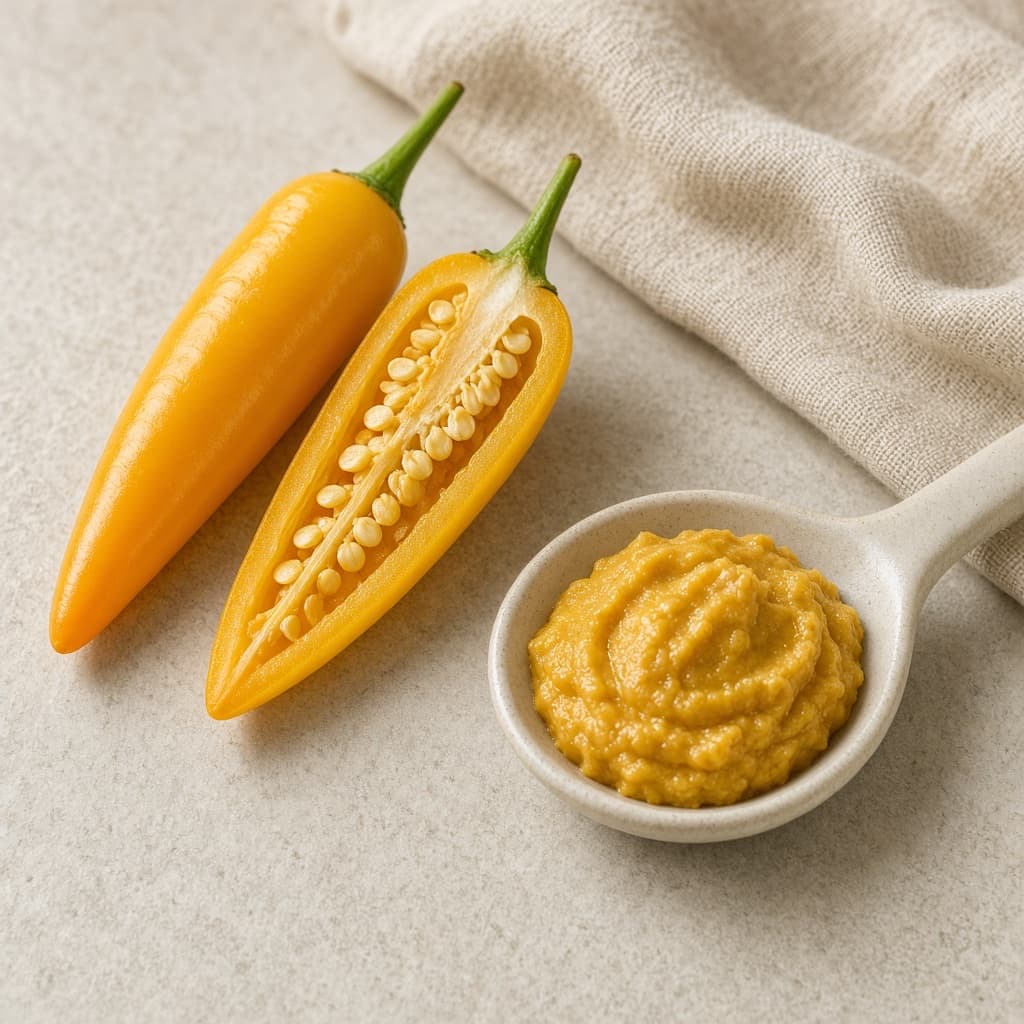
A fruity Peruvian chilli, usually sold abroad as a jarred yellow-orange paste. Fresh pods are a luxury outside the Andes; the paste is the working ingredient for ají de gallina and many sauces.
Origin
Peru, where ají amarillo is a daily flavour rather than a heat stunt. It travelled with Andean cooking more as a paste than as a fresh export.
Flavour
Mango-chilli, medium heat, floral rather than smoky. It is not cayenne and not habanero.
How it is made
Ripe yellow chillies are deseeded or not, then blended, often with a little oil or acid. Frozen whole ají is closer to fresh than the sweetest supermarket jars.
How to use it
Fry the paste in oil until it smells fruity and the raw edge goes, then add stock, bread or chicken. That fry is the difference between a round sauce and a raw chilli hit. For a table salsa, loosen paste with lime and onion. Do not swap a Scotch bonnet cup-for-cup. A mild jar may need a bigger spoon; a hot one needs cream or potato. Freeze leftover paste in teaspoons.
Storage
Fridge after opening, with the surface covered. Frozen cubes hold flavour better than a half-empty jar that oxidises at the top.
Recipes using it
Checking your allergy settings…