Spice
Star anise
Also called Chinese star anise
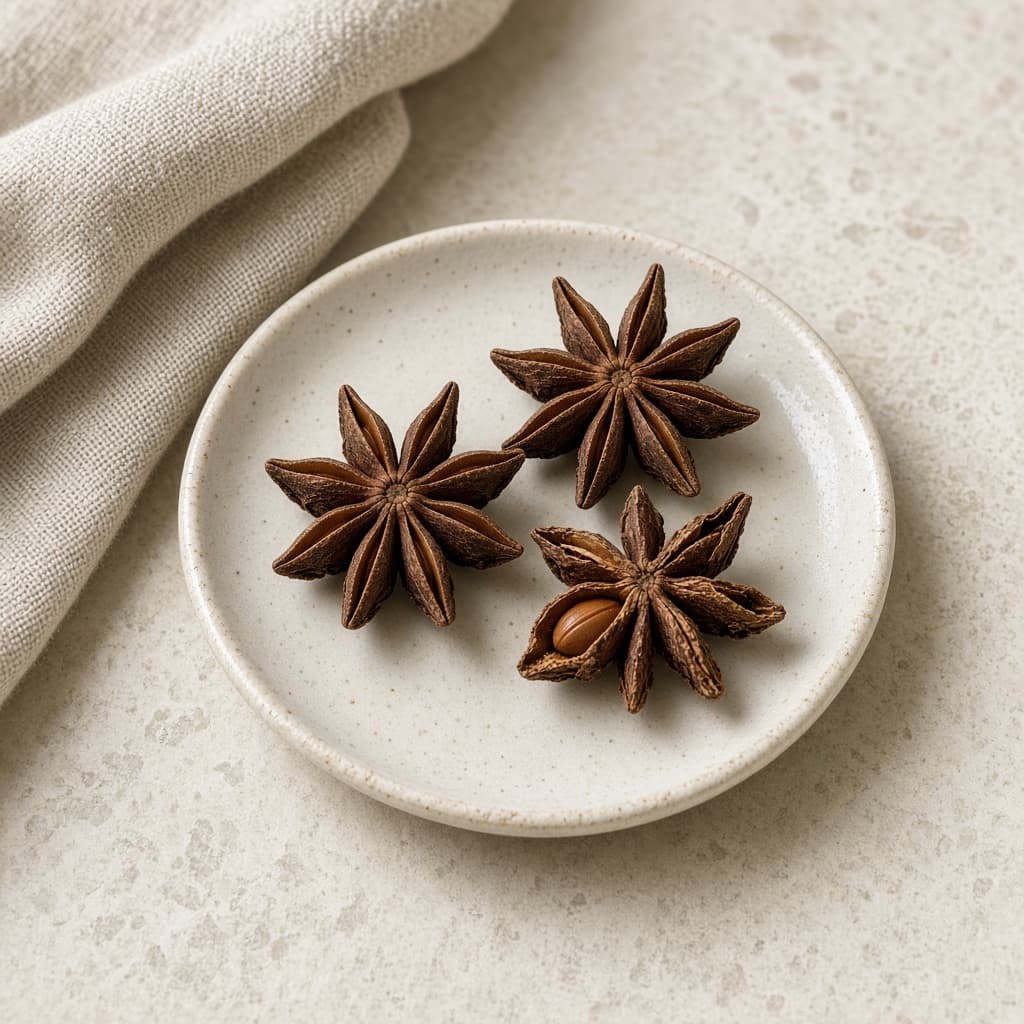
The dried, star-shaped fruit of Illicium verum, an evergreen from southwest China and Vietnam. It is one of the high notes in phở, and it is not aniseed.
Origin
The tree is native to the China–Vietnam borderlands, which is why a Hanoi phở pot smells of it.
Flavour
Sweet liquorice, fennel, a little warmth. Too many stars taste like old cough sweets and bully every other spice in the pot.
How to use it
Drop one or two stars into a beef phở stock with cinnamon, clove and charred onion, and simmer; fish them out before serving. Do not grind it into a soup unless you want grit and a blast of anise. In braises, treat it like a bay leaf: present, then gone. Fennel seed or aniseed give a related perfume without the same woody depth — use less, and do not expect the phở to taste right. Heat and time extract it; a last-minute sprinkle does almost nothing.
Storage
Whole stars, airtight, dark. If a star is pale and scentless, it is decoration.
Recipes using it
Checking your allergy settings…