Grain
Dangmyeon
당면
Also called sweet potato glass noodles, Korean vermicelli, japchae noodles
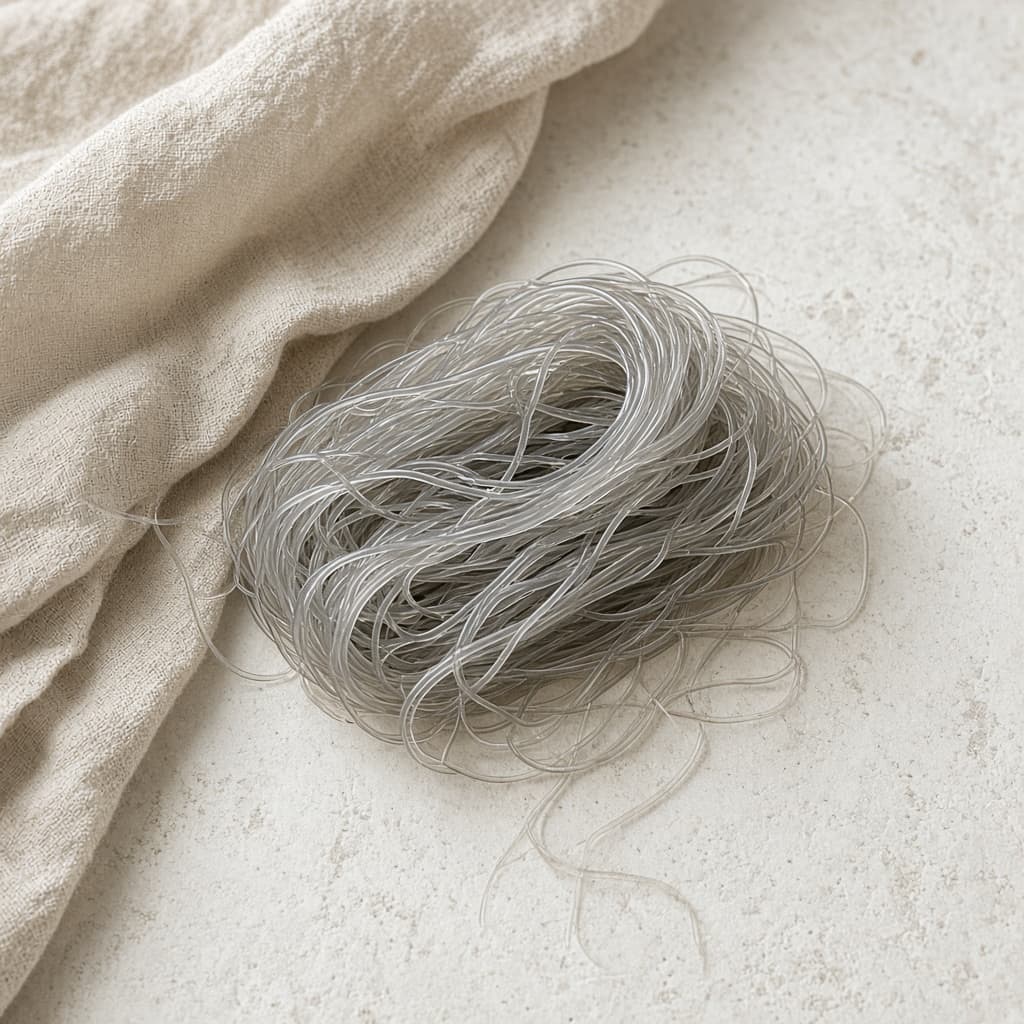
Grey-clear Korean noodles made from sweet-potato starch, the strand of japchae. Dry, they look like fishing line; cooked, they turn glossy, brown with soy, and bounce.
Origin
Korea. Chinese sweet-potato and mung-bean glass noodles are cousins; dangmyeon is the thicker, chewier Korean cut used in banquets and weeknight stir-fries.
Flavour
Almost none of their own. They exist to carry sesame oil, soy and the juice of mushrooms and meat. A stale bundle tastes dusty even after soaking.
How it is made
Sweet-potato starch is mixed with water, extruded and dried. There is no wheat and no egg. The grey tint is the starch, not dirt.
How to use it
Soak in warm water or boil until just flexible — they should still have a little resistance, because they finish in the pan. Drain well. Japchae wants them tossed with soy, sugar and sesame so they stain amber; they drink sauce, so season the vegetables separately and go easy on salt in the soaking water. Cut them with scissors if the strands are unmanageably long. Overcooked dangmyeon turns slimy; undercooked squeaks. Do not confuse them with thin mung-bean vermicelli, which collapse faster.
Storage
Dried bundles in a pantry cupboard, airtight once the pack is open. They keep for months.
Recipes using it
Checking your allergy settings…