


Japchae
잡채
Glossy sweet-potato noodles with sesame, soy and a rainbow of vegetables — banquet food that also does potluck.
Recipe by I Want Some Food · Reviewed by the editorial kitchen. Native name preserved: 잡채.
0 people cooked this in the public kitchen yet. Kitchen-tested by I Want Some Food. Not a purchased rating.
- Prep
- 30 min
- Cook
- 25 min
- Rest
- None
- Total
- 55 min
- Difficulty
- Medium
- Spice
- No chilli
- Cost
- Weeknight budget$8–16 USD · indicative, not a store price
About
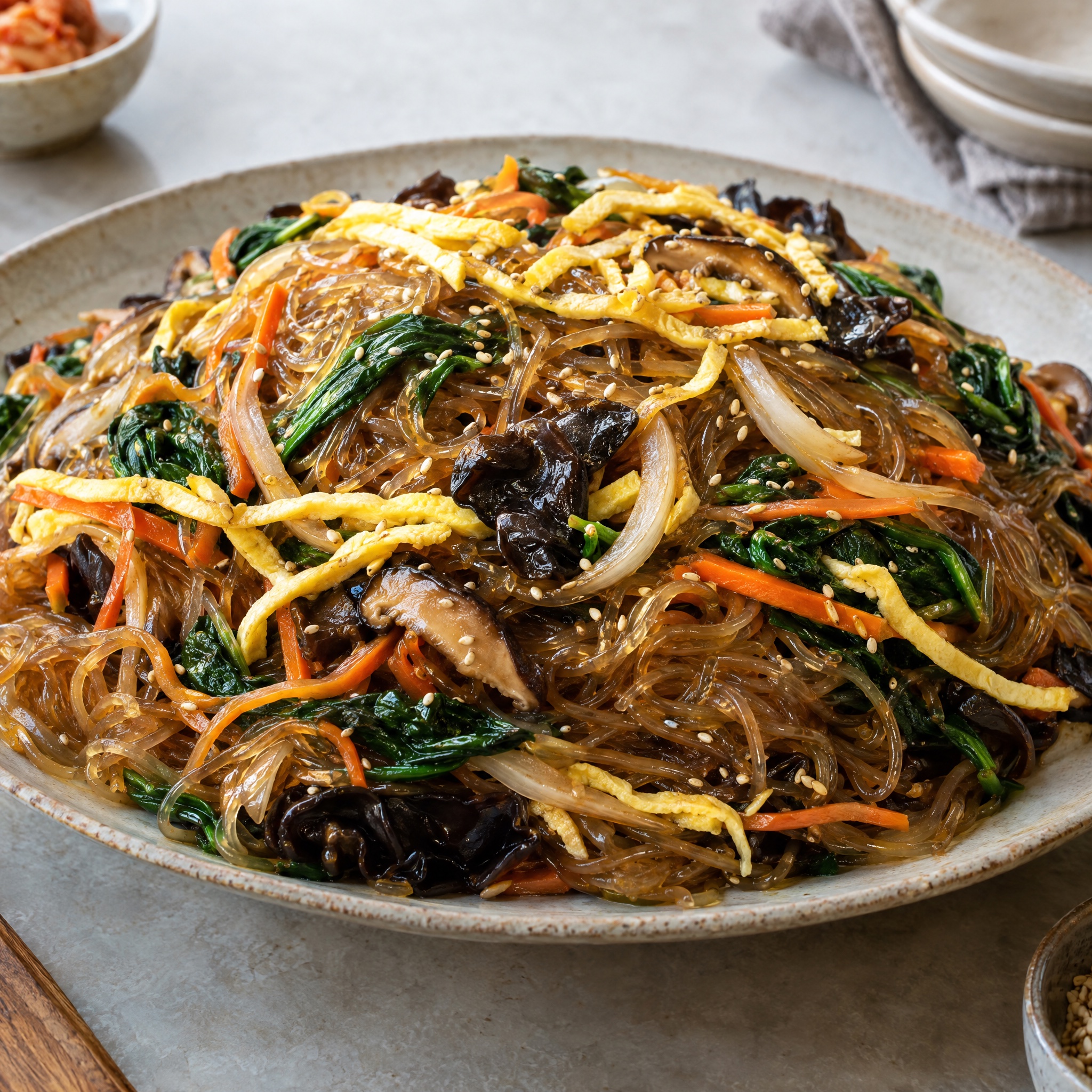
Japchae is glass noodles that should stay springy and separate, each vegetable cooked on its own so the colours stay honest. The seasoning is soy, sugar and sesame oil — not chilli. It is served at celebrations and also from a plastic container at room temperature. Both are correct. Soak dangmyeon until flexible, then give them a short boil so they stay springy; a long boil turns them to glue. Season the noodles in their own bowl with soy, sugar and sesame oil. Cook each vegetable separately so the colours stay clean, then toss off the heat. Done is glossy, separate strands and vegetables that still taste of themselves; wet spinach will grey the whole pan.
Ingredients
- Dangmyeon250 g
- Soy sauce59 ml
- Sugar22 ml
- Toasted sesame oil30 ml
- Garlic2 clove
- Spinach150 g
- Carrot, julienned1 medium
- Onion, sliced1 small
- Mushrooms, sliced shiitake if you can100 g
- Beef, thin strips (optional)150 g
- Egg, thin omelette strips (optional)1 large
- Sesame seed4.9 ml
- Neutral oil30 ml
- Black pepper1 pinch
Scaling multiplies the written quantities. Baking still prefers a scale.
Steps
Step 1
Boil dangmyeon until just flexible, 6–8 minutes. Drain, cut into shorter lengths with scissors, and toss with 1 tbsp soy and 1 tbsp sesame oil so they do not set into a brick.
10 minStep 2
Blanch spinach, squeeze, season with salt and a drop of sesame oil. Sauté carrot, onion and mushroom separately with a pinch of salt — each should stay bright.
12 minStep 3
If using beef, sear quickly with a little soy and garlic. Cook a thin omelette and slice.
6 minStep 4
Toss noodles with remaining soy, sugar, sesame oil, garlic and pepper. Fold in vegetables and beef. Taste: savoury-sweet, not salty soup. Sesame seeds.
3 minTip: If it tastes dull, it wants sesame oil, not more soy.
Adapt this recipe
The canonical recipe stays intact. Personal versions are labelled. Serving changes are maths, not AI.
Adaptations · 0 / 15 used. Resets 10 October.
Substitutions
Beef → More mushrooms
The usual vegetarian table.
Tips
- Japchae is good at room temperature. Do not refrigerate it into a noodle ice block if you can serve it today.
- A splash of water in the pan loosens leftover noodles.
History & culture
A janchi (feast) table almost always has japchae. Home cooks often make it a day ahead. Beef is common, not required. Weddings, sixtieth-birthday tables and church buffets still expect a tray of it, often at room temperature. Home cooks make it a day ahead on purpose. Beef is common in Seoul celebration pans and easy to omit. It is feast food that also survives in a plastic container on a desk the next day.
The royal-court ancestor was vegetables without noodles. Dangmyeon arrived later and became the dish people now mean. Court japchae is often described as a vegetable dish without noodles; sweet-potato starch dangmyeon made the plate people now mean, largely in the twentieth century. Banquet restaurants then fixed the soy-sesame-sweet profile. We are not plating a Joseon reconstruction. The glass-noodle version is the modern celebration standard.
Traditional
Provenance: Editorial adaptation.
Questions about this recipe
Answers taken from this dish's times, amounts, swaps and tips — not a chatbot.
How long does Japchae take?
55 min all in — 30 min prep, 25 min cook. Cook and rest follow the method. Leftover storage and optional extra waits are not included.
How many does it serve?
The recipe is written for 4 plates. Scale the ingredient list on the page if you are cooking for a different number.
How hard is it?
Medium.
How spicy is it?
No chilli.
What allergens should I watch?
This recipe is labelled for Soy, Sesame, Wheat. Labels are informational — check the packets in your kitchen. This is not medical advice.
Does it fit a diet?
The published recipe is labelled Dairy-free, Nut-free.
What does it cost to cook?
Weeknight budget — about $8–16 USD, as a grocery budget for this recipe, not a restaurant price.
What equipment do I need?
Saucepan, Frying pan, Mixing bowl.
How much salt do I put in?
This recipe does not list salt as its own ingredient. Saltiness comes from Soy sauce — 4 tbsp. Taste at the end rather than adding a number we did not write.
How much soy sauce?
4 tbsp of Soy sauce.
How much sugar?
1½ tbsp of Sugar.
How much toasted sesame oil?
2 tbsp of Toasted sesame oil.
What can I use instead?
Beef → More mushrooms. The usual vegetarian table.
Any tips from this recipe?
Japchae is good at room temperature. Do not refrigerate it into a noodle ice block if you can serve it today. A splash of water in the pan loosens leftover noodles.
Can I prepare this ahead?
A splash of water in the pan loosens leftover noodles.
Can I use an air fryer?
This method is not written for an air fryer. The core technique on the page still applies.
Similar dishes
Checking your allergy settings…