Spice
Fenugreek
Also called methi, helba
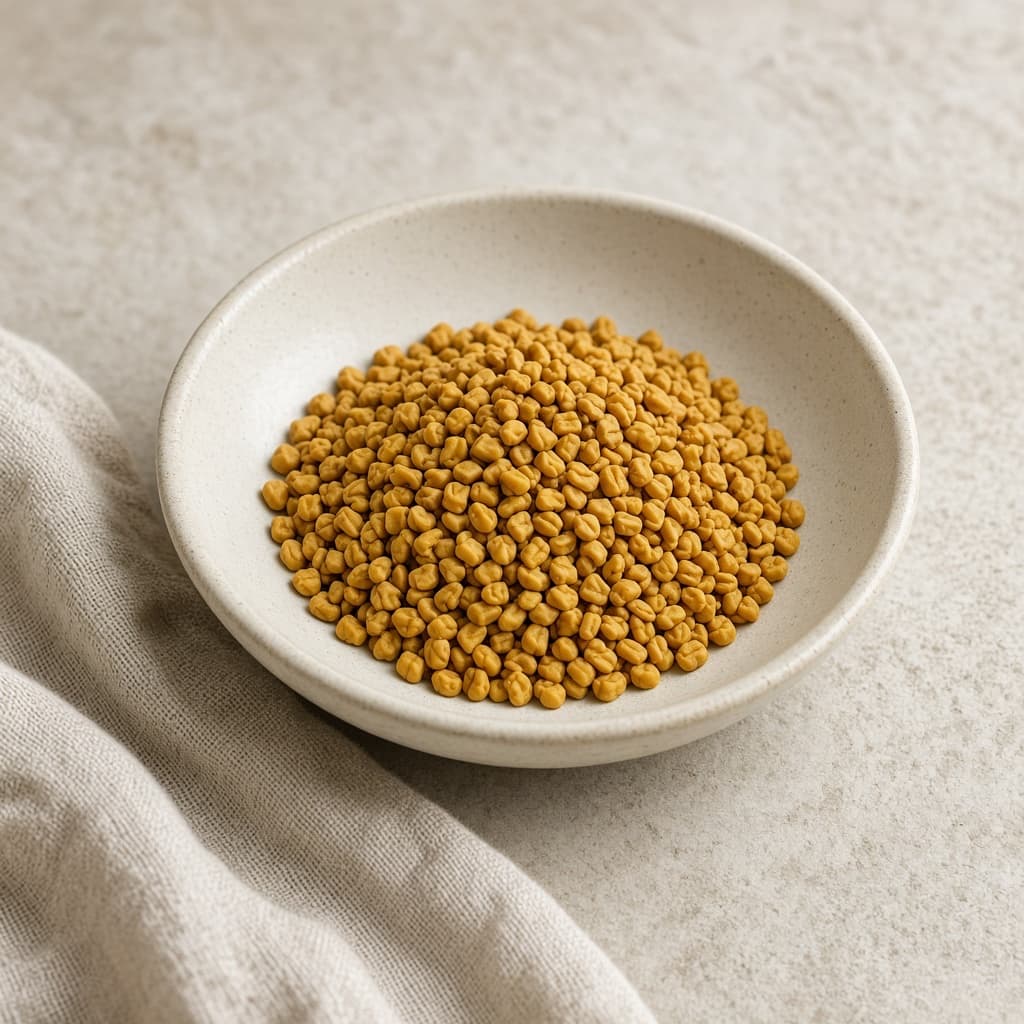
The hard, ochre seeds of Trigonella — methi, helba — bitter until you soak or toast them, then oddly like maple. Rfissa leans on them; some Kerala pots do too. The dried leaf (kasuri methi) is a different, greener ingredient and not a one-for-one swap.
Origin
South Asia and the eastern Mediterranean, a spice, a leafy green and a folk-medicine seed. Moroccan rfissa and Indian pickles both treat the bitterness as structure, not a fault to hide completely.
Flavour
Bitter, maple, celery-seed, with a lingering savoury aftertaste. Raw, chewed seeds are harsh. Too many and the pot tastes of medicine and cheap syrup at once.
How to use it
Soak the seeds if a stew such as rfissa wants them soft, or toast them in a dry pan until they smell louder, then grind. A teaspoon in a family pot is a start; a handful is a dare. Bloom ground fenugreek in fat with the other spices so the raw bitterness cooks off. Do not confuse the seed with the dried leaf — the leaf you crush between your palms over a curry at the end. Mustard seeds pop; fenugreek does not behave the same in a tadka and can scorch into acrid.
Storage
Airtight jar, dry. The seeds last years; ground fenugreek fades and cakes. A maple smell should still be there when you crush one. The leaf belongs in its own tin.
Recipes using it
Checking your allergy settings…