Produce
Korean radish
무
Also called mu, joseon mu, Korean daikon
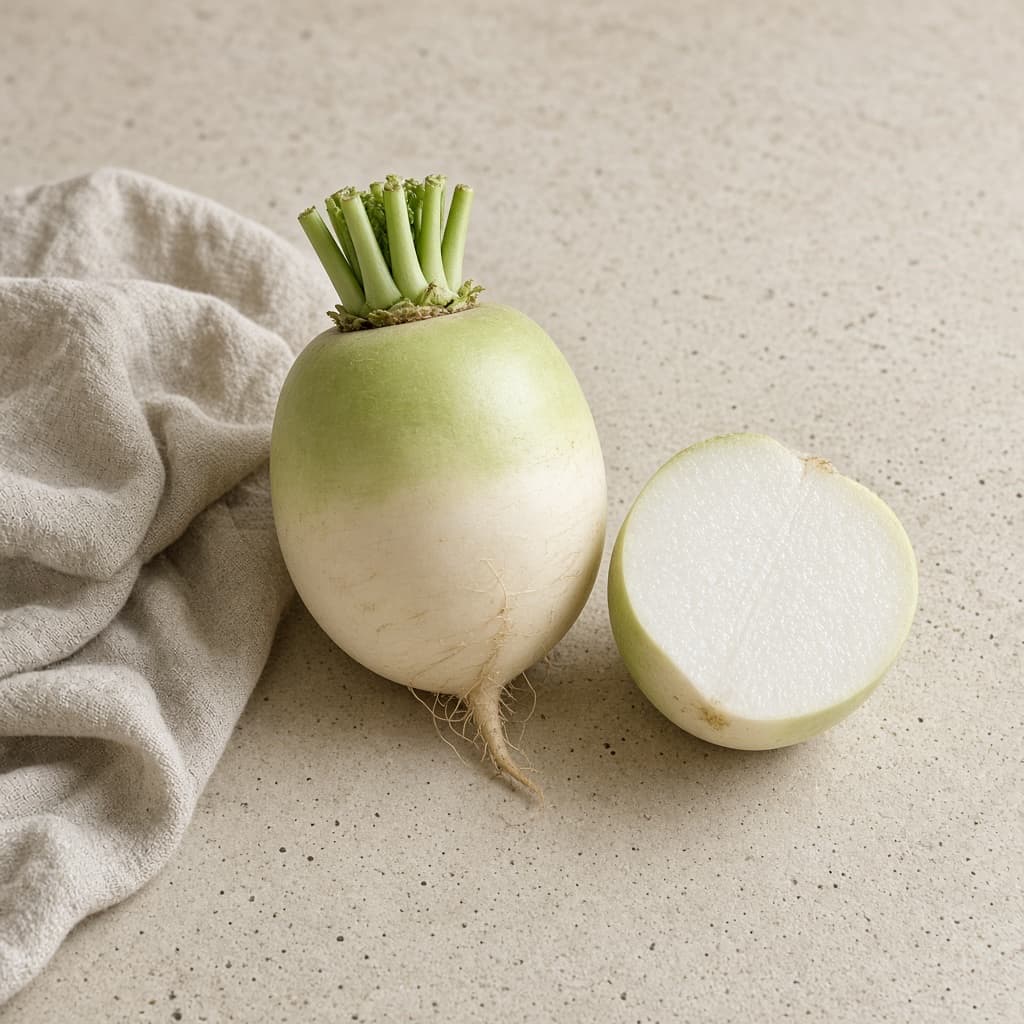
A stout white radish, mu, denser and often sweeter than long Japanese daikon. It is the cube of kkakdugi, the matchstick in soups, and a crunchy ssam extra.
Origin
Korea, selected from the wider East Asian radish family. Daikon is a fair stand-in if you pick a firm, heavy root, but mu is usually shorter and greener at the shoulder.
Flavour
Peppery-sweet and juicier than a storage turnip. The bite is sharper near the tail, milder at the stem end. Cooked, it turns translucent and sweet.
How to use it
Peel if the skin is thick or waxed. Cube for kkakdugi and salt like cabbage so the pieces weep and stay crunchy after fermentation. Julienne into broths — they need more time than leafy greens, so add them with the stock. Grated mu sweetens some marinades. In ssam, thin slices cut the richness of pork. If a radish is hollow or spongy, it will cook to water; pick heavy roots. Do not boil it to collapse unless you want it as a sweet pot vegetable. Fresh leaves can be seasoned as a banchan.
Storage
Fridge, whole if possible. Wrap cut faces so they do not dry to cork. It pithens after a couple of weeks.
Recipes using it
Checking your allergy settings…