


Bibim-naengmyeon
비빔냉면
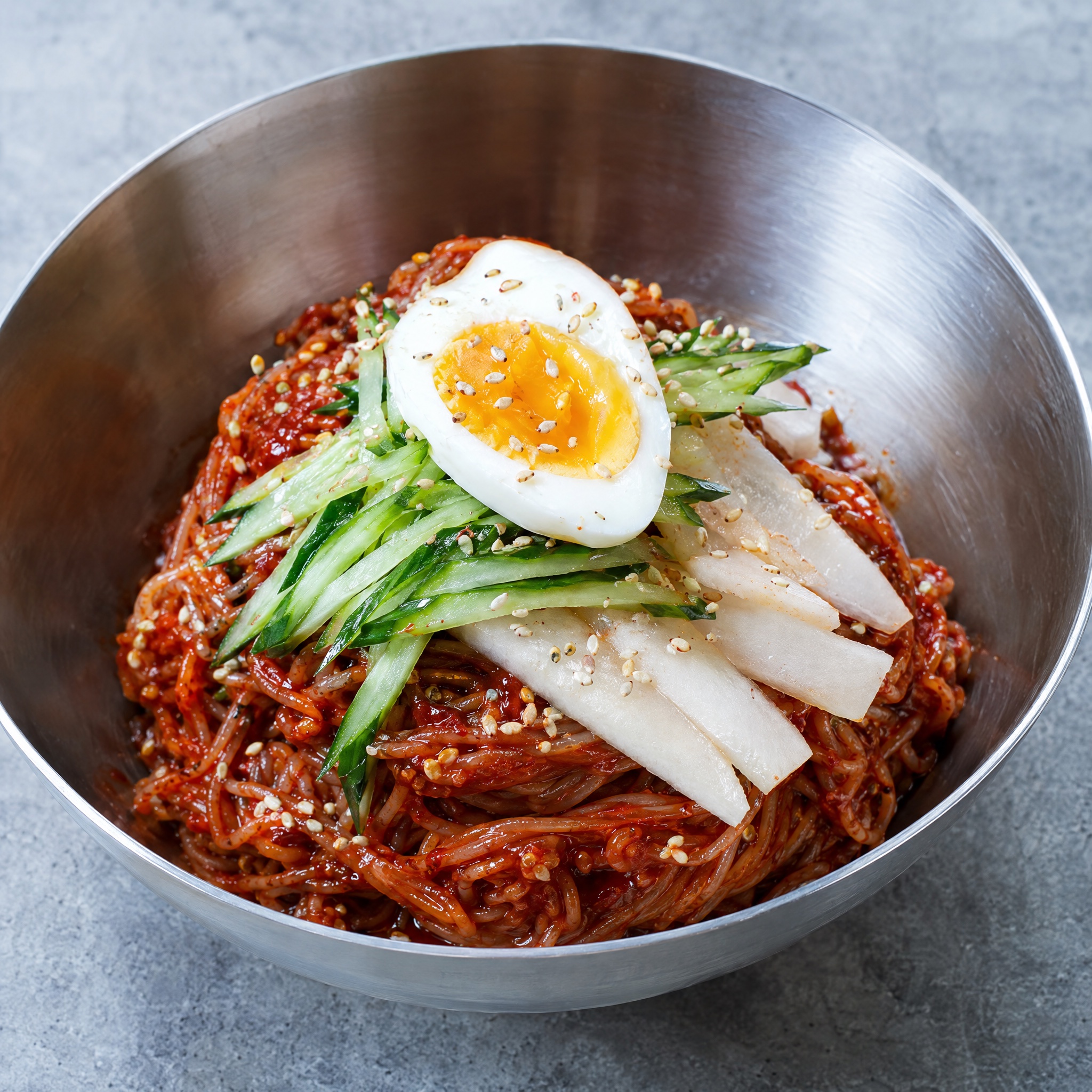
The same chewy cold noodles as mul-naengmyeon, but tossed in a sweet-hot gochujang sauce instead of ice broth.
Recipe by I Want Some Food · Reviewed by the editorial kitchen. Native name preserved: 비빔냉면.
0 people cooked this in the public kitchen yet. Kitchen-tested by I Want Some Food. Not a purchased rating.
- Prep
- 20 min
- Cook
- 10 min
- Rest
- None
- Total
- 30 min
- Difficulty
- Easy
- Spice
- Hot
- Cost
- Weeknight budget$8–16 USD · indicative, not a store price
About
Bibim-naengmyeon is the spicy twin of the icy broth bowl. The noodles still get the hard ice-water rinse. The sauce is gochujang, vinegar, sugar and garlic — louder than the soup version, still a summer plate. A boiled egg and cucumber are not garnish; they are how you eat it. Rinse the noodles in ice water until they are cold and squeaky, same as the broth twin. The sauce needs vinegar, sugar, garlic and gochujang in balance — too sweet and it becomes dessert; too little acid and it tastes flat-hot. Toss at the table so the strands stay cold. Done is every noodle coated, egg and cucumber still there as part of the bite; if the noodles clump into a warm brick, you drained them too soon and let them sit.
Ingredients
- Naengmyeon noodles300 g
- Gochujang30 ml
- Gochugaru4.9 ml
- Vinegar22 ml
- Sugar15 ml
- Soy sauce15 ml
- Garlic2 clove
- Toasted sesame oil15 ml
- Cucumber, julienned1
- Korean radish, julienned, optional pickle80 g
- Egg, boiled or poached2 large
- Beef, leftover boiled brisket, optional80 g
- Sesame seed4.9 ml
Scaling multiplies the written quantities. Baking still prefers a scale.
Steps
Step 1
Stir gochujang, gochugaru, vinegar, sugar, soy, garlic and sesame oil into a thick sauce. Taste: sweet, hot, sour.
5 minStep 2
Boil noodles, then rinse in several changes of ice water until they squeak. Drain hard.
8 minStep 3
Toss noodles with most of the sauce. Top with cucumber, radish, egg, beef if you have it, and the rest of the sauce. Sesame seeds. Scissors.
Adapt this recipe
The canonical recipe stays intact. Personal versions are labelled. Serving changes are maths, not AI.
Adaptations · 0 / 15 used. Resets 10 October.
Substitutions
Naengmyeon noodles → Somen, rinsed very cold
Softer. Still a spicy cold bowl.
Tips
- A slice of Asian pear on top is the shop move.
- Sauce keeps a week. Noodles do not.
History & culture
Same shops as mul-naengmyeon, often the other half of a split order. Scissors on the table still apply. Houses that sell the icy broth bowl usually print this as the spicier twin, and plenty of tables split one of each. Hamhung-style rooms in Seoul still advertise a chewier noodle and a louder sauce. It is a summer finish after grilled meat, scissors included. People who find the clear bowl too quiet come here.
Northern cold-noodle houses and their southern descendants. Pyongyang is broth; Hamhung is often the spicier bibim story people tell. Cold-noodle shops from the north and their southern descendants split broth and bibim lines. The Hamhung spicy story is the one restaurants tell; the evidence is refugee and shop history after partition, not a palace archive. Gochujang on iced noodles is twentieth-century restaurant food. We keep that origin talk labelled as talk.
Regional variation
Provenance: Editorial adaptation.
Questions about this recipe
Answers taken from this dish's times, amounts, swaps and tips — not a chatbot.
How long does Bibim-naengmyeon take?
30 min all in — 20 min prep, 10 min cook. Cook and rest follow the method. Leftover storage and optional extra waits are not included.
How many does it serve?
The recipe is written for 2 bowls. Scale the ingredient list on the page if you are cooking for a different number.
How hard is it?
Easy.
How spicy is it?
Hot.
What allergens should I watch?
This recipe is labelled for Wheat, Soy, Eggs, Sesame. Labels are informational — check the packets in your kitchen. This is not medical advice.
Does it fit a diet?
The published recipe is labelled Dairy-free, Nut-free.
What does it cost to cook?
Weeknight budget — about $8–16 USD, as a grocery budget for this recipe, not a restaurant price.
What equipment do I need?
Saucepan, Mixing bowl.
How much salt do I put in?
This recipe does not list salt as its own ingredient. Saltiness comes from Gochujang — 2 tbsp; Soy sauce — 1 tbsp. Taste at the end rather than adding a number we did not write.
How much gochujang?
2 tbsp of Gochujang.
How much gochugaru?
1 tsp of Gochugaru.
How much vinegar?
1½ tbsp of Vinegar.
How much sugar?
1 tbsp of Sugar.
How much soy sauce?
1 tbsp of Soy sauce.
How much toasted sesame oil?
1 tbsp of Toasted sesame oil.
What can I use instead?
Naengmyeon noodles → Somen, rinsed very cold. Softer. Still a spicy cold bowl.
Any tips from this recipe?
A slice of Asian pear on top is the shop move. Sauce keeps a week. Noodles do not.
Can I use an air fryer?
This method is not written for an air fryer. The core technique on the page still applies.
Similar dishes
Checking your allergy settings…