


Kimchi
김치 (막김치)
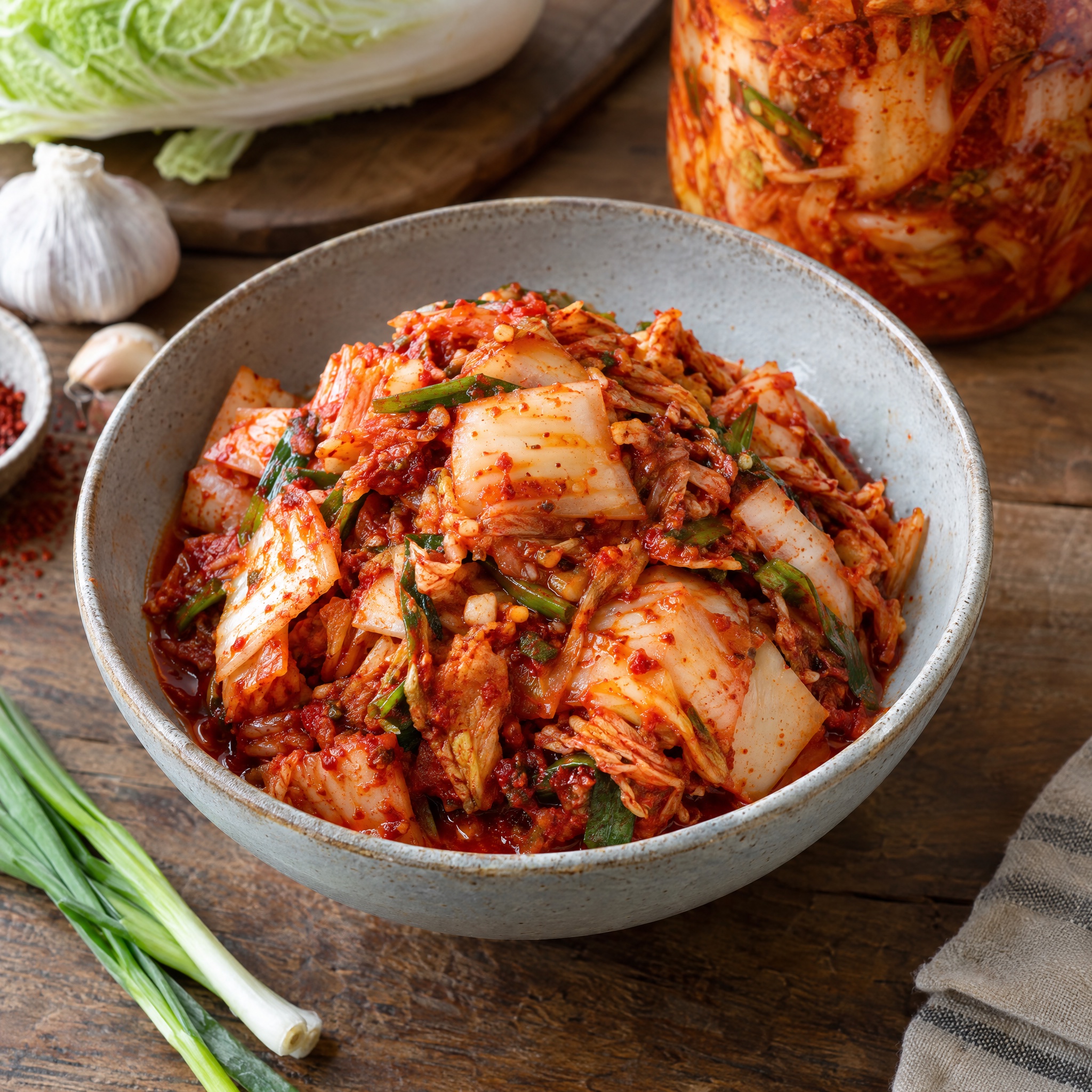
The home jar: chopped napa cabbage, gochugaru, garlic, ginger, fish sauce. Ready as a salad the first night, sour enough for stew in a week.
Recipe by I Want Some Food · Reviewed by the editorial kitchen. Native name preserved: 김치 (막김치).
0 people cooked this in the public kitchen yet. Kitchen-tested by I Want Some Food. Not a purchased rating.
- Prep
- 45 min
- Cook
- 10 min
- Rest
- 3 hr
- Total
- 3 hr 55 min
- Difficulty
- Medium
- Spice
- Hot
- Cost
- Weeknight budget$8–16 USD · indicative, not a store price
About
This is mak-kimchi — cabbage cut into bite-size pieces, salted, then mixed with a gochugaru paste. It is the kimchi most Korean home kitchens actually pack on a Tuesday, not a village kimjang of whole heads. You can eat it the same day as a spicy salad (geotjeori). After a couple of days on the counter and a week in the fridge it is the sour kimchi that jjigae, jeon and fried rice want. Salt the cabbage until the leaves bend and taste seasoned all the way through, then rinse and squeeze hard — wet cabbage makes a dilute paste. Work the gochugaru-garlic-jeotgal mixture under every layer and pack to submerge. It is ready to jar when wilted, not mushy; ferment at room temperature until it smells lively, then refrigerate. Geotjeori is the same mix eaten the day you make it, before sourness arrives.
Ingredients
- Napa cabbage, cored, cut into 4–5cm pieces1½ kg
- Salt, coarse sea salt or kosher70 g
- Gochugaru, coarse Korean chilli flakes70 g
- Korean radish, julienned, or daikon250 g
- Carrot, julienned (optional)1 small
- Spring onion, cut into 4cm lengths5
- Garlic, minced or grated12 clove
- Ginger, grated25 g
- Fish sauce59 ml
- Sticky rice, glutinous rice, for the porridge — or 1 tbsp rice flour30 ml
- Sugar15 ml
- Water, for the porridge, plus extra if the paste is stiff250 ml
Scaling multiplies the written quantities. Baking still prefers a scale.
Steps
Step 1
Toss the cabbage with the salt in a large bowl, getting salt into the thick white stems. Rest 90 minutes, turning once, until the stems bend without snapping. If the bowl looks dry, add a splash of water.
90 minTip: Taste a rinsed piece of stem. It should be seasoned, not painfully salty.
Step 2
Rinse the cabbage in cold water three times. Drain in a colander 20 minutes, then squeeze gently. Too wet and the paste slides off.
25 minStep 3
Porridge: simmer the glutinous rice in 200ml water, stirring, until thick and glossy, 8–10 minutes. Cool until just warm. (Rice flour whisked into 120ml water and cooked 2 minutes is the shortcut.)
10 minStep 4
Mix the cooled porridge with gochugaru, garlic, ginger, fish sauce, sugar and a splash of water into a thick red paste. Fold in radish, carrot and spring onion.
8 minStep 5
Gloves on. Toss the cabbage through the paste until every piece is stained. Pack into a clean glass jar or plastic kimchi box, pressing down to push out air. Leave 3cm of headroom — it will bubble.
10 minStep 6
Lid on loosely. Leave at cool room temperature 1–2 days until it smells alive and tastes lightly sour, then refrigerate. It keeps fermenting slowly for weeks.
5 minTip: Bubbles and a tangy smell are correct. Fuzzy mould is not — skim, and keep the cabbage under its own liquid.
Adapt this recipe
The canonical recipe stays intact. Personal versions are labelled. Serving changes are maths, not AI.
Adaptations · 0 / 15 used. Resets 10 October.
Substitutions
Fish sauce → Soy sauce plus a strip of simmered dashima in the porridge
Vegetarian kimchi. Different, still a jar.
Korean radish → Daikon or even a little extra cabbage
The crunch changes. The ferment still works.
Glutinous-rice porridge → Skip it and add a splash more water to the paste
Thinner paste, still kimchi. The porridge just helps it cling.
Tips
- Day-one kimchi is a salad. Week-old kimchi is an ingredient. Label the date.
- Gochugaru, not cayenne and not chilli powder from a taco packet. The fruit and colour are the point.
- A teaspoon of salted shrimp (saeujeot) in the paste is the Seoul-supermarket upgrade if you find a jar.
History & culture
Kimchi is a family of ferments, not one official cabbage. Baechu is the famous one. Every house has a salt-and-chilli ratio, and a fight about salted shrimp. A plastic box in a Sydney fridge is still kimchi. Kimjang still happens as a communal day in some towns and as a weekend in an apartment kitchen in others. Diaspora fridges keep a dedicated box the same way Seoul flats do. Households fight about salted shrimp versus fish sauce. A Sydney or London plastic tub is still kimchi if the ferment is honest; baechu is the famous cabbage, not the only one.
Red kimchi is a few centuries old — chilli arrived from the Americas and stayed. White kimchi without gochugaru exists. This is the red everyday pot people mean when they say they need to make kimchi. Pre-chilli white and radish kimchi are older than the red pot. Gochugaru after chilli reached the peninsula — a few centuries, not millennia — made the scarlet everyday version. Twentieth-century napa dominance and refrigeration changed the seasonal rhythm of kimjang. This mak-kimchi is the cut-cabbage habit of modern kitchens, not a village whole-head performance.
Traditional — Saeujeot (salted shrimp) is the traditional seafood in many Seoul-Gyeonggi pastes. This jar uses fish sauce, which is easier to find and still a real kimchi. Glutinous-rice porridge thickens the paste the way many grandmothers do.
Provenance: Editorial adaptation.
Questions about this recipe
Answers taken from this dish's times, amounts, swaps and tips — not a chatbot.
How long does Kimchi take?
3 hr 55 min all in — 45 min prep, 10 min cook, 3 hr rest. Cook and rest follow the method. Leftover storage and optional extra waits are not included.
How many does it serve?
The recipe is written for 10 servings (about 1.5 litres). Scale the ingredient list on the page if you are cooking for a different number.
How hard is it?
Medium.
How spicy is it?
Hot.
What allergens should I watch?
This recipe is labelled for Fish, Shellfish. Labels are informational — check the packets in your kitchen. This is not medical advice.
Does it fit a diet?
The published recipe is labelled Pescatarian, Gluten-free, Dairy-free, Nut-free.
What does it cost to cook?
Weeknight budget — about $8–16 USD, as a grocery budget for this recipe, not a restaurant price.
What equipment do I need?
Mixing bowl, Saucepan.
How much salt do I put in?
The recipe lists Salt at 70 g (coarse sea salt or kosher).
How much gochugaru?
70 g (coarse Korean chilli flakes) of Gochugaru.
How much fish sauce?
4 tbsp of Fish sauce.
How much sugar?
1 tbsp of Sugar.
What can I use instead?
Fish sauce → Soy sauce plus a strip of simmered dashima in the porridge. Vegetarian kimchi. Different, still a jar. Korean radish → Daikon or even a little extra cabbage. The crunch changes. The ferment still works. Glutinous-rice porridge → Skip it and add a splash more water to the paste. Thinner paste, still kimchi. The porridge just helps it cling.
Any tips from this recipe?
Day-one kimchi is a salad. Week-old kimchi is an ingredient. Label the date. Gochugaru, not cayenne and not chilli powder from a taco packet. The fruit and colour are the point. A teaspoon of salted shrimp (saeujeot) in the paste is the Seoul-supermarket upgrade if you find a jar.
Can I use an air fryer?
This method is not written for an air fryer. The core technique on the page still applies.
Similar dishes
Checking your allergy settings…