


Gimbap
김밥
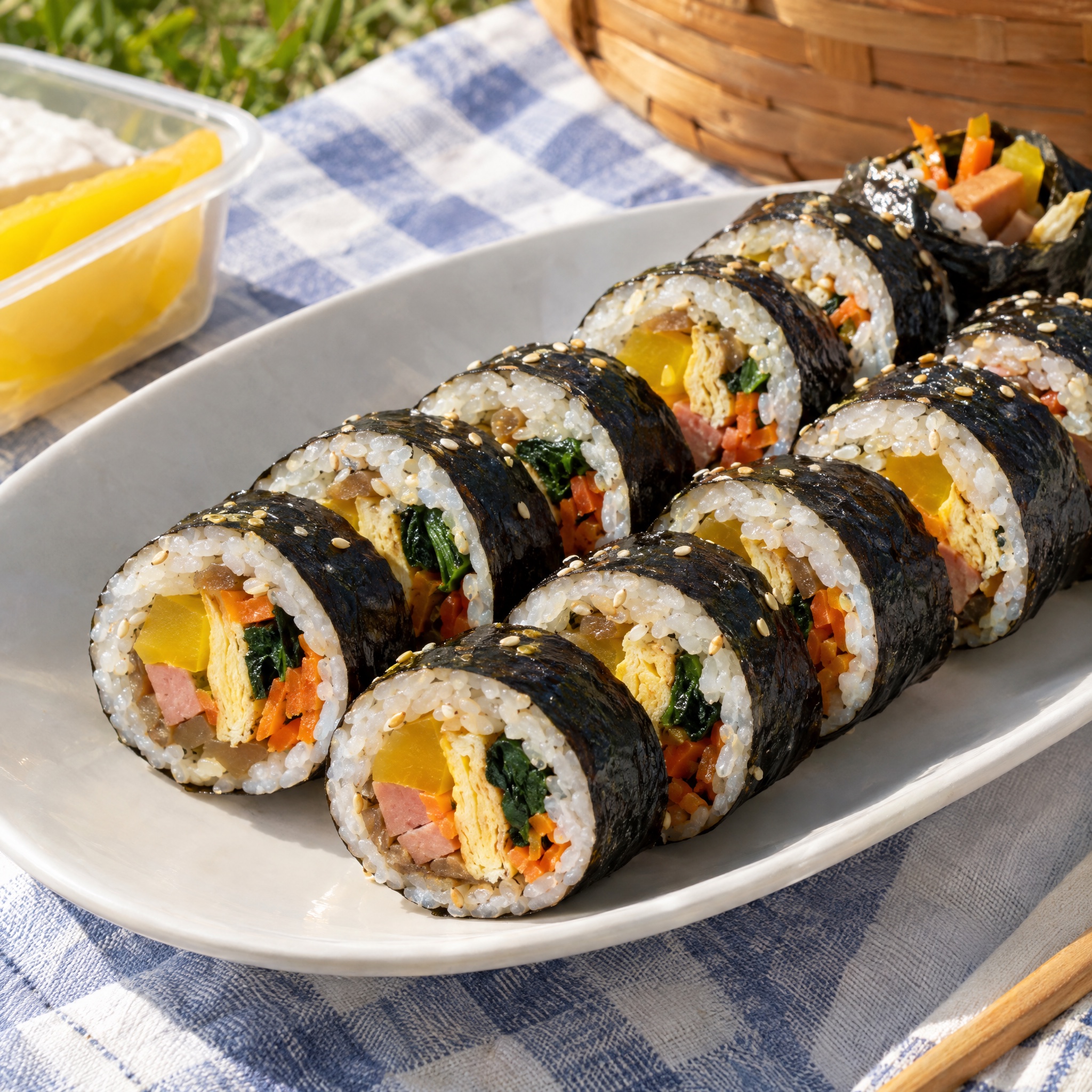
Sesame rice rolled in gim with pickled radish, egg and vegetables — picnic food, not sushi with a new passport.
Recipe by I Want Some Food · Reviewed by the editorial kitchen. Native name preserved: 김밥.
0 people cooked this in the public kitchen yet. Kitchen-tested by I Want Some Food. Not a purchased rating.
- Prep
- 35 min
- Cook
- 20 min
- Rest
- None
- Total
- 55 min
- Difficulty
- Medium
- Spice
- No chilli
- Cost
- Weeknight budget$8–16 USD · indicative, not a store price
About
Gimbap is a Korean rice roll. The rice is seasoned with sesame oil and salt, not sushi vinegar. The filling is usually a rainbow of cooked vegetables, egg, and something yellow and crunchy (danmuji). Roll it tight, slice it clean, pack it for a train. It is not a raw-fish situation unless you decide it is. Season warm rice with sesame oil and salt only; wet rice tears the gim. Squeeze cooked spinach, carrot and burdock until they stop dripping. Roll tightly with a mat, then rest a minute before a sharp wet knife. Done is a spiral that holds when sliced, nori still leathery rather than immediately soggy; danmuji is the yellow crunch people notice when it is missing.
Ingredients
- Rice, uncooked short-grain, then cooked and cooled slightly400 g
- Nori4 sheet
- Toasted sesame oil30 ml
- Salt4.9 ml
- Sesame seed4.9 ml
- Egg, cooked as a thin omelette, sliced3 large
- Spinach, blanched, squeezed, seasoned150 g
- Carrot, julienned and sautéed1 medium
- Cucumber, seeded strips (optional)½
- Korean radish, yellow pickled danmuji strips if you have them80 g
Scaling multiplies the written quantities. Baking still prefers a scale.
Steps
Step 1
Season warm rice with sesame oil, salt and sesame seeds. Fan it so it is sticky, not steaming-wet.
5 minStep 2
Cook a thin salted omelette, roll and slice into strips. Blanch and season spinach. Sauté carrot with a pinch of salt.
15 minStep 3
On a sheet of gim, shiny side down, spread a thin even layer of rice, leaving a 2 cm strip at the far edge.
4 minStep 4
Line fillings across the near third. Roll away from you, tucking tightly. Seal the far edge with a dab of water or a rice grain.
4 minTip: A bamboo mat helps. Clean wet hands help more.
Step 5
Brush the roll with a film of sesame oil. Slice with a sharp wet knife. Pack or eat.
Adapt this recipe
The canonical recipe stays intact. Personal versions are labelled. Serving changes are maths, not AI.
Adaptations · 0 / 15 used. Resets 10 October.
Substitutions
Danmuji → Pickled daikon or a strip of salted cucumber
You lose the neon yellow. Fine.
Spinach → Seasoned soybean sprouts
A common swap.
Tips
- Danmuji (yellow pickled radish) is the crunch people miss when they improvise.
- If the roll bursts, you used too much rice. Less is tighter.
History & culture
Convenience stores, picnic blankets, and packed lunches all run on gimbap. Every family argues about whether the carrot should be there. We include it. Sports days, grave-visit picnics and convenience-store fridges all run on gimbap. Chungmu gimbap is served unfilled with spicy squid on the side; 'mayak' rolls go heavier on sesame and sugar. Families still argue about pickle versus raw cucumber. It is packed-lunch architecture, not a raw-fish flex, unless you choose to make it one.
Rolled rice in seaweed has cousins across East Asia. Gimbap's sesame-oil rice and danmuji filling are the Korean tell. We are not tracing a single inventor. Rolled rice in seaweed has East Asian cousins; sesame oil in the rice and a strip of yellow pickle are what mark this one as Korean. How much is a twentieth-century echo of norimaki is still argued and does not need a single inventor. Postwar picnic culture and, later, convenience-store production made the sliced roll everyday. We are not awarding a founding date we cannot defend.
Traditional — Tuna mayo, cheese, and bulgogi fillings are all normal now. This is a vegetable-and-egg base roll.
Provenance: Editorial adaptation.
Questions about this recipe
Answers taken from this dish's times, amounts, swaps and tips — not a chatbot.
How long does Gimbap take?
55 min all in — 35 min prep, 20 min cook. Cook and rest follow the method. Leftover storage and optional extra waits are not included.
How many does it serve?
The recipe is written for 4 rolls. Scale the ingredient list on the page if you are cooking for a different number.
How hard is it?
Medium.
How spicy is it?
No chilli.
What allergens should I watch?
This recipe is labelled for Eggs, Sesame, Soy, Wheat. Labels are informational — check the packets in your kitchen. This is not medical advice.
Does it fit a diet?
The published recipe is labelled Vegetarian, Dairy-free, Nut-free.
What does it cost to cook?
Weeknight budget — about $8–16 USD, as a grocery budget for this recipe, not a restaurant price.
What equipment do I need?
Saucepan, Frying pan.
How much salt do I put in?
The recipe lists Salt at 1 tsp.
How much toasted sesame oil?
2 tbsp of Toasted sesame oil.
What can I use instead?
Danmuji → Pickled daikon or a strip of salted cucumber. You lose the neon yellow. Fine. Spinach → Seasoned soybean sprouts. A common swap.
Any tips from this recipe?
Danmuji (yellow pickled radish) is the crunch people miss when they improvise. If the roll bursts, you used too much rice. Less is tighter.
Can I use an air fryer?
This method is not written for an air fryer. The core technique on the page still applies.
Similar dishes
Checking your allergy settings…