Vegetable
Olives
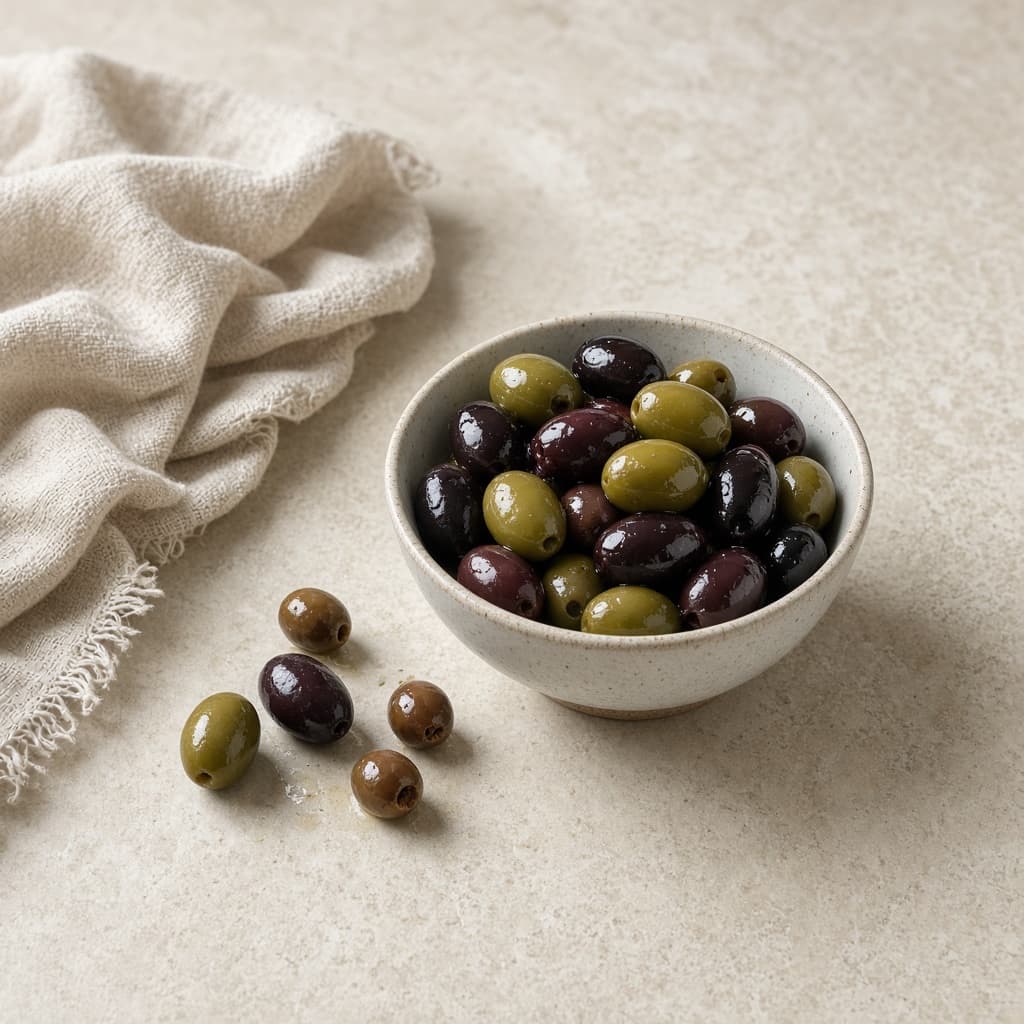
Also called green olives, black olives, kalamata
The fruit of the olive tree, cured until it is edible — raw olives are bitter enough to spit. Green and black are stages and cures, not two species. They are a finish more than a cooking vegetable, unless an empanada or tagine asks you to fold them in.
Origin
Domesticated in the Mediterranean. Table olives are a separate stream from oil olives. Kalamata and oil-cured jars beat the canned pizza slice.
Flavour
Salty, bitter, sometimes fruity or smoky. Oil-cured olives taste meatier. Cheap canned black olives taste of the tin.
How it is made
Fruit is soaked in lye or brine, or packed in salt, to leach oleuropein. Some 'black' olives are just oxidised green fruit.
How to use it
Pit them. Add toward the end of ropa vieja, a tagine or an empanada filling so they stay distinct. Rinse a harsh brine, then dress with their own oil. Do not boil them for half an hour — they go flabby and salt the pot. Capers echo the brine; they do not replace the fruit's fat.
Storage
Fridge, submerged in brine or oil. Exposed olives hollow. A buttery film is usually oil; bin them if they smell rotten.
Recipes using it
Checking your allergy settings…