Vegetable
Pumpkin
Also called pie pumpkin, canned pumpkin, squash purée
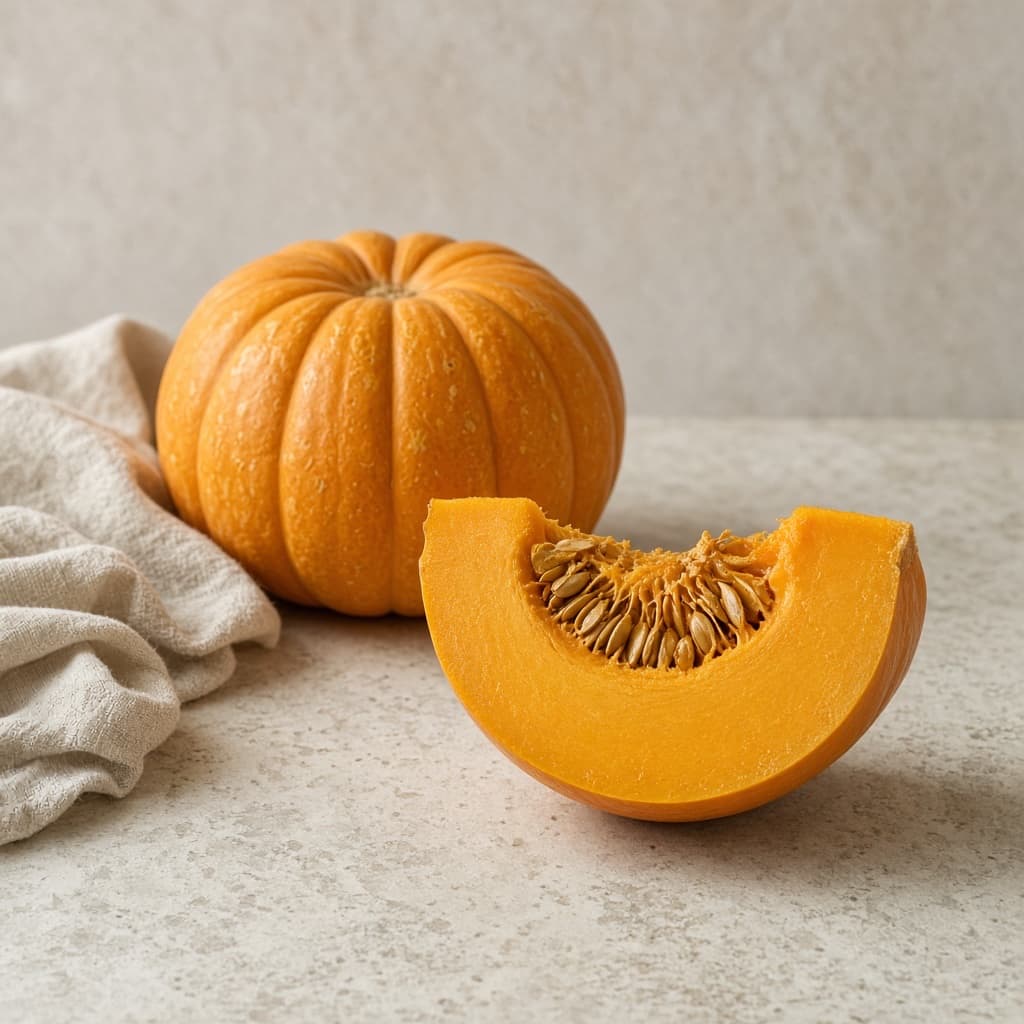
Winter squash flesh, usually a small 'pie pumpkin' or a can of plain purée — the American pie filling, not a jack-o'-lantern, and not pumpkin-pie filling, which is already sugared and spiced. In Australia the word also covers larger grey-skinned squash; for pie you want dry, sweet flesh, not watery carving pumpkin.
Origin
The Americas. Indigenous squash agriculture is the root; the canned pie habit is North American industrial canning. Japanese and Australian kabocha-style squash are excellent fresh stand-ins.
Flavour
Sweet, earthy, mild, with a chestnut note when roasted. Watery pumpkin tastes like orange cardboard. The can is consistent; a wet roast needs draining.
How to use it
Roast chunks until the edges caramelise, then mash and, if needed, cook off moisture in a pan before it goes into custard. Open a can of plain pumpkin purée for pie and do not use the tin labelled pie filling unless you want someone else's spice mix. A splash of cream and eggs set the custard; nutmeg and cinnamon should support, not bury, the squash. Soup wants stock and salt; pie wants sugar and dairy. Seeds roast separately with salt. Do not boil cubes to death and call it purée.
Storage
Whole squash in a cool room for weeks. Cut squash, fridge, a few days. Cans in the pantry; leftover purée, fridge two days or frozen in bricks.
Recipes using it
Checking your allergy settings…