Vegetable
Ube
ube
Also called purple yam, ube halaya, ube extract
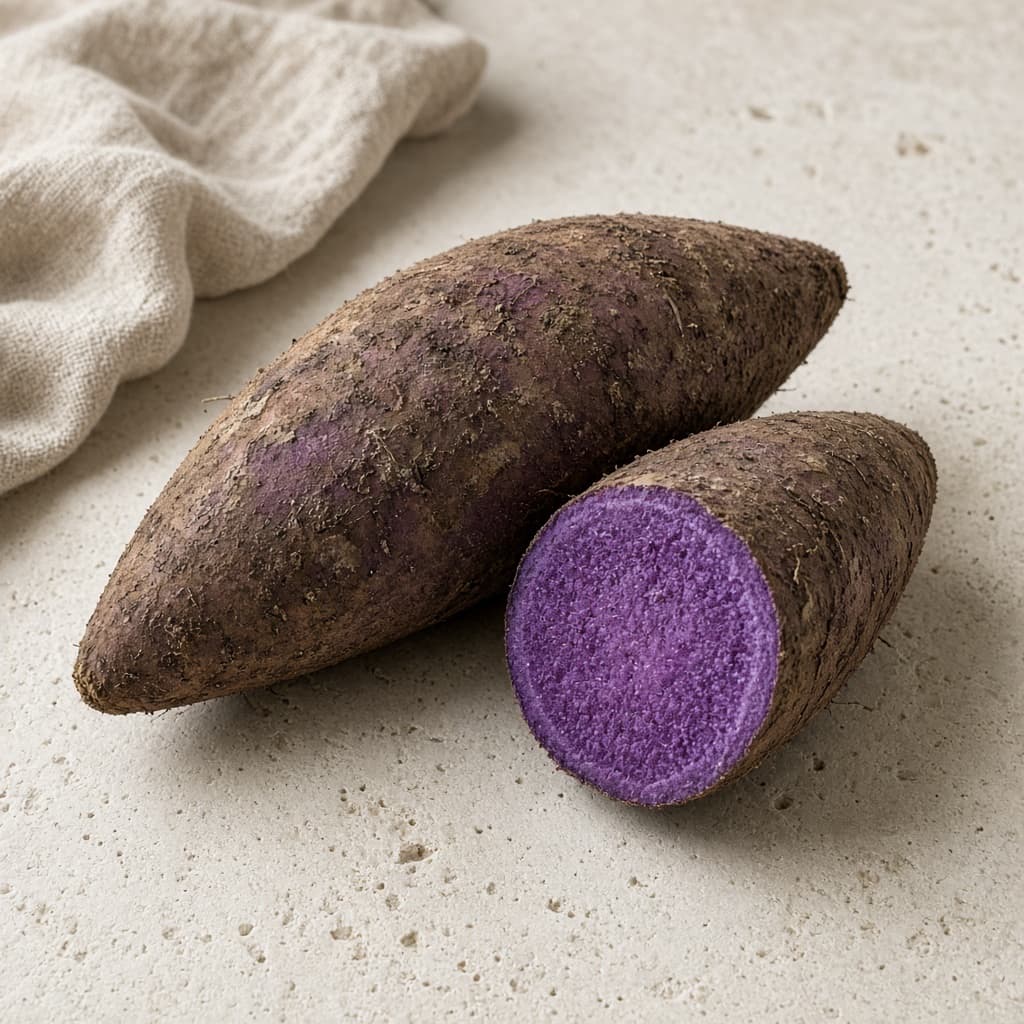
A purple yam (Dioscorea alata) from the Philippines, not taro, not purple sweet potato, and not grape flavouring. Fresh tubers mash into a nutty paste; jars of ube halaya are already cooked with milk and sugar; extracts are mostly colour and perfume. The internet's violet ice cream is often extract plus dye.
Origin
A staple in the Philippines, now a global bakery colour. Related purple yams grow across Southeast Asia, but 'ube' on a menu usually means the Filipino flavour profile — vanilla-pistachio, not starchy taro.
Flavour
Mild, nutty, vanilla-like, only faintly earthy. Extract is louder, sweeter and more candy. If it tastes of grape soda, that is flavouring, not the yam.
How to use it
Steam or boil cubed ube until a knife slides through, then mash while hot. For halaya, cook the mash with condensed milk, butter and a little vanilla until it pulls from the pan; extract can boost colour if the tuber is pale. Do not treat purple sweet potato as a silent swap — it is sweeter and wetter. Frozen grated ube is a good supermarket stand-in. Raw extract in a cold frosting needs time to hydrate or it tastes of alcohol.
Storage
Fresh yams in a cool, dark pantry like potatoes — not the fridge, which damages the starch. Halaya in the fridge, covered, a week, or frozen. Extracts last in a dark cupboard.
Recipes using it
Checking your allergy settings…