Meat
Spam
Also called luncheon meat, canned pork
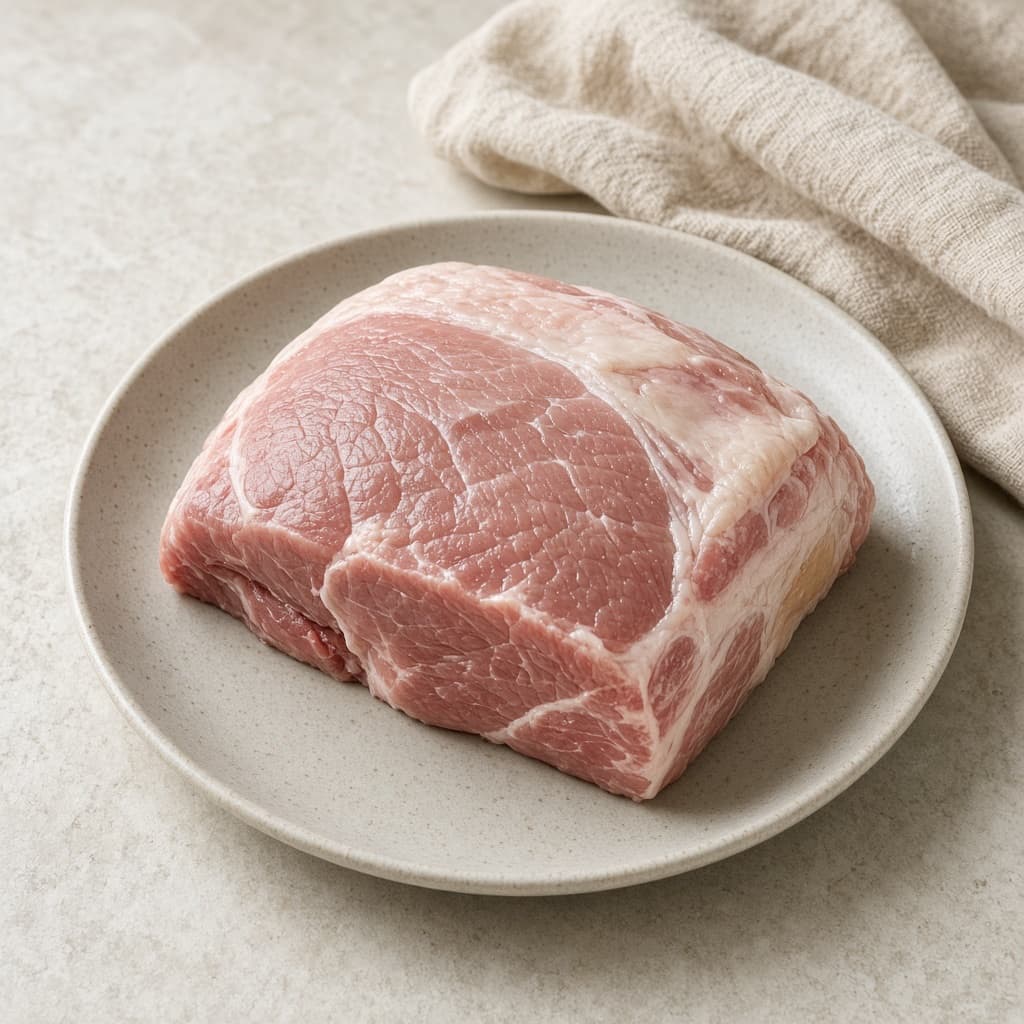
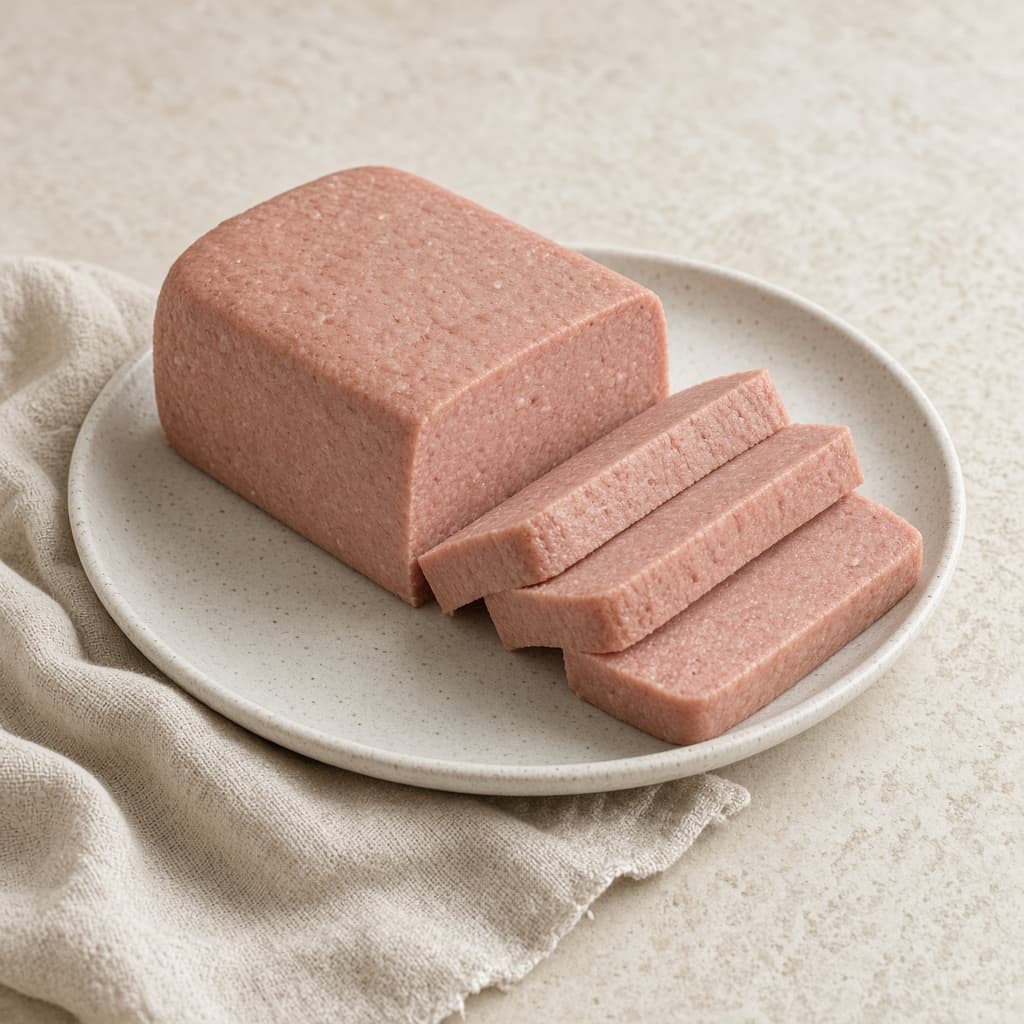
Canned cooked pork shoulder with salt, sugar and potato starch, sliced from a brick. In Korean cooking it is a budae-jjigae ingredient and a fried breakfast slice, not a punchline.
Origin
United States wartime canning, then adopted into Korean postwar cooking where cheap protein met chilli paste and kimchi. Hawaii and several Pacific tables made their own habits with the same tin.
Flavour
Salty, porky, a little sweet, with a ham-like snap when browned. Straight from the tin it tastes processed because it is; the pan fixes that.
How it is made
Pork is ground with salt, sugar, water and starch, packed into the can, then cooked. The gelatinous jelly around the block is from the meat, not a separate aspic to fear.
How to use it
Open the tin, slide the block out, and slice. Brown the slices until the edges catch before they go into budae-jjigae or kimchi fried rice — pale cubes taste only of salt. Add them after the kimchi has fried so they warm through without boiling into sponges. A thin slice also goes into gimbap.
Storage
Pantry until opened, then fridge, wrapped. Use within a few days once the can is open.
Recipes using it
Checking your allergy settings…