


Kimchi-bokkeumbap
김치볶음밥
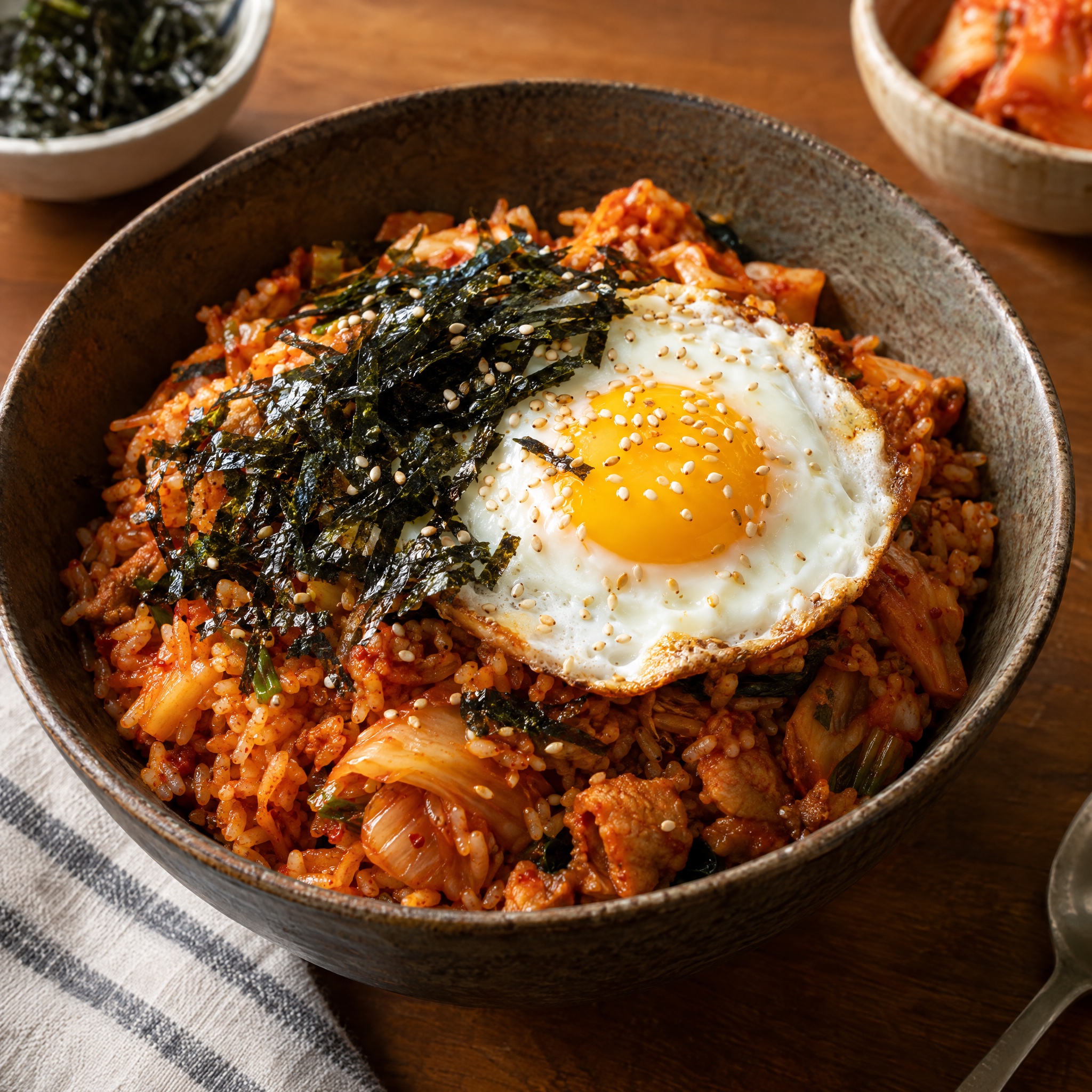
Kimchi fried rice with a fried egg — the 10-minute argument for keeping sour kimchi and leftover rice.
Recipe by I Want Some Food · Reviewed by the editorial kitchen. Native name preserved: 김치볶음밥.
0 people cooked this in the public kitchen yet. Kitchen-tested by I Want Some Food. Not a purchased rating.
- Prep
- 8 min
- Cook
- 10 min
- Rest
- None
- Total
- 18 min
- Difficulty
- Easy
- Spice
- Medium heat
- Cost
- Cheap nightUnder $8 USD · indicative, not a store price
About
Kimchi-bokkeumbap is leftover rice, chopped sour kimchi, and a hot pan. A little gochujang if the kimchi is mild. An egg on top is not decoration; the yolk is the sauce. If you use fresh rice, spread it to dry for a minute or you will make porridge. Use cold, dry leftover rice; fresh steamed rice needs a spread-out minute or it turns to porridge. Fry chopped sour kimchi in oil first, then the rice, breaking clumps with the spatula. A little gochujang only if the kimchi is mild. Done is distinct grains, pink-red, and an egg yolk still wet enough to sauce the plate; spam or chopped ham is a house option, not a requirement.
Ingredients
- Rice, cooked, cold leftover rice400 g
- Kimchi, chopped, plus juice200 g
- Gochujang (optional)4.9 ml
- Soy sauce4.9 ml
- Toasted sesame oil4.9 ml
- Neutral oil15 ml
- Egg2 large
- Sesame seed4.9 ml
- Spam (optional) - Or leftover pork80 g
Scaling multiplies the written quantities. Baking still prefers a scale.
Steps
Step 1
Heat oil. Fry spam if using. Add kimchi and fry until it smells cooked, 2 minutes.
3 minStep 2
Add rice, breaking clumps. Stir in kimchi juice, gochujang and soy. Fry until the rice is stained and a little toasted, 4–5 minutes.
5 minStep 3
Sesame oil, spring onion, sesame seeds. Fry eggs separately and put them on top.
Adapt this recipe
The canonical recipe stays intact. Personal versions are labelled. Serving changes are maths, not AI.
Adaptations · 0 / 15 used. Resets 10 October.
Substitutions
Spam → Nothing
Still a complete bowl.
Tips
- A sheet of gim crumbled over the top is correct.
- Cheese in the pan is a midnight variant, not a crime.
History & culture
Dorm food, hangover food, 'there is nothing in the house' food. Also perfectly respectable as a planned lunch. Dorm hotplates, military leftovers and convenience-store midnight meals all claim it. A cheese slice on top is a 2000s habit some flats never dropped. It is planned lunch as often as emergency food. Parents still consider a well-made pan respectable enough for guests who arrived unannounced.
Fried rice is a leftover technology. Kimchi is the Korean specific. Fried rice is leftover technology with Chinese technique behind it; kimchi is the Korean specific. The everyday pan is twentieth-century home cooking, not an ancestral recipe with a name plaque. Industrial rice cookers simply increased the leftover supply. We date it as weekday reuse, not heritage performance.
Traditional
Provenance: Editorial adaptation.
Questions about this recipe
Answers taken from this dish's times, amounts, swaps and tips — not a chatbot.
How long does Kimchi-bokkeumbap take?
18 min all in — 8 min prep, 10 min cook. Cook and rest follow the method. Leftover storage and optional extra waits are not included.
How many does it serve?
The recipe is written for 2 bowls. Scale the ingredient list on the page if you are cooking for a different number.
How hard is it?
Easy.
How spicy is it?
Medium heat.
What allergens should I watch?
This recipe is labelled for Eggs, Soy, Wheat, Fish, Sesame. Labels are informational — check the packets in your kitchen. This is not medical advice.
Does it fit a diet?
The published recipe is labelled Vegetarian, Dairy-free, Nut-free.
What does it cost to cook?
Cheap night — about Under $8 USD, as a grocery budget for this recipe, not a restaurant price.
What equipment do I need?
Frying pan, Wok.
How much salt do I put in?
This recipe does not list salt as its own ingredient. Saltiness comes from Kimchi — 200 g (chopped, plus juice); Gochujang — 1 tsp (optional); Soy sauce — 1 tsp. Taste at the end rather than adding a number we did not write.
How much kimchi?
200 g (chopped, plus juice) of Kimchi.
How much gochujang?
1 tsp (optional) of Gochujang.
How much soy sauce?
1 tsp of Soy sauce.
How much toasted sesame oil?
1 tsp of Toasted sesame oil.
What can I use instead?
Spam → Nothing. Still a complete bowl.
Any tips from this recipe?
A sheet of gim crumbled over the top is correct. Cheese in the pan is a midnight variant, not a crime.
Can I use an air fryer?
This method is not written for an air fryer. The core technique on the page still applies.
Similar dishes
Checking your allergy settings…