


Haemul pajeon
해물파전
A crispy-edged spring-onion and seafood pancake — the rainy-day order, and the one you tear with your hands.
Recipe by I Want Some Food · Reviewed by the editorial kitchen. Native name preserved: 해물파전.
0 people cooked this in the public kitchen yet. Kitchen-tested by I Want Some Food. Not a purchased rating.
- Prep
- 15 min
- Cook
- 20 min
- Rest
- None
- Total
- 35 min
- Difficulty
- Medium
- Spice
- No chilli
- Cost
- Weeknight budget$8–16 USD · indicative, not a store price
About
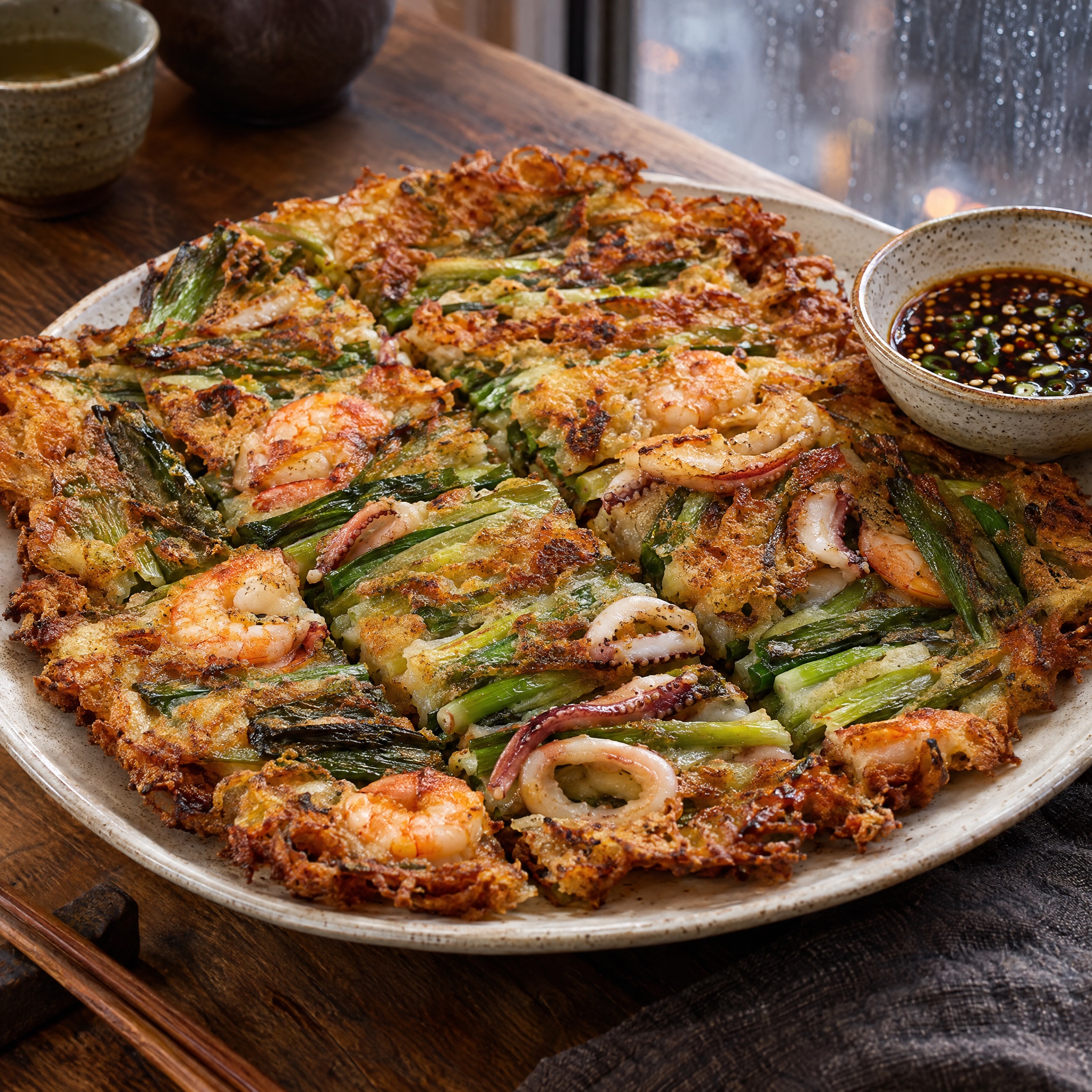
Pajeon is a savoury pancake with more spring onion than batter. Haemul means seafood: squid, prawns, maybe oysters. The edges should shatter; the middle should stay custardy. You dip it in soy-vinegar. If it is pale and steamed, the pan was not hot enough. Pat the seafood dry or the batter goes grey and steamed. Use a thin, cold batter and a well-oiled hot pan; do not flip until the edges lace and release. Spring onion should dominate the volume. Buchim-garu helps the crust; plain flour works if you add a little rice flour or starch; done is a shatter at the rim and a custardy middle; pale and floppy means the pan was timid or the batter too thick.
Ingredients
Ingredients
- Wheat flour120 g
- Egg1 large
- Water, ice-cold180 ml
- Spring onion, cut to pan length8
- Squid, thin rings120 g
- Prawn, chopped100 g
- Neutral oil59 ml
Scaling multiplies the written quantities. Baking still prefers a scale.
Steps
Step 1
Whisk flour, starch, egg and ice water to a thin batter, like thick cream. Do not overmix.
3 minStep 2
Heat a generous film of oil in a wide pan until shimmering. Lay spring onions in one layer, scatter seafood, then pour batter to just fill the gaps — not a cake.
2 minStep 3
Cook medium-high until the underside is deep gold and lacy, 4–5 minutes. Flip carefully (or finish under a grill). Cook the other side 3 minutes.
8 minTip: More oil than you think. This is not a dry crêpe.
Step 4
Cut into squares. Dip: soy, vinegar, a pinch of gochugaru if you want.
Adapt this recipe
The canonical recipe stays intact. Personal versions are labelled. Serving changes are maths, not AI.
Adaptations · 0 / 15 used. Resets 10 October.
Substitutions
Seafood → Just spring onion (pajeon)
Cheaper, still the rainy-day pancake.
Tips
- A second smaller pancake is easier than one giant broken one.
- Oysters instead of squid is a different, excellent jeon.
History & culture
Rainy days and makgeolli are the cliché because they are true. It is also a banchan that became a main. Busan and other ports throw more mixed seafood into the pan; Seoul rooms often go squid-and-prawn. Pojangmacha still pair it with makgeolli, rain or no rain. It is a share plate that outgrew banchan status. Ordering pajeon without seafood is allowed and is a different, cheaper pancake.
Jeon is an old category — battered and pan-fried anything. The seafood-and-scallion restaurant pancake is the famous plate. Jeon — battered, pan-fried anything — is an old category. The wide seafood-scallion shop pancake is twentieth-century spectacle. The rainy-day makgeolli pairing stuck because rooms kept serving it that way. We are not dating a single inventor; we are dating the plate people photograph.
Traditional
Provenance: Editorial adaptation.
Questions about this recipe
Answers taken from this dish's times, amounts, swaps and tips — not a chatbot.
How long does Haemul pajeon take?
35 min all in — 15 min prep, 20 min cook. Cook and rest follow the method. Leftover storage and optional extra waits are not included.
How many does it serve?
The recipe is written for 2 pancakes. Scale the ingredient list on the page if you are cooking for a different number.
How hard is it?
Medium.
How spicy is it?
No chilli.
What allergens should I watch?
This recipe is labelled for Wheat, Shellfish, Eggs, Soy. Labels are informational — check the packets in your kitchen. This is not medical advice.
Does it fit a diet?
The published recipe is labelled Pescatarian, Dairy-free, Nut-free.
What does it cost to cook?
Weeknight budget — about $8–16 USD, as a grocery budget for this recipe, not a restaurant price.
What equipment do I need?
Frying pan.
How much salt do I put in?
This recipe does not list salt as its own ingredient. Saltiness comes from Soy sauce — 2 tbsp. Taste at the end rather than adding a number we did not write.
How much soy sauce?
2 tbsp of Soy sauce.
How much vinegar?
1 tbsp of Vinegar.
What can I use instead?
Seafood → Just spring onion (pajeon). Cheaper, still the rainy-day pancake.
Any tips from this recipe?
A second smaller pancake is easier than one giant broken one. Oysters instead of squid is a different, excellent jeon.
Can I use an air fryer?
This method is not written for an air fryer. The core technique on the page still applies.
Similar dishes
Checking your allergy settings…