


Taiwanese beef noodle soup
牛肉麵
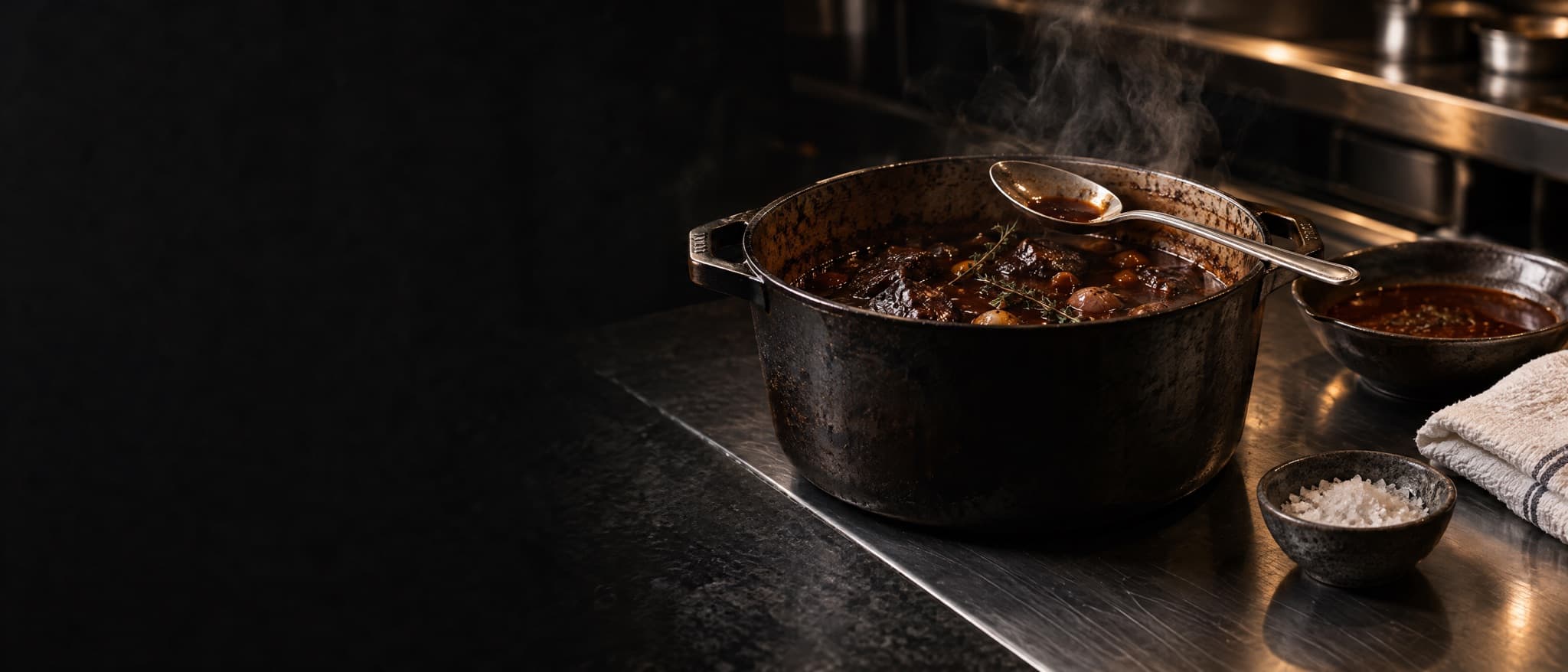
Taiwan's red-braised beef noodle soup: shin simmered with doubanjiang, soy, tomato and spice over chewy wheat noodles and greens.
Recipe by I Want Some Food · Reviewed by the editorial kitchen. Native name preserved: 牛肉麵.
- Prep
- 25 min
- Cook
- 2 hr 30 min
- Rest
- None
- Total
- 2 hr 55 min
- Difficulty
- Medium
- Spice
- Mild
- Cost
- A bit special$16–28 USD · indicative, not a store price

About
Taiwanese beef noodle soup in its red-braised form is beef shin cooked slowly in a broth built on fried ginger, garlic and spring onion, spicy fermented broad bean paste, light and dark soy, Shaoxing wine, rock sugar, tomato and a few whole spices. After two hours the beef is yielding and the broth is dark, slightly sweet and warming rather than hot. It goes over thick wheat noodles with blanched greens and a spoonful of chopped pickled mustard greens, which cut the richness. Make the braise a day ahead if you can; the fat lifts off and the flavour settles. This recipe serves four generously.
What you'll need
21 ingredients. Tap each one once it's out on the bench.
- Ingredients
- To serve
Ingredients
Ingredients
- Beef, shin or boneless short rib, cut into 4 cm chunks1.2 kg
- Doubanjiang, spicy fermented broad bean paste44 ml
- Soy sauce100 ml
- Dark soy sauce30 ml
- Shaoxing wine100 ml
- Sugar, rock sugar if you have it30 ml
- Tomato, quartered2
- Onion, quartered1 medium
- Ginger, sliced thick40 g
- Garlic, smashed6 clove
- Spring onion, 4 in lengths for the pot, 2 sliced to serve6
- Sichuan pepper4.9 ml
- Fresh chilli, dried, whole (optional)2
- Neutral oil44 ml
- Water2 l
To serve
- Wheat noodles, thick, fresh or dried400 g
- Bok choi, halved, blanched300 g
- Coriander1 handful
Scaling multiplies the written quantities. Baking still prefers a scale.
Steps
Step 1
Blanch the beef in boiling water for 3 minutes, drain and rinse. Pat dry.
6 min
Step 2
Heat the oil in a Dutch oven. Fry ginger, garlic and spring onion lengths for 2 minutes, then the doubanjiang for 1 minute until the oil turns red. Add onion and tomato and cook 3 minutes.
6 min
Watch: Doubanjiang scorches. Medium heat, keep it moving.
Step 3
Add the beef, both soys, Shaoxing, sugar, the whole spices and chilli. Stir to coat, then add the water. Bring to a boil and skim.
8 min
Step 4
Cover and simmer very gently until the beef is tender enough to cut with a spoon but still holds its shape, 2 to 2.5 hours. Fish out the spices and ginger. Taste for salt and sugar.
135 min
Tip: Cool overnight, lift off the fat and reheat. The broth is clearer and tastes deeper.
Step 5
Cook the noodles in plenty of boiling water, drain, and divide between deep bowls with the blanched bok choi. Top with beef and a generous ladle of broth. Finish with sliced spring onion, coriander and chopped pickled mustard greens if you have them.
10 min
Nutrition
Per serving · estimate
- Calories
- 1189 kcal
- Protein
- 93.1 g
- Carbs
- 61.7 g
- Fat
- 59.3 g
- Saturated fat
- 19.8 g
- Fibre
- 5.4 g
- Sugar
- 15.1 g
- Sodium
- 3866 mg
Calculated from canonical ingredient data (USDA FoodData Central averages and equivalent published tables). Estimates only.
Allergens
Informational only. Not a medical guarantee. Cross-contamination happens in real kitchens.
- Wheat
- Soy
- Dairy-free
Adapt this recipe
The original recipe stays as it is. Personal versions are labelled. Serving changes are simple maths.
Adaptations · 0 / 15 used. Resets 11 November.
Substitutions
Doubanjiang → 2 tbsp gochujang plus 1 tbsp miso
Sweeter and less funky. Add a pinch of chilli flakes.
Tips
- Add 300 g of beef tendon with the shin if you find it; after two hours it is soft and gelatinous and the shops charge extra for it.
- Thick, chewy noodles stand up to the broth. Thin egg noodles go limp.
- A spoon of chilli oil at the table for those who want it hotter.
History & culture
Taipei holds an annual beef noodle festival, and shops specialising in a single bowl have queues down the street. It is lunch, dinner and the dish Taiwanese students abroad try to recreate first. Shops offer clear broth or red-braised, and regulars argue about tendon, chewiness of noodles and how much pickle. It costs a few dollars and is treated with the seriousness of a national cuisine.
The red-braised version dates to the late 1940s, developed in the military dependants' villages around Kaohsiung by soldiers from Sichuan who had followed the Nationalist government to Taiwan, using local beef and their home chilli-bean paste. Beef had been rare in Taiwanese farming households, so the dish is a product of migration rather than tradition.
Traditional — Shops often add beef tendon and bones to the pot. Pickled mustard greens (suan cai) are the standard topping and worth seeking out in a Chinese grocer.
Provenance: Editorial adaptation.
Questions about this recipe
Answers taken from this dish's times, amounts, swaps and tips.
How long does Taiwanese beef noodle soup take?
2 hr 55 min all in — 25 min prep, 2 hr 30 min cook. Cook and rest follow the method. Leftover storage and optional extra waits are not included.
How many does it serve?
The recipe is written for 4 bowls. Scale the ingredient list on the page if you are cooking for a different number.
How hard is it?
Medium.
How spicy is it?
Mild.
What allergens should I watch?
This recipe is labelled for Wheat, Soy. Labels are informational — check the packets in your kitchen. This is not medical advice.
Does it fit a diet?
The published recipe is labelled Dairy-free.
11 more questionsFewer questions
What does it cost to cook?
A bit special — about $16–28 USD, as a grocery budget for this recipe, not a restaurant price.
What equipment do I need?
Dutch oven, Stockpot, Chef's knife.
How much salt do I put in?
This recipe does not list salt as its own ingredient. Saltiness comes from Soy sauce — 100 ml; Dark soy sauce — 2 tbsp. Taste at the end rather than adding a number we did not write.
How much soy sauce?
100 ml of Soy sauce.
How much dark soy sauce?
2 tbsp of Dark soy sauce.
How much sugar?
2 tbsp (rock sugar if you have it) of Sugar.
What can I use instead?
Doubanjiang → 2 tbsp gochujang plus 1 tbsp miso. Sweeter and less funky. Add a pinch of chilli flakes.
What should I watch for?
Doubanjiang scorches. Medium heat, keep it moving.
Any tips from this recipe?
Add 300 g of beef tendon with the shin if you find it; after two hours it is soft and gelatinous and the shops charge extra for it. Thick, chewy noodles stand up to the broth. Thin egg noodles go limp. A spoon of chilli oil at the table for those who want it hotter.
Can I prepare this ahead?
Cool overnight, lift off the fat and reheat. The broth is clearer and tastes deeper.
Can I use an air fryer?
This method is not written for an air fryer. The core technique on the page still applies.
Similar dishes

Phở bò
Vietnamese beef noodle soup: a long, clear-ish broth, rice noodles, herbs, and a table full of finishing flavours.
A bit of work

Lemongrass beef stew with noodles
Lemongrass beef stew with noodles from Thailand.
A bit of work

Dan dan mian
担担面
Sichuan noodles in a sesame-chilli sauce with a little pork — mala, not a peanut-butter soup.
EasyHot

Lu rou fan
滷肉飯
Taiwan's braised pork belly rice: finely chopped belly simmered in soy, fried shallots and five-spice until sticky, spooned over hot rice.
Easy