

Pantry
Vinegar
Also called cane vinegar, coconut vinegar, white vinegar, rice vinegar
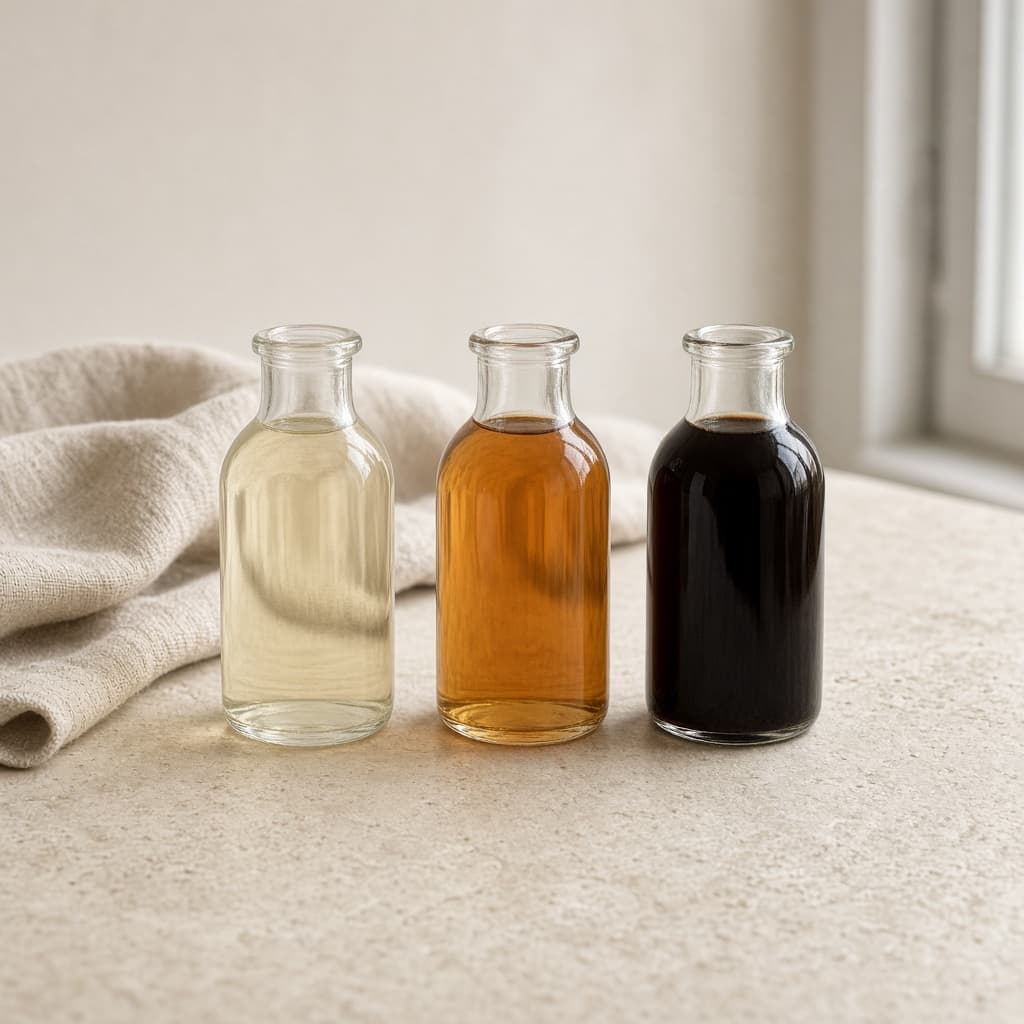
A sour liquid made when alcohol ferments a second time into acetic acid. Cane, coconut, rice, wine, cider and malt vinegars share that sting; the fruit or grain behind them is the flavour.
Origin
Wherever people have made wine, cider, beer or palm toddy, vinegar has followed. Filipino adobo leans on cane or coconut; East Asian pickles often want rice vinegar.
Flavour
Sharp first. Good vinegar then shows apple, coconut, rice sweetness or barrel wood.
How it is made
A yeast-fermented liquid is exposed to acetobacter, which convert ethanol to acetic acid. Traditional methods use a mother or a barrel; industrial tanks speed the same biology.
How to use it
Add vinegar in stages, not as a dump at the end. In adobo it is the sour backbone: do not swap the whole amount for lemon, which is brighter and lacks fermented warmth. Rice vinegar sweetens dipping sauces; malt cuts fried batter. Reduce it in a pan for gloss, but do not boil it to nothing. A pinch of sugar or a knob of butter rounds a sharp dressing.
Storage
A cool cupboard, cap on. Cloudiness or a mother is harmless; throw it out only if it smells of nail polish or grows mould.
Recipes using it
Checking your allergy settings…
Showing 18 of 28. Search all recipes using vinegar