


Hot and sour soup
酸辣汤
Vinegar, white pepper, egg ribbons and wood-ear crunch — a Chinese restaurant soup you can make without the red mystery.
Recipe by I Want Some Food · Reviewed by the editorial kitchen. Native name preserved: 酸辣汤.
0 people cooked this in the public kitchen yet. Kitchen-tested by I Want Some Food. Not a purchased rating.
- Prep
- 15 min
- Cook
- 20 min
- Rest
- None
- Total
- 35 min
- Difficulty
- Easy
- Spice
- Medium heat
- Cost
- Cheap nightUnder $8 USD · indicative, not a store price
About
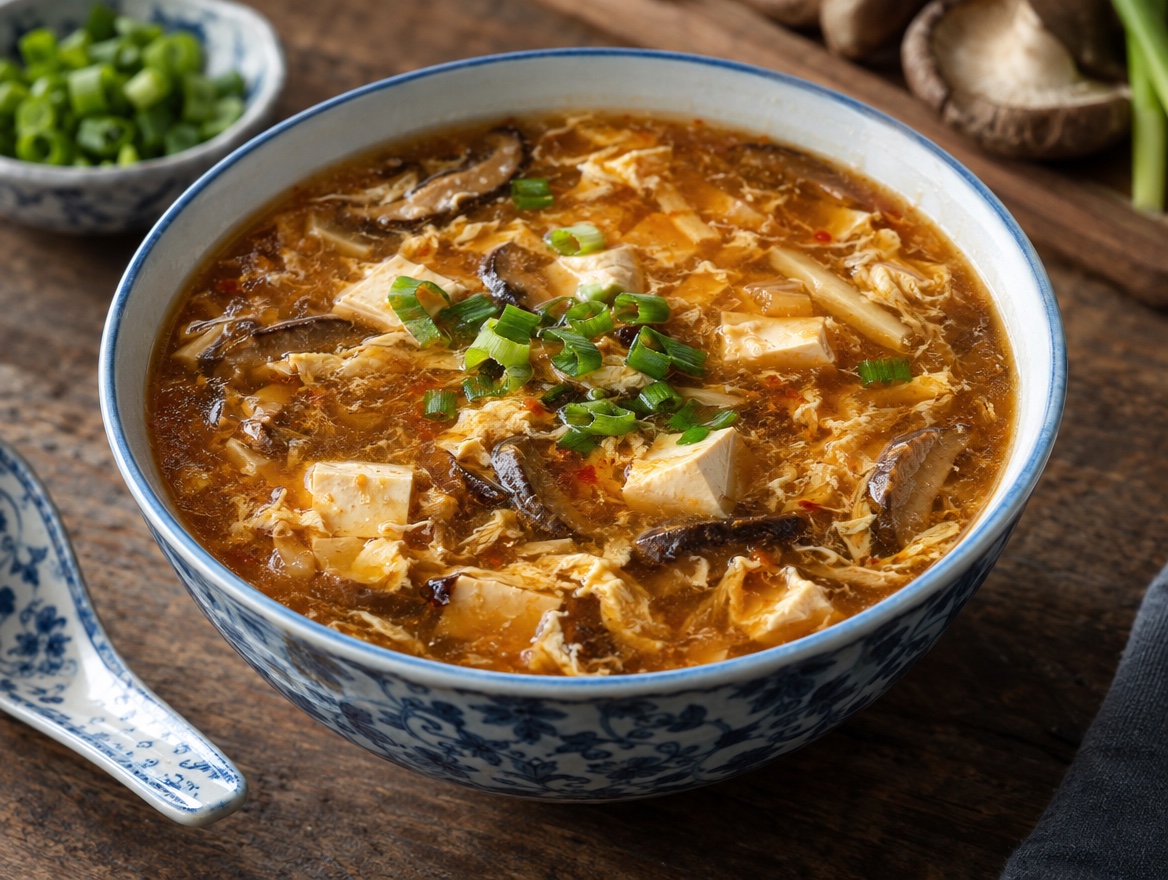
Hot and sour soup should make you sneeze from white pepper and pucker from black vinegar. Tofu, mushroom, bamboo or wood ear, a starch-thickened broth, and egg stirred in at the end. American-Chinese versions are often darker and sweeter; this leans toward a sharper home-restaurant bowl. Build a clear, savoury broth first — chicken, pork bone, or a mushroom pot — then season with Chinkiang vinegar and enough white pepper to tickle the nose. Wood ear, bamboo shoot, tofu, and a little minced pork or mushroom give texture. Thicken lightly with starch slurry so the soup coats a spoon without turning to jelly. Stir a beaten egg in a thin stream at the end for ribbons. Taste again: sour should come first, heat second, salt last. Dark soy is for colour in some restaurant pots; a home bowl can stay paler. If it tastes only of vinegar, the broth was weak. Serve hot. Leftovers thicken in the fridge; loosen with stock, not water. Dried mushrooms, soaked and sliced, add more flavour than fresh button mushrooms ever will. If you only have rice vinegar, use less and add a dash of soy so the sour does not taste like salad dressing. Serve in small bowls; it is loud.
Ingredients
- Water, or light chicken stock1 l
- Tofu, firm, julienned200 g
- Mushrooms, shiitake, sliced80 g
- Egg, beaten1 large
- Vinegar, Chinkiang black vinegar if you can44 ml
- Soy sauce30 ml
- Black pepper, or white pepper, preferably4.9 ml
- Fresh chilli (optional)2½ ml
- Potato or corn starch, mixed with 3 tbsp water30 ml
- Toasted sesame oil4.9 ml
Scaling multiplies the written quantities. Baking still prefers a scale.
Steps
Step 1
Simmer stock with mushrooms 8 minutes. Add tofu, soy, pepper and chilli.
10 minStep 2
Stir in cornflour slurry until the soup lightly cloaks a spoon. Vinegar off the hard boil.
4 minStep 3
Stir the pot in a circle and drizzle the egg to make ribbons. Sesame oil, spring onion. Taste: it should be sharp and peppery.
3 min
Adapt this recipe
The canonical recipe stays intact. Personal versions are labelled. Serving changes are maths, not AI.
Adaptations · 0 / 15 used. Resets 10 October.
Substitutions
Black vinegar → Rice vinegar plus a pinch of sugar
Less malt-deep, still sour.
Tips
- White pepper is the 'hot'. Chilli is extra.
- Bamboo shoots and wood ear are the classic crunch if the grocer has them.
History & culture
Jiangnan and Sichuan both have sour-hot soups. The takeaway classic is a diaspora standard. We are writing a home pot, not a mall food-court ladle. Jiangnan and Sichuan kitchens both cook sour-hot soups with different vinegars and heat sources; neither is obliged to match a North American takeaway ladle. The mall version is often darker, sweeter, and starchier, which is a real diaspora restaurant dialect, not a moral failure. At home you can keep it sharper and less gluey. It is a starter in restaurants and a meal with rice in a hurry. White pepper, not chilli oil, is the classic sneeze, though chilli versions exist. People with vinegar-sensitive stomachs should eat a small bowl. It is not medicinal in any clinical sense; it is just a loud, warming soup. Families who grew up with the North American cup often prefer that darker, sweeter ladle and should be allowed to. Families who grew up with a sharper mainland pot should not be told their soup is 'inauthentic' because it is paler. Cook the bowl you mean, and say which one it is.
Vinegar-pepper soups are regional Chinese cooking. The gloopy red takeaway version is 20th-century North American Chinese restaurant language. Sichuan suan la tang and related Jiangnan pots are cousins, not identical twins. Bamboo, wood ear and tofu entered restaurant versions because they keep and shred well. MSG in shop broths is a flavour tool, not a scandal. Home cooks recreating 'the takeaway one' and home cooks recreating a sharper mainland pot are doing two honest jobs. Name which bowl you want. There is no imperial recipe that this soup must follow. Cornstarch as a default thickener is a restaurant convenience that stuck. Home pots can stay brothier. Neither version needs a dynasty story. The useful history is regional sour-hot cooking plus a separate, well-documented takeaway dialect in North America. Mainland sour-hot pots and the starchier North American takeaway cup are cousins with different vinegar, colour, and sugar. Neither needs a dynasty caption. Bottled sauces, diner expectations, and later mall food courts wrote the gloopy dialect. Cook the sharper bowl or the darker cup on purpose, and say which one you meant.
Modern adaptation
Provenance: Editorial adaptation.
Questions about this recipe
Answers taken from this dish's times, amounts, swaps and tips — not a chatbot.
How long does Hot and sour soup take?
35 min all in — 15 min prep, 20 min cook. Cook and rest follow the method. Leftover storage and optional extra waits are not included.
How many does it serve?
The recipe is written for 4 bowls. Scale the ingredient list on the page if you are cooking for a different number.
How hard is it?
Easy.
How spicy is it?
Medium heat.
What allergens should I watch?
This recipe is labelled for Soy, Eggs, Wheat. Labels are informational — check the packets in your kitchen. This is not medical advice.
Does it fit a diet?
The published recipe is labelled Dairy-free.
What does it cost to cook?
Cheap night — about Under $8 USD, as a grocery budget for this recipe, not a restaurant price.
What equipment do I need?
Saucepan.
How much salt do I put in?
This recipe does not list salt as its own ingredient. Saltiness comes from Soy sauce — 2 tbsp. Taste at the end rather than adding a number we did not write.
How much vinegar?
3 tbsp (Chinkiang black vinegar if you can) of Vinegar.
How much soy sauce?
2 tbsp of Soy sauce.
How much toasted sesame oil?
1 tsp of Toasted sesame oil.
What can I use instead?
Black vinegar → Rice vinegar plus a pinch of sugar. Less malt-deep, still sour.
Any tips from this recipe?
White pepper is the 'hot'. Chilli is extra. Bamboo shoots and wood ear are the classic crunch if the grocer has them.
Can I use an air fryer?
This method is not written for an air fryer. The core technique on the page still applies.
Similar dishes
Checking your allergy settings…