


Cacık
cacık
Yoghurt, cucumber, garlic and mint — the Turkish bowl that is a dip, a soup, or a side depending on how much water you add.
Recipe by I Want Some Food · Reviewed by the editorial kitchen. Native name preserved: cacık.
0 people cooked this in the public kitchen yet. Kitchen-tested by I Want Some Food. Not a purchased rating.
- Prep
- 10 min
- Cook
- —
- Rest
- None
- Total
- 10 min
- Difficulty
- Very easy
- Spice
- No chilli
- Cost
- Cheap nightUnder $8 USD · indicative, not a store price
About
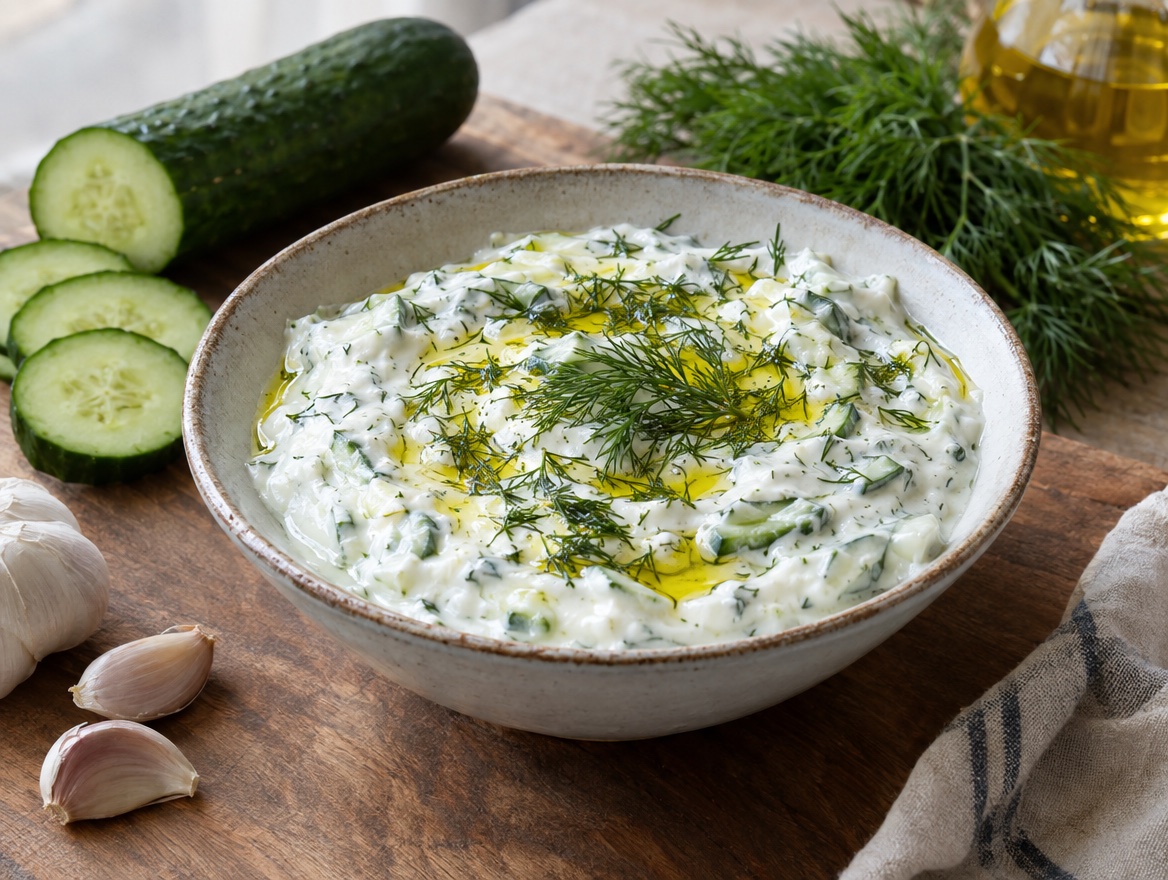
Cacık is yoghurt loosened with a little water or ice, mixed with grated cucumber, garlic, dried mint and olive oil. Thick, it is a meze. Thin and icy, it is a summer soup. Related to tzatziki, not identical — mint and a looser body are the Turkish tell. Grate or finely chop cucumber and salt it briefly if it is watery, then squeeze. Stir into yoghurt with crushed garlic, dried mint, salt, and a thread of olive oil. Loosen with cold water or a cube of ice until it is as thick as a dip or as thin as a cold soup — both are correct, depending on the table. Taste for garlic; it blooms as it sits. Serve soon, or the cucumber weeps and the bowl goes watery. A little dill is a household extra. This is not a place for Greek yoghurt so stiff it stands in peaks unless you plan to thin it. Keep it cold. Bread, grilled meat, or rice all welcome a spoonful.
Ingredients
Scaling multiplies the written quantities. Baking still prefers a scale.
Steps
Step 1
Grate cucumber, salt lightly, squeeze out water.
5 minStep 2
Stir yoghurt with garlic, mint, oil and cucumber. Loosen with cold water if you want a spoonable soup.
3 minStep 3
Taste. More mint or salt. A thread of oil on top. Serve cold.
Adapt this recipe
The canonical recipe stays intact. Personal versions are labelled. Serving changes are maths, not AI.
Adaptations · 0 / 15 used. Resets 10 October.
Substitutions
Dried mint → Dill
More Balkan. Still yoghurt-cucumber.
Tips
- Dried mint is the Turkish note. Fresh only is a different perfume.
- Ice cubes in a thin cacık are a heatwave move.
History & culture
Table sauce for kebabs, börek, and rice. Every house decides the garlic level. Some add dill. Turkish tables put cacık next to kebabs, börek, and pilav as a cooler, not as a party dip for crisps. In summer some households eat it as a light soup with a spoon. Every house sets the garlic and the thickness. Tzatziki is a cousin with a thicker body and often more cucumber crunch and less mint; collapsing both into 'Mediterranean yoghurt sauce' erases the tell. Meze spreads include it as a matter of course. Diaspora kebab shops sometimes thicken it to travel in a plastic pot. At home, full-fat yoghurt tastes more like itself. It is everyday food, not feast food, which is why it matters. Picnic boxes carry it in a jar next to köfte. Some tables want it spoonable; some want it drinkable on the hottest nights. If you grew up with tzatziki, keep the mint and the looser body so this bowl stays Turkish on the tongue. Olive oil on top is a finish, not a swimming pool.
Yoghurt-cucumber sauces sit across Anatolia and the Balkans. Naming cacık keeps it from collapsing into 'Greek dip'. Naming cacık is a way of not letting the bowl get absorbed into a generic Greek-restaurant dip, especially in export markets where tzatziki already owns the fridge. Dried mint as a marker is a Turkish and regional habit more than a recent garnish. Ice in the bowl is a hot-climate practicality. There is no single inventor and no palace origin story that needs repeating. Twentieth-century restaurants portioned it into meze dishes. Home cooks still make it in the same bowl they use for everything else. That continuity is the history. Pastoral yoghurt-making and summer cucumbers explain the bowl better than any restaurant origin myth. National borders drew lines through a sauce family. Using the Turkish name in English is a small act of keeping those lines visible on a page that already has Greek cousins. Ice is climate, not garnish history.
Traditional
Provenance: Editorial adaptation.
Questions about this recipe
Answers taken from this dish's times, amounts, swaps and tips — not a chatbot.
How long does Cacık take?
10 min all in — 10 min prep. Cook and rest follow the method. Leftover storage and optional extra waits are not included.
How many does it serve?
The recipe is written for 4 bowls. Scale the ingredient list on the page if you are cooking for a different number.
How hard is it?
Very easy.
How spicy is it?
No chilli.
What allergens should I watch?
This recipe is labelled for Milk. Labels are informational — check the packets in your kitchen. This is not medical advice.
Does it fit a diet?
The published recipe is labelled Vegetarian, Gluten-free.
What does it cost to cook?
Cheap night — about Under $8 USD, as a grocery budget for this recipe, not a restaurant price.
What equipment do I need?
Mixing bowl.
How much salt do I put in?
The recipe lists Salt at ½ tsp.
What can I use instead?
Dried mint → Dill. More Balkan. Still yoghurt-cucumber.
Any tips from this recipe?
Dried mint is the Turkish note. Fresh only is a different perfume. Ice cubes in a thin cacık are a heatwave move.
Can I use an air fryer?
This method is not written for an air fryer. The core technique on the page still applies.
Similar dishes
Checking your allergy settings…