

Pantry
Water
Also called stock water, cooking water
The liquid most recipes assume. It hydrates flour and pulses, carries starch off pasta, extracts gelatine from bones, and sets the mineral background of tea, coffee and pastry. Hard and soft water do not behave the same.
Origin
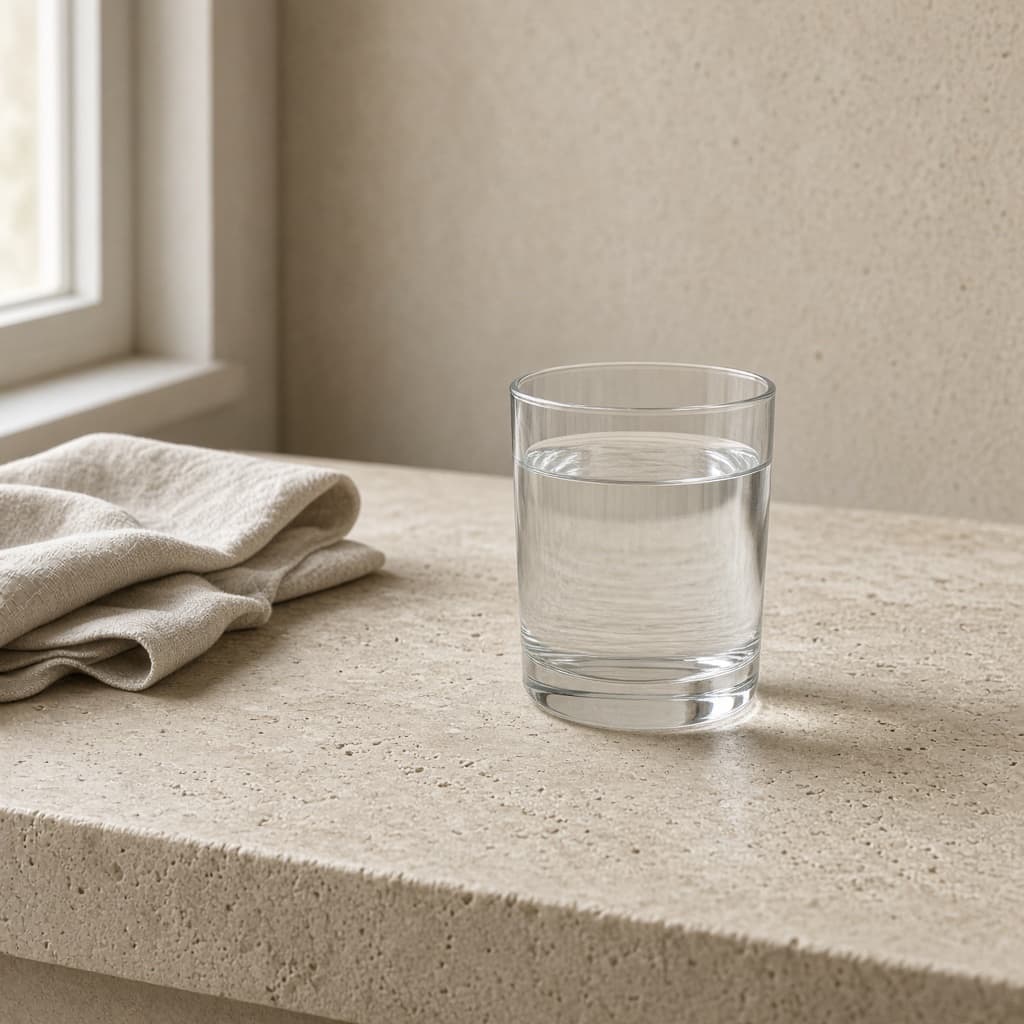
The tap, a filter or a kettle. Culinary water is local geology plus whatever the municipality adds. Most home cooking is built on whatever comes out of the mixer.
Flavour
Good cooking water should taste of almost nothing. Chlorine, a metallic tank or a sulphurous well will show up in a pale broth. Hard water can taste chalky and toughens some vegetables.
How to use it
Treat water as a measured ingredient. Pasta water should be plentiful and seasoned; save a ladle of that starchy liquid to emulsify the pan. For beef bone broth, start cold so proteins and scum rise slowly, then skim. Rice wants a reliable ratio by weight. In pastry, add water in small amounts. Ice-cold water keeps pie fat solid; hand-hot water wakes yeast. If the tap smells of chlorine, use filtered water for a clear soup.
Storage
Use fresh. A covered jug in the fridge is fine for a day if you dislike chlorine. Do not store cooking water in an aluminium pot overnight.
Recipes using it
Checking your allergy settings…
Showing 18 of 272. Search all recipes using water