


Raita
रायता
Seasoned yoghurt with cucumber or onion — the cooling bowl that makes biryani make sense.
Recipe by I Want Some Food · Reviewed by the editorial kitchen. Native name preserved: रायता.
0 people cooked this in the public kitchen yet. Kitchen-tested by I Want Some Food. Not a purchased rating.
- Prep
- 10 min
- Cook
- —
- Rest
- None
- Total
- 10 min
- Difficulty
- Very easy
- Spice
- No chilli
- Cost
- Cheap nightUnder $8 USD · indicative, not a store price
About
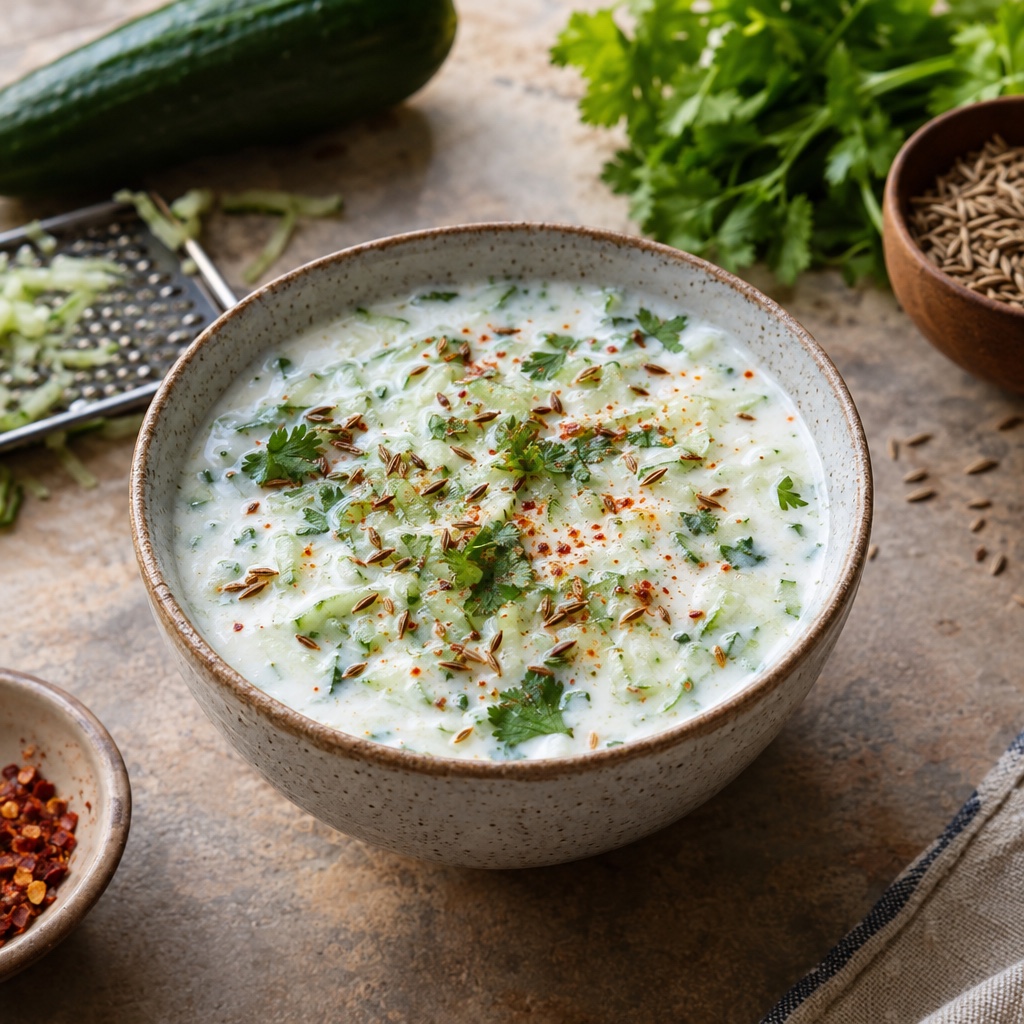
Raita is yoghurt loosened and seasoned with salt, cumin, and something crunchy — cucumber, onion, tomato, or just a tadka of cumin. It is not tzatziki and it is not a dip for crisps. It is how you eat a heavy pot. This is a cucumber-cumin version you can make while the biryani rests. Loosen full-fat yoghurt with a spoon of water or milk until it is spoonable. Grate or finely chop cucumber, salt it if it is watery, and squeeze. Stir in roasted cumin, salt, and maybe a pinch of chilli powder or black salt. Taste: it should be cool, savoury, and a little smoky from the cumin, not sweet. Onion or tomato versions exist; this cucumber-cumin bowl is the one to make while a biryani rests. Keep it cold. If you only have Greek yoghurt, thin it. A tadka of cumin in ghee on top is a house flourish. It is not tzatziki, not a crisp dip, and not a marinade. Serve in a small bowl with a spoon. It dies if it sits in a warm room for hours.
Ingredients
Scaling multiplies the written quantities. Baking still prefers a scale.
Steps
Step 1
Whisk yoghurt with salt and most of the cumin until smooth.
3 minStep 2
Fold in cucumber and mint. Taste. A pinch of chilli if you want a contradiction.
3 minStep 3
Chill 10 minutes. Dust with remaining cumin. Serve with rice or bread.
Adapt this recipe
The canonical recipe stays intact. Personal versions are labelled. Serving changes are maths, not AI.
Adaptations · 0 / 15 used. Resets 10 October.
Substitutions
Cucumber → Fine onion and tomato
Onion raita. Sharper.
Tips
- Squeeze cucumber if you want it thick.
- Boondi raita is the party version if you have the fried droplets.
History & culture
North Indian tables especially. South Indian pachadi is a related idea with different tempering. Every house has a ratio. Every house has a ratio of yoghurt to vegetable. Restaurant thalis include it as a matter of course, often too sweet. At home it is a five-minute bowl that makes a spicy pot edible for children and for people who want relief. Mint raita, boondi raita, and onion raita are siblings. Eat it with the meal, not as a starter with crackers. Diaspora fridge doors often hold a tub next to last night's curry. That is the culture: accompaniment, not a branded snack. A too-sweet restaurant mint sauce can still be useful for children; just do not let it become the only yoghurt you know. Keep a savoury cucumber bowl for the biryani. That split is ordinary household diplomacy. Boondi and onion versions are siblings, not rivals. Accompaniment, not a branded snack. South Indian pachadi remains a related, differently tempered idea.
Yoghurt as a cooler next to spice is older than the restaurant thali. The named bowl is everyday. The named bowl is everyday, not a Mughal secret. Cumin and cucumber are a common modern default because they are easy, not because a court recorded them as law. British-Indian restaurants exported a sweet mint-yoghurt that many diners think is the only raita; it is one dialect. Home versions stayed savoury. There is no archaeological need to overclaim. Dairy, salt, and a raw vegetable against a hot pot is the historical idea. The rest is household taste. Keep the name raita so it does not collapse into a generic 'Indian dip' on a party platter. Mughal-court myths get pasted onto every yoghurt bowl in English copy. Resist them. Dahi on a hot plate is domestic history, repeated daily, which is a better pedigree than a prince.
Traditional
Provenance: Editorial adaptation.
Questions about this recipe
Answers taken from this dish's times, amounts, swaps and tips — not a chatbot.
How long does Raita take?
10 min all in — 10 min prep. Cook and rest follow the method. Leftover storage and optional extra waits are not included.
How many does it serve?
The recipe is written for 4 bowls. Scale the ingredient list on the page if you are cooking for a different number.
How hard is it?
Very easy.
How spicy is it?
No chilli.
What allergens should I watch?
This recipe is labelled for Milk. Labels are informational — check the packets in your kitchen. This is not medical advice.
Does it fit a diet?
The published recipe is labelled Vegetarian, Gluten-free.
What does it cost to cook?
Cheap night — about Under $8 USD, as a grocery budget for this recipe, not a restaurant price.
What equipment do I need?
Mixing bowl.
How much salt do I put in?
The recipe lists Salt at ½ tsp.
What can I use instead?
Cucumber → Fine onion and tomato. Onion raita. Sharper.
Any tips from this recipe?
Squeeze cucumber if you want it thick. Boondi raita is the party version if you have the fried droplets.
Can I use an air fryer?
This method is not written for an air fryer. The core technique on the page still applies.
Similar dishes
Checking your allergy settings…