


Cacio e pepe
Cacio e pepe
Pecorino, pepper and pasta water — a Roman emulsion that looks like nothing and fails if you rush it.
Recipe by I Want Some Food · Reviewed by the editorial kitchen. Native name preserved: Cacio e pepe.
0 people cooked this in the public kitchen yet. Kitchen-tested by I Want Some Food. Not a purchased rating.
- Prep
- 5 min
- Cook
- 15 min
- Rest
- None
- Total
- 20 min
- Difficulty
- Medium
- Spice
- Mild
- Cost
- Cheap nightUnder $8 USD · indicative, not a store price
About
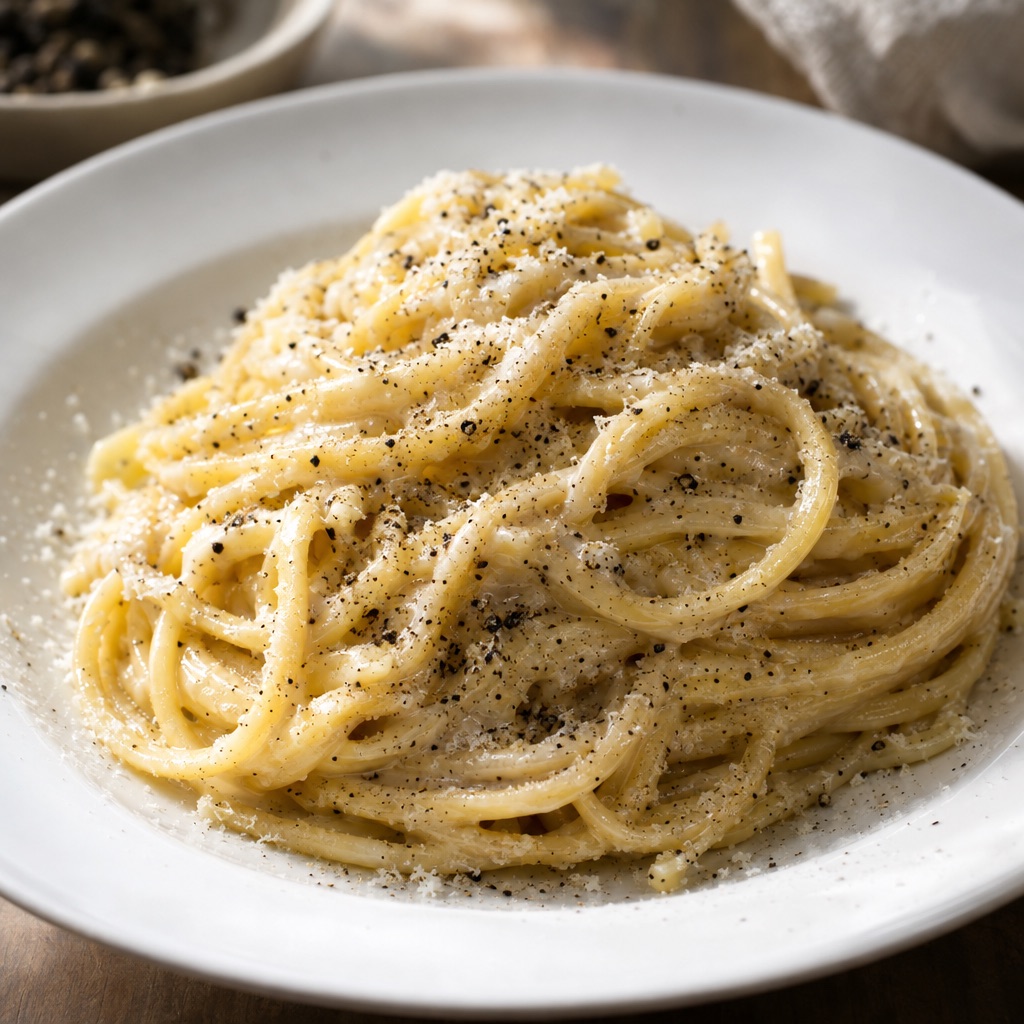
Cacio e pepe is three ingredients and a technique. You toast pepper, finish pasta in a little water, and toss in finely grated pecorino off the heat so it melts into a sauce instead of clumping into concrete. Cream is not invited. If it seizes, you added cheese to a pan that was still screaming. Grate the pecorino as fine as dust or it will not melt in time. A box grater's large holes make gravel, and gravel becomes grit. Save more pasta water than you think; the sauce is an emulsion you adjust drop by drop. Work in a warm bowl, not a screaming skillet. If it turns into clumps, add a spoon of hot water and stir like you mean it — starting over is allowed. Toast the pepper until fragrant, then crack it so you get perfume, not charcoal. Undercook the pasta by a minute; it finishes in the water-and-cheese slurry.
Ingredients
- Pasta200 g
- Pecorino Romano, very finely grated60 g
- Black pepper7.4 ml
- Salt, for the water, go light — the cheese is salty4.9 ml
Scaling multiplies the written quantities. Baking still prefers a scale.
Steps
Step 1
Boil pasta in well-salted water until just shy of al dente. Scoop out a mug of cloudy water.
10 minStep 2
Toast cracked pepper in a wide pan 30 seconds. Add a ladle of pasta water.
1 minStep 3
Add pasta. Toss. Take off the heat. Rain in pecorino a handful at a time, tossing and adding water until it turns glossy, not grainy.
2 minTip: If it clumps, more hot water and motion, not more heat.
Adapt this recipe
The canonical recipe stays intact. Personal versions are labelled. Serving changes are maths, not AI.
Adaptations · 0 / 15 used. Resets 10 October.
Substitutions
Pecorino → Mostly pecorino plus a little parmigiano
Milder. Still a Roman plate if pecorino leads.
Tips
- Grate the cheese like dust. Chunks will not melt.
- A little leftover cooking water in a jug is cheaper than panic.
History & culture
Lazio trattorie and the pasta people order to test a kitchen. Tonnarelli or spaghetti. Pecorino Romano should taste like sheep. Romans still use this plate as a competence test because there is nowhere to hide. Tourists order it, then add oil, then wonder why the city is unimpressed. At home it is also the pasta you can make when the shops are shut, provided you bought the right cheese. Substituting a mild cow's-milk grating cheese changes the dish into something paler and less stubborn. That something can be tasty. It is not this.
Shepherd food that restaurants made precious. The modern creamy-looking plate is still just cheese, pepper and starch. Shepherds needed calories that travelled: hard sheep's cheese, dried pasta or other starch, pepper as a bought spice. Restaurants later plated it as minimalism. The internet turned it into a fail video. Neither of those chapters invented the logic. What is new is the anxiety — a century ago nobody filmed the clump. They ate it or they loosened it. That remains the adult method.
Traditional
Provenance: Editorial adaptation.
Questions about this recipe
Answers taken from this dish's times, amounts, swaps and tips — not a chatbot.
How long does Cacio e pepe take?
20 min all in — 5 min prep, 15 min cook. Cook and rest follow the method. Leftover storage and optional extra waits are not included.
How many does it serve?
The recipe is written for 2 plates. Scale the ingredient list on the page if you are cooking for a different number.
How hard is it?
Medium.
How spicy is it?
Mild.
What allergens should I watch?
This recipe is labelled for Wheat, Milk. Labels are informational — check the packets in your kitchen. This is not medical advice.
Does it fit a diet?
The published recipe is labelled Vegetarian.
What does it cost to cook?
Cheap night — about Under $8 USD, as a grocery budget for this recipe, not a restaurant price.
What equipment do I need?
Saucepan, Frying pan.
How much salt do I put in?
The recipe lists Salt at 1 tsp (for the water, go light — the cheese is salty).
What can I use instead?
Pecorino → Mostly pecorino plus a little parmigiano. Milder. Still a Roman plate if pecorino leads.
Any tips from this recipe?
Grate the cheese like dust. Chunks will not melt. A little leftover cooking water in a jug is cheaper than panic.
Can I prepare this ahead?
A little leftover cooking water in a jug is cheaper than panic.
Can I use an air fryer?
This method is not written for an air fryer. The core technique on the page still applies.
Similar dishes
Checking your allergy settings…