


Gigantes plaki
γίγαντες πλακί
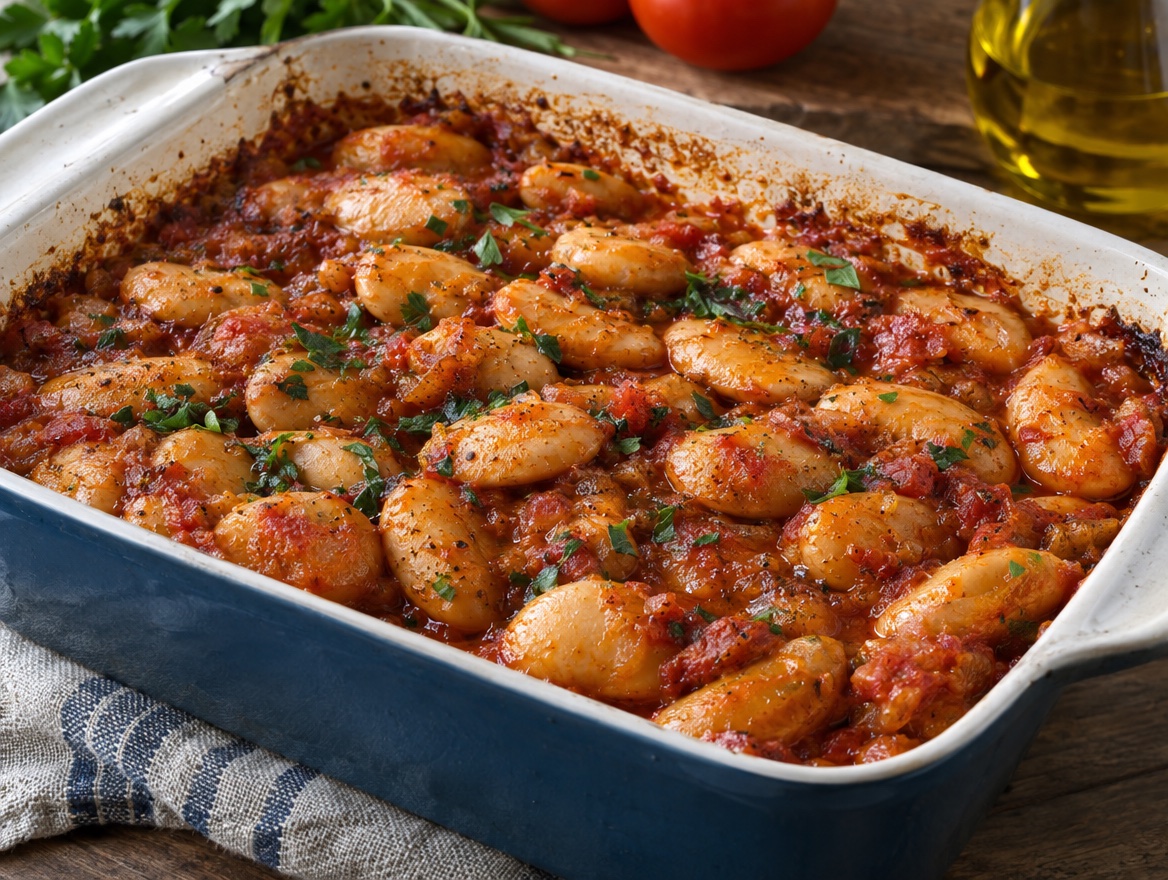
Giant beans baked in tomato, dill and olive oil until they go creamy — a Greek taverna tray.
Recipe by I Want Some Food · Reviewed by the editorial kitchen. Native name preserved: γίγαντες πλακί.
0 people cooked this in the public kitchen yet. Kitchen-tested by I Want Some Food. Not a purchased rating.
- Prep
- 15 min
- Cook
- 50 min
- Rest
- None
- Total
- 1 hr 5 min
- Difficulty
- Easy
- Spice
- No chilli
- Cost
- Cheap nightUnder $8 USD · indicative, not a store price
About
Gigantes are large white beans baked (plaki) in a thick tomato sauce with onion, garlic, plenty of oil and herbs until the skins go silky and the centres go creamy. Tinned butter beans work if you cannot find dried giants. This is a tray, not a boiled pot. Bread is how you finish the sauce. Soak dried giant beans overnight, then simmer until they are tender before they ever see the oven; undercooked beans will never go creamy in tomato. Tinned butter beans are a weekday cheat: drain, rinse, and give them a shorter bake. The sauce wants onion, garlic, a lot of olive oil, tomato, and herbs such as parsley, dill, or oregano. Bake uncovered enough for the top to catch and the sauce to thicken into something bread can scrape. The beans should slump, not split into mush. Cool until they are warm or room temperature; boiling-hot plaki tastes less of itself. Lemon at the table is a house extra. Salt carefully, because the sauce reduces. Parsley or dill at the end keeps the tray tasting green rather than only of cooked tomato. If the beans wrinkle without going creamy, they needed more time in water before the oven, not more tomato. Serve with bread that can take oil.
Ingredients
Scaling multiplies the written quantities. Baking still prefers a scale.
Steps
Step 1
Soften onion in half the oil. Add garlic, tomato, oregano and salt. Simmer 10 minutes.
12 minStep 2
Fold in beans and most of the herbs. Tip into a baking dish, pour over remaining oil and a splash of water.
5 minStep 3
Bake at 190°C 35–40 minutes until the top looks bronzed and the sauce is thick. Rest 10 minutes.
40 min190°C
Adapt this recipe
The canonical recipe stays intact. Personal versions are labelled. Serving changes are maths, not AI.
Adaptations · 0 / 15 used. Resets 10 October.
Substitutions
Giant beans → Butter beans or cannellini
Smaller, still a plaki.
Tips
- They should be oily. This is not a diet bean.
- Feta on the side is allowed.
History & culture
Meze and Lenten food. Served room temperature or warm. A vegetable main that does not apologise. Taverna trays sit at room temperature beside feta, bread, and a glass of wine. Home cooks make a pan on Sunday and eat it for days. It is also picnic food. Dried gigantes have a prestige that tinned beans lack, but the tinned version still feeds people honestly. Pair with horta or a raw onion salad if you want greens. It is not baked beans in the British breakfast sense; the oil and herbs are the point. Vegetarians get the feast version without a substitute lecture. On fasting days it carries the table; on ordinary days it sits among other mezedes and nobody makes a speech. Pack it for a beach lunch. A wedge of feta on the side is common and not a requirement. Children often eat the sauce with bread and leave the beans, which is still a successful pan.
Baked beans in tomato oil are an Eastern Mediterranean habit. The named taverna tray is modern Greek restaurant language on an older pot. Large white beans in tomato and oil belong to a wider eastern Mediterranean habit of oven-baked pulses, from Turkish barbunya to various Balkan trays. New World beans replaced or joined older legumes after the Columbian exchange. The named taverna 'gigantes plaki' is modern Greek restaurant language laid over older home pots. Olive oil as a cooking fat, not a drizzle, is the pre-tourist logic. Canned tomatoes and canned beans are twentieth-century pantry tools that made the dish year-round. There is no Mycenaean recipe for this tray. What is old is baking pulses in a saucy oven; what is named is a taverna classic. Serve it as such. Venetian and Ottoman pantry overlaps in the islands make bean-and-tomato trays a shared sea habit rather than a purely Hellenic invention. Twentieth-century tavernas named and portioned what homes already baked. Canned beans are a later mercy for people without a soaking habit.
Traditional
Provenance: Editorial adaptation.
Questions about this recipe
Answers taken from this dish's times, amounts, swaps and tips — not a chatbot.
How long does Gigantes plaki take?
1 hr 5 min all in — 15 min prep, 50 min cook. Cook and rest follow the method. Leftover storage and optional extra waits are not included.
How many does it serve?
The recipe is written for 4 people. Scale the ingredient list on the page if you are cooking for a different number.
How hard is it?
Easy.
How spicy is it?
No chilli.
Does it fit a diet?
The published recipe is labelled Vegan, Gluten-free.
What does it cost to cook?
Cheap night — about Under $8 USD, as a grocery budget for this recipe, not a restaurant price.
What equipment do I need?
Oven, Saucepan.
How much salt do I put in?
The recipe lists Salt at 1 tsp.
What can I use instead?
Giant beans → Butter beans or cannellini. Smaller, still a plaki.
Any tips from this recipe?
They should be oily. This is not a diet bean. Feta on the side is allowed.
Can I use an air fryer?
This method is not written for an air fryer. The core technique on the page still applies.
Similar dishes
Checking your allergy settings…