

 Taste Greece
Ελλάδα
Olive oil as a cooking fat, not a drizzle. Island fish, mainland pies, lemon and oregano — Eastern Mediterranean, not a generic 'Mediterranean platter'.
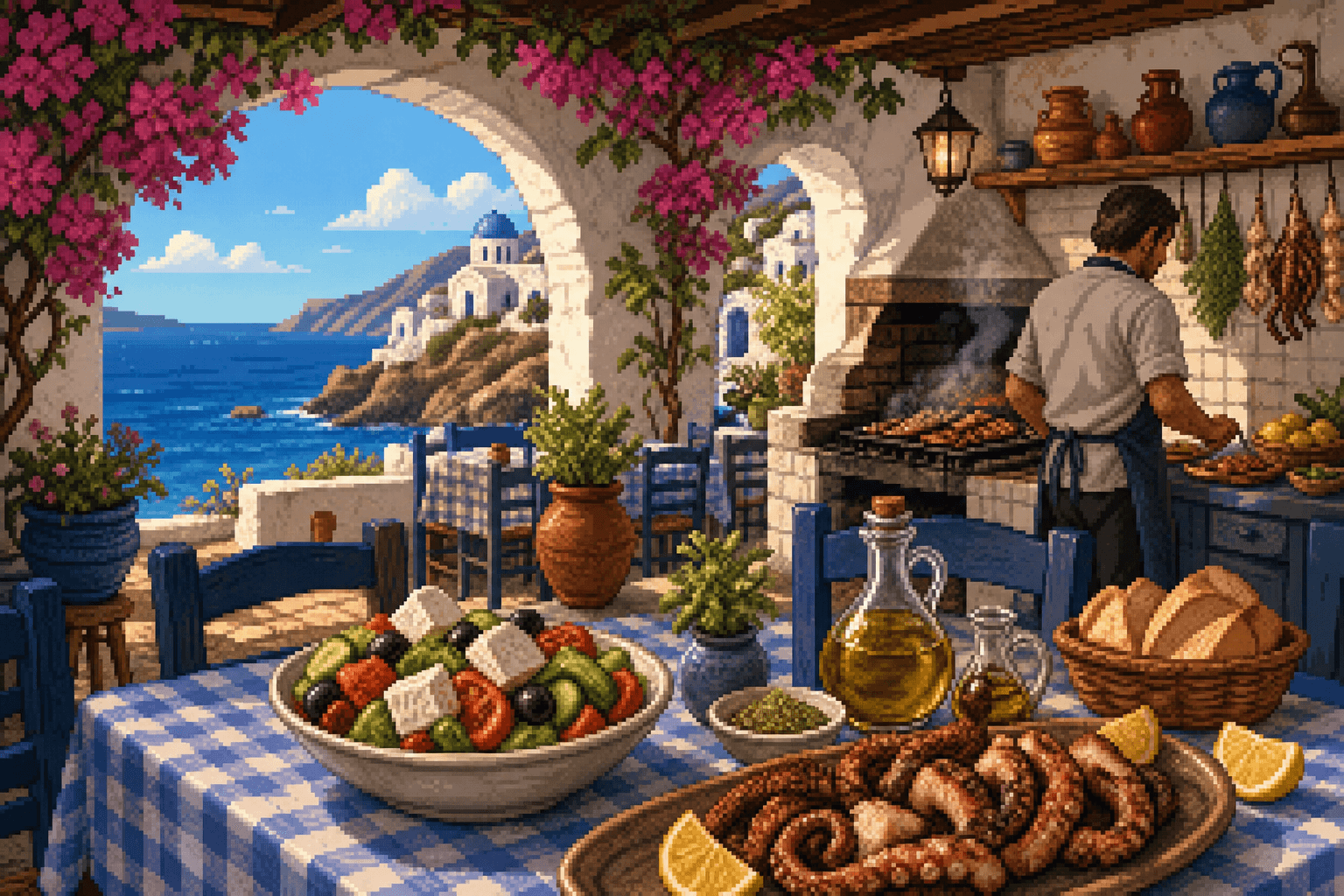
Village greens, sheep's yoghurt, slow lamb and a salad that should never be an afterthought. Moussaka is layered eggplant and spiced meat under a béchamel that Ottoman and Italian neighbours would recognise in spirit; the potato layer is a later habit. Gigantes plaki are baked giant beans in tomato, a taverna staple that is really a home oven dish. Souvlaki is grilled meat on a skewer, oregano and lemon, eaten standing up. Gyros is stacked meat carved onto pitta with tomato, onion and tzatziki — a twentieth-century urban craft more than a village relic. Foraged horta, regional pies and the logic of oil, lemon and herbs still matter more than any tourist grill.
17 recipes · 1 cuisine
Essential dishes
Checking your allergy settings…
More dishes
Further Greece listings, including shorter editorial recipes and imported methods.
Checking your allergy settings…
Regional cuisines
Think you know Greece food?
17 quiz dishes. Optional — Passport stamps still come from cooking.
Take the Greece food quizFood history
Ancient, Byzantine and Ottoman layers remain visible in pies, syrups, yoghurt and slow meat. Tomato is relatively recent. The village salad of tomato, cucumber, onion, feta and oregano is a twentieth-century taverna standard, not an ancient recipe — still worth making well, without lettuce filler. Exchange with Anatolia and the Levant is part of the kitchen, not a problem for it. Naming the island or the mountain is more honest than a single national flavour.