

Knafeh
كنافة
Shredded pastry, melting cheese, sugar syrup — Levantine dessert that the pistachio-chocolate internet keeps remixing.
Recipe by I Want Some Food · Reviewed by the editorial kitchen. Native name preserved: كنافة.
0 people cooked this in the public kitchen yet. Kitchen-tested by I Want Some Food. Not a purchased rating.
- Prep
- 25 min
- Cook
- 35 min
- Rest
- None
- Total
- 1 hr
- Difficulty
- Medium
- Spice
- No chilli
- Cost
- Weeknight budget$8–16 USD · indicative, not a store price
About
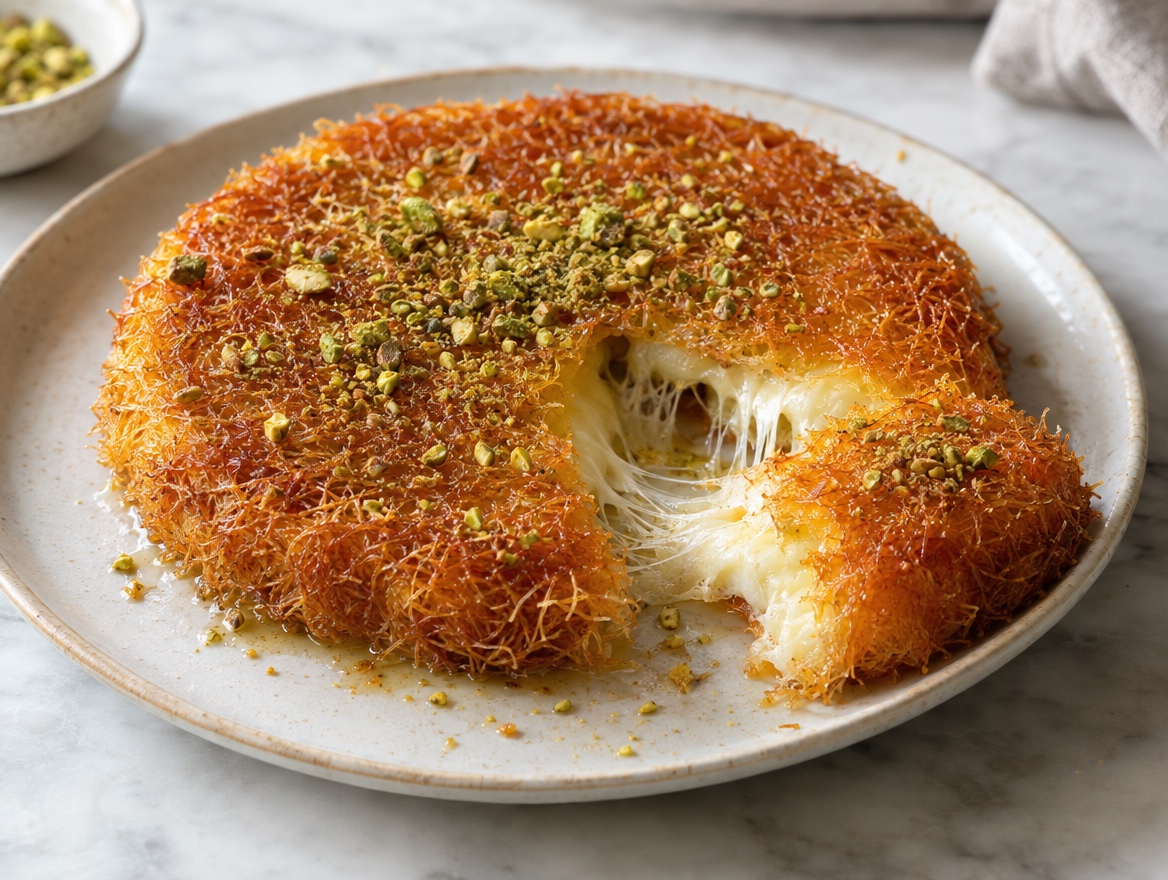
Knafeh (kunafeh) is a tray of kataifi or fine semolina pastry over mild melting cheese (or clotted cream), baked until the top is gold, then drowned in orange-blossom or rose syrup. The cheese should stretch. This is a home tray, not a Nablus specialist's secret. The 2025–26 pistachio-chocolate bar is a cousin we write next door. The cheese should stretch. Serve hot. If the pastry is dry, you were shy with butter. If the syrup makes it soggy before it hits the table, you poured too soon or too much. Pistachio on top is a common finish. Leftovers reheat in a pan and lose some crunch. Eat them anyway. Soak briny cheese in several changes of water until it is mild enough to melt without turning the tray into a salt lick. Warm the syrup with orange blossom and let it cool so it soaks without dissolving the pastry into glue. Invert only if that is how your bakery taught you; a golden top in the tin is equally correct. Cut with a wet knife while the cheese is still stretchy. A handful of ground pistachio is a finish, not a requirement. Leftover squares reheat in a dry pan and lose some shatter, which is still breakfast in some houses.
Ingredients
- Phyllo, kataifi / shredded pastry, or crushed vermicelli250 g
- Butter, or ghee, melted120 g
- Melting cheese, nabulsi, akkawi (soaked), or mozzarella plus ricotta400 g
- Sugar200 g
- Water120 ml
- Lemon, juice, for the syrup4.9 ml
- Pistachios, chopped, to finish40 g
Scaling multiplies the written quantities. Baking still prefers a scale.
Steps
Step 1
Syrup: dissolve sugar in water, boil 5 minutes, lemon, cool. Toss pastry with melted butter.
12 minStep 2
Press half the pastry in a buttered tray, add cheese, remaining pastry. Bake at 190°C 30–35 minutes until deep gold.
35 min190°CStep 3
Pour cool syrup over hot knafeh. Pistachio. Invert if you want the postcard. Serve immediately.
5 min
Adapt this recipe
The canonical recipe stays intact. Personal versions are labelled. Serving changes are maths, not AI.
Adaptations · 0 / 15 used. Resets 10 October.
Substitutions
Kataifi → Shredded filo or vermicelli
Texture changes. Still a syrup-cheese tray.
Tips
- Salty cheese needs a soak. Fresh mozzarella needs a squeeze.
- Orange blossom in the syrup is the Levantine perfume if you have it.
History & culture
Levantine celebration dessert — Palestine, Lebanon, Syria, Jordan all cook versions. Eat it hot. Nablus is famous for a reason; other cities are allowed to cook it. It is not a fridge cake. It is a stretch-and-syrup event. People argue about kadaif versus semolina, orange blossom versus rose, and whether to invert. That argument is the culture. Eat it with small cups of unsweetened coffee or tea. Diaspora bakeries in London, São Paulo and Detroit keep the smell in the street. It is generous food. Cutting squares for a crowd is the serving style. A single portion in a café is a later, tourist-sized plate. Both can be good. Share if you can. The cheese pull is not internet theatre here; it is how you know it is ready. Bakeries cut hot squares for a crowd; cafés later sold tourist-sized plates. Eat it with unsweetened coffee or tea. That argument is how the dessert stays alive. Share if you can.
Medieval Arab pastry. The cheese-filled tray is the modern street and bakery standard. Exact origin cities are argued because the dessert is loved, not because a court document will settle it. Palestinian knafeh, especially from Nablus, has a justly loud reputation; Lebanese and Syrian trays are not copies, they are kin. There is no need to pick a single inventor for a syrup-soaked cheese pastry that travelled. There is a need to serve it hot. The viral chocolate bar of the 2020s is a different object built on the crunch. Keep this historical paragraph with the tray. Semolina and shredded pastry versions are both in the family. Syrup, cheese, and gold pastry are the through-line. Shredded pastry and syrup are medieval eastern Mediterranean ideas; cheese in the tray is the bakery standard people queue for now. Cities argue because the dessert is loved. Nablus has a justly loud name; Lebanese and Syrian trays are kin, not photocopies. Serve it hot. The chocolate-pistachio bar of the mid-2020s is a different object that borrowed the crunch. Semolina and kadaif versions both belong in the family.
Traditional
Provenance: Editorial adaptation.
Questions about this recipe
Answers taken from this dish's times, amounts, swaps and tips — not a chatbot.
How long does Knafeh take?
1 hr all in — 25 min prep, 35 min cook. Cook and rest follow the method. Leftover storage and optional extra waits are not included.
How many does it serve?
The recipe is written for 8 slices. Scale the ingredient list on the page if you are cooking for a different number.
How hard is it?
Medium.
How spicy is it?
No chilli.
What allergens should I watch?
This recipe is labelled for Wheat, Milk. Labels are informational — check the packets in your kitchen. This is not medical advice.
Does it fit a diet?
The published recipe is labelled Vegetarian.
What does it cost to cook?
Weeknight budget — about $8–16 USD, as a grocery budget for this recipe, not a restaurant price.
What equipment do I need?
Oven, Saucepan.
How much salt do I put in?
This recipe does not list a salt amount. We will not invent one.
How much sugar?
200 g of Sugar.
What can I use instead?
Kataifi → Shredded filo or vermicelli. Texture changes. Still a syrup-cheese tray.
Any tips from this recipe?
Salty cheese needs a soak. Fresh mozzarella needs a squeeze. Orange blossom in the syrup is the Levantine perfume if you have it.
Can I use an air fryer?
This method is not written for an air fryer. The core technique on the page still applies.
Similar dishes
Checking your allergy settings…