


Lamb biryani
मटन बिरयानी
Layered lamb and parboiled basmati, dum-steamed — a weekend pot, not yellow takeaway rice with meat on top.
Recipe by I Want Some Food · Reviewed by the editorial kitchen. Native name preserved: मटन बिरयानी.
0 people cooked this in the public kitchen yet. Kitchen-tested by I Want Some Food. Not a purchased rating.
- Prep
- 40 min
- Cook
- 1 hr 15 min
- Rest
- 2 hr
- Total
- 3 hr 55 min
- Difficulty
- A bit of work
- Spice
- Medium heat
- Cost
- A bit special$16–28 USD · indicative, not a store price
About
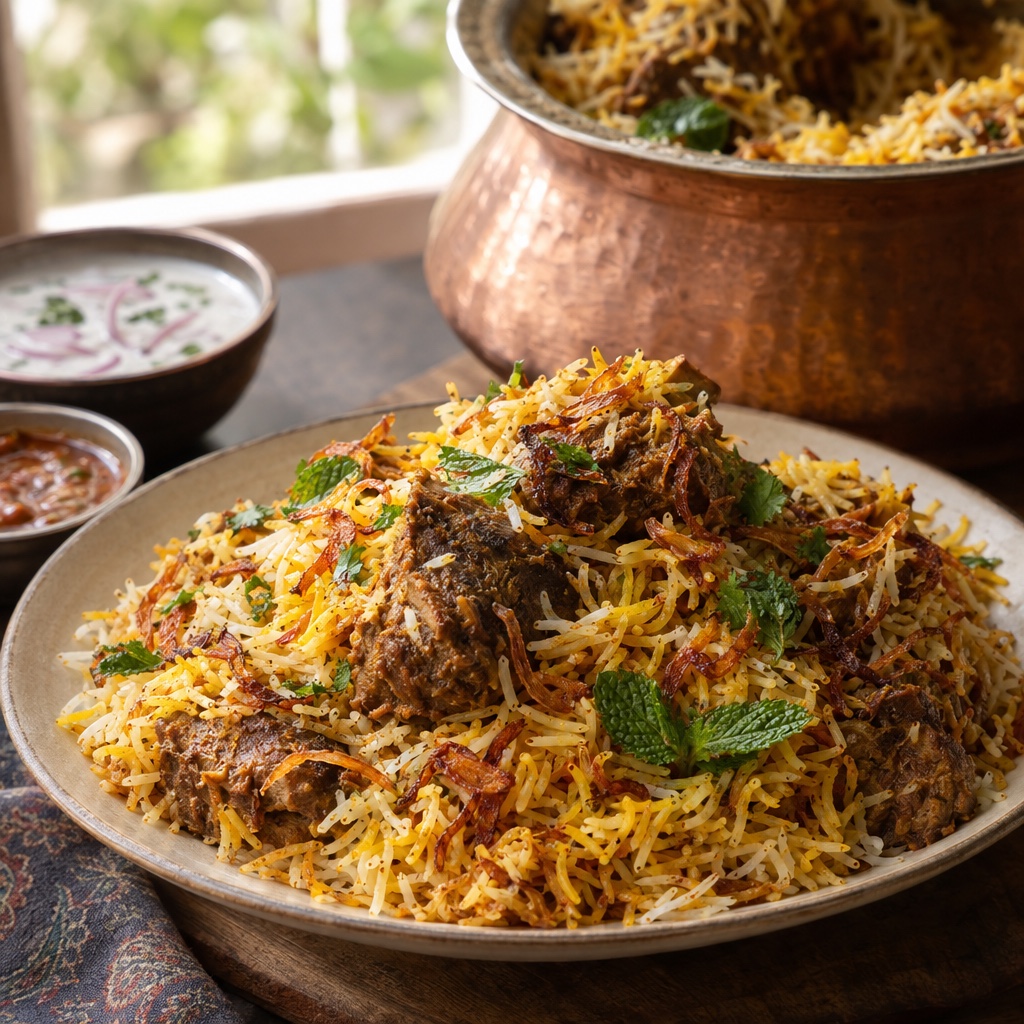
Biryani is layered rice and marinated meat, sealed and steamed so the grains stay separate and the lamb juices perfume everything. This is a home Hyderabadi-leaning pot: yoghurt marinade, fried onions, saffron milk, dum on a low flame. It will not replace a dedicated biryani house. It will be the best rice you cook this month if you do not stir it like risotto. Marinate the lamb in yoghurt, ginger, garlic, chilli and ground spices until it smells like the pot you want. Parboil the rice until it has a bite, then layer it with the meat, fried onions, and saffron or turmeric milk. Seal the lid with dough or a tight towel and cook on a low dum so steam finishes the grains. Do not stir. Rest before you crack the seal. The rice should stay separate and the lamb should be tender. A potato layer is a Hyderabadi-leaning extra some houses love. If you stew it like a curry and then dump rice on top, you have made a different, wetter plate. Serve with raita. Leftovers are excellent; reheat gently with a sprinkle of water so the grains do not toughen.
Ingredients
Scaling multiplies the written quantities. Baking still prefers a scale.
Steps
Step 1
Marinate lamb with yoghurt, ginger, garlic, chilli, garam masala and salt at least 2 hours. Fry onions in ghee until deep brown; reserve.
25 minStep 2
Cook the lamb in a little ghee until the raw smell goes and it is half-tender, 25 minutes. Parboil soaked rice in salted water 5–6 minutes until 70% cooked. Drain.
35 minStep 3
Layer meat, rice, fried onion, mint, saffron milk. Seal the lid (dough or a tight foil). Dum on the lowest heat 25 minutes. Rest 10. Fork, do not stir.
35 minWatch: Stirring is how you invent khichdi.
Adapt this recipe
The canonical recipe stays intact. Personal versions are labelled. Serving changes are maths, not AI.
Adaptations · 0 / 15 used. Resets 10 October.
Substitutions
Lamb → Chicken thigh
Shorter cook. Still layer and dum.
Tips
- A tawa or heat diffuser under the pot prevents a burnt bottom.
- Raita on the side is not optional if the pot is hot.
History & culture
Celebration food across South Asia with fierce regional schools. We are not declaring a capital. We are writing one careful home dum. This is one careful home dum, Hyderabadi-leaning, not a claim to the capital of biryani. Weddings, Eid, and Sunday family pots all use the same architecture with different spice pastes. Takeaway boxes are often wetter and more gravy-forward, which is a real urban cousin, not a fraud. At home the fried onions take time and are not optional if you want the smell. Eat with hands or a spoon, and with something cooling. It is feast calorie density. Making it for two is slightly absurd and still worth it. Neighbours will comment on the smell, which is part of the point. If a guest from another city says your spice paste is wrong, they are participating in the culture, not ending it. Offer raita and keep your fried onions plentiful. The argument is how the dish stays alive in public.
Persian layered-rice ideas meeting Deccan and Awadhi kitchens. The takeaway box is a later, wetter cousin. Dum cooking — sealing and steaming — is the technical through-line. Colonial cookbooks and later Indian restaurant menus abroad sometimes flattened biryani into 'spiced rice with meat', which is how the word gets misused on pub boards. Cooking a sealed pot of layered lamb and rice is closer to the celebration dish. There is no need to pick a city as the only origin. There is a need to not stir it like risotto. Twentieth-century restaurants made it a public feast; homes never stopped. Layered rice travelled with Persian and Central Asian court cookery into the Deccan and the Gangetic cities, then split into fiercely local schools that still argue about potatoes, chilli, and how dry the pot should be. Delivery culture later wettened the box so it survived a motorbike. Home dum is a sealed steam, not a stirred pilaf. Restaurant menus abroad often flatten the word into spiced rice with meat. Keep the seal, the fried onion, and the refusal to stir. That is the through-line worth protecting.
Regional variation
Provenance: Editorial adaptation.
Questions about this recipe
Answers taken from this dish's times, amounts, swaps and tips — not a chatbot.
How long does Lamb biryani take?
3 hr 55 min all in — 40 min prep, 1 hr 15 min cook, 2 hr rest. Cook and rest follow the method. Leftover storage and optional extra waits are not included.
How many does it serve?
The recipe is written for 6 people. Scale the ingredient list on the page if you are cooking for a different number.
How hard is it?
A bit of work.
How spicy is it?
Medium heat.
What allergens should I watch?
This recipe is labelled for Milk. Labels are informational — check the packets in your kitchen. This is not medical advice.
Does it fit a diet?
The published recipe is labelled Gluten-free.
What does it cost to cook?
A bit special — about $16–28 USD, as a grocery budget for this recipe, not a restaurant price.
What equipment do I need?
Dutch oven, Saucepan.
How much salt do I put in?
The recipe lists Salt at 2 tsp.
What can I use instead?
Lamb → Chicken thigh. Shorter cook. Still layer and dum.
What should I watch for?
Stirring is how you invent khichdi.
Any tips from this recipe?
A tawa or heat diffuser under the pot prevents a burnt bottom. Raita on the side is not optional if the pot is hot.
Can I use an air fryer?
This method is not written for an air fryer. The core technique on the page still applies.
Similar dishes
Checking your allergy settings…