

 Taste Afghanistan
Long-grain rice as a centrepiece, not a side. Afghan cooking sits between Iranian, Central Asian and South Asian pantries without being any of their leftovers.
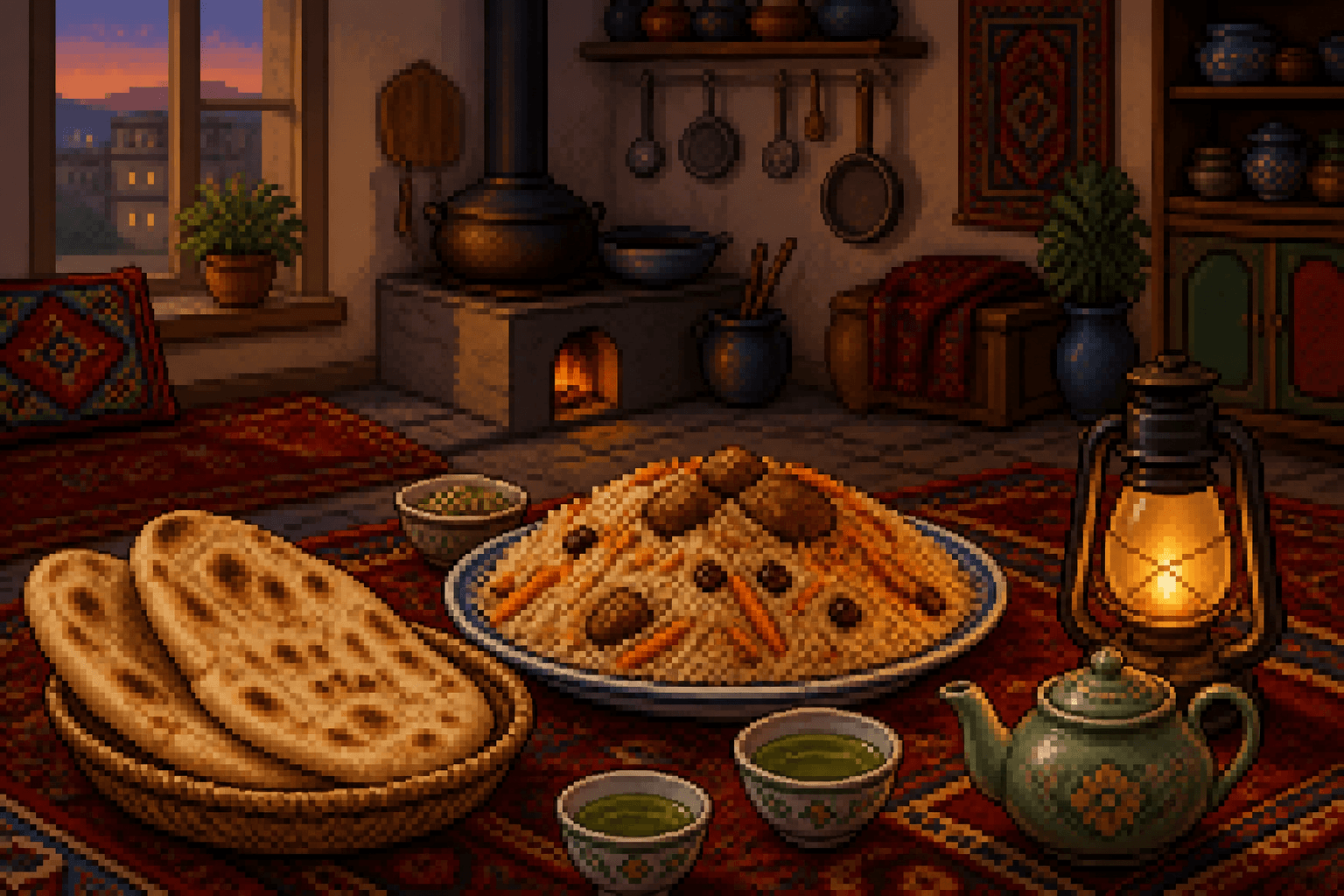
Kabuli pulao (qabili palaw) is lamb or beef buried under steamed rice, with carrots caramelised until they go rust-red and raisins that should plump, not scorch. The rice is soaked, parboiled, then steamed with fat and broth so each grain stays long. Mantoo are dumplings with yoghurt and meat sauce; ashak are leek dumplings; naan is torn at the table. Kabul, Herat, Mazar and the Pashtun south do not spice identically. Yoghurt, coriander and a gentle sweet-savoury carrot are more typical than a heavy chilli. Tea is green or black, constant, and not a digestif.
9 recipes · 1 cuisine
Essential dishes
Checking your allergy settings…
More dishes
Further Afghanistan listings, including shorter editorial recipes and imported methods.
Checking your allergy settings…
Regional cuisines
Think you know Afghanistan food?
9 quiz dishes. Optional — Passport stamps still come from cooking.
Take the Afghanistan food quizFood history
Caravan-city cooking, Persian rice technique, Turkic dumplings, and Indian spice at the eastern edge. Pulao as a festive tray is older than any modern flag; the carrot-and-raisin garnish is the version restaurants abroad standardised as 'Kabuli'. Decades of war and displacement carried the kitchen to Peshawar, Tehran, London and the Bay Area. Home cooks still insist on the steaming stage that makes the rice actually Afghan. Honesty means Central Asian rice logic, not a generic 'kebab house' grill, and not inventing courtly origin myths for a family palaw.