

 Taste Malaysia
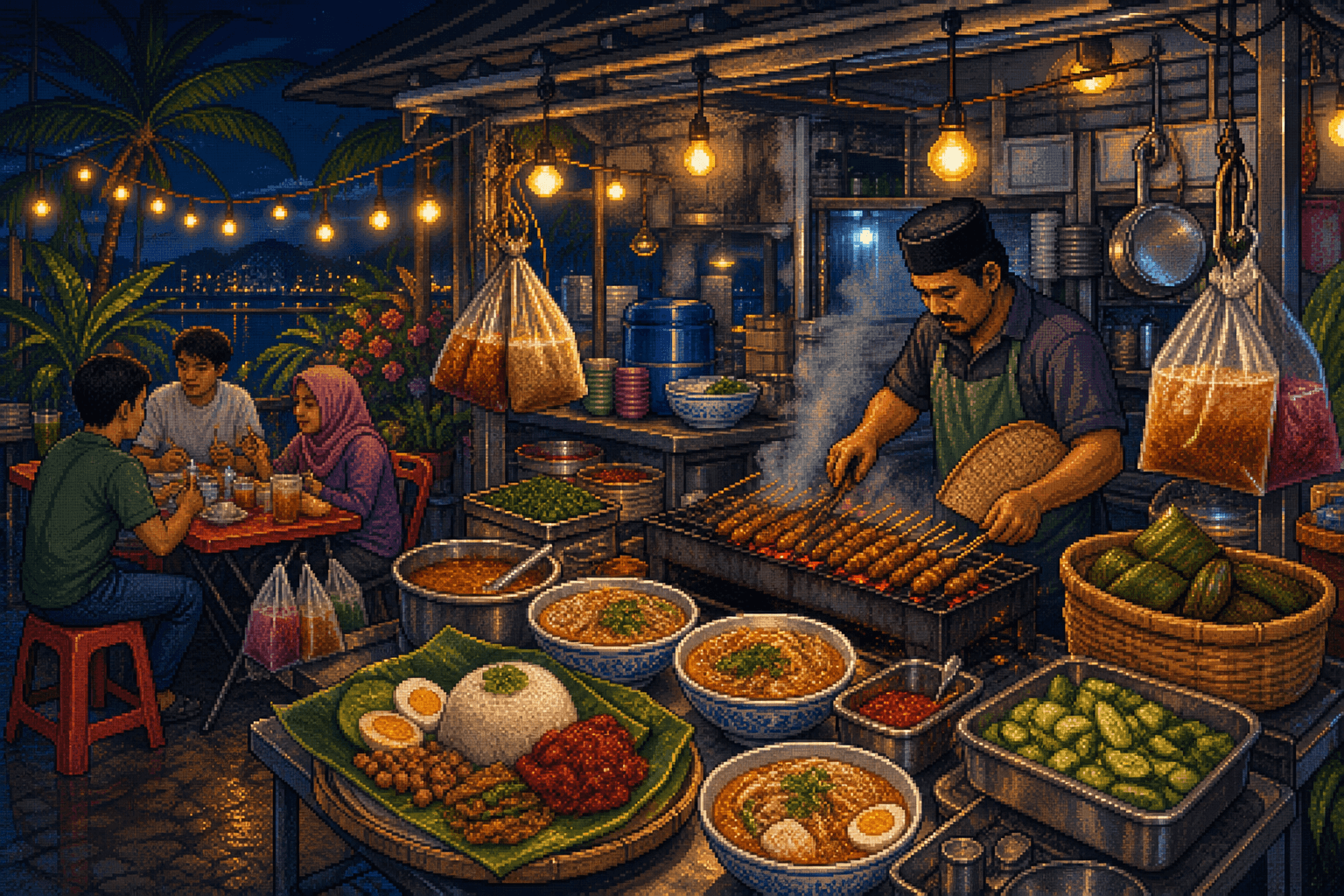
Three pantries at one table: Malay, Chinese and Indian kitchens that refuse to be a single 'Asian fusion'. Nasi lemak is the breakfast that became a national argument.
Nasi lemak is coconut rice with sambal, ikan bilis, egg, cucumber and peanuts — a complete breakfast that hawker stalls sell all day. Muah chee is glutinous rice pieces tossed in crushed peanut, a Chinese-Malaysian snack with a chewy pull. Penang's asam laksa, Ipoh's bean sprouts, Melaka's Nyonya stews, Sabah and Sarawak's indigenous and Chinese coastal cooking: the peninsula and Borneo do not share one chilli paste. Rendang, satay, roti canai and Hokkien mee all belong. Sambal is pounded, not a condiment sachet. Pandan and belacan announce themselves whether you asked them to or not.
9 recipes · 1 cuisine
Essential dishes
Checking your allergy settings…
More dishes
Further Malaysia listings, including shorter editorial recipes and imported methods.
Checking your allergy settings…
Regional cuisines
Think you know Malaysia food?
9 quiz dishes. Optional — Passport stamps still come from cooking.
Take the Malaysia food quizFood history
Malay cooking, Chinese migration, South Indian labour, and Nyonya (Peranakan) kitchens born from Chinese-Malay households. Islam shaped halal meat rules without erasing Chinese pork shops next door. British colonial tin and rubber towns concentrated hawker food; independence did not invent nasi lemak. Exact origins of the coconut rice plate are argued between states, which is how breakfast should be. Indonesian overlap is real; so is a Malaysian sambal that tastes like itself. Honesty is naming the stall's language, not a tourism board's 'melting pot'.
Common ingredients
Techniques
- coconut rice
- sambal pounding
- wok tossing
- steaming
- deep frying