

 Taste New Zealand
Aotearoa
Two long islands at the bottom of the Pacific where Māori earth-oven cooking, British baking and a huge farming and fishing economy share one small table.
New Zealand eats lamb, dairy, kūmara and whatever the sea gives up: green-lipped mussels, Bluff oysters, whitebait for a few weeks in spring, and crayfish if you know someone. Māori kai means hāngī, boil-up, rēwena bread and fry bread. The Pākehā side brought roasts, pies, pavlova and a biscuit tin full of Afghans and Anzacs. Since the 1980s Pacific Island, Chinese, Indian and Southeast Asian communities have turned Auckland into one of the Pacific's best eating cities, and a flat white is a national right.
7 recipes · 1 cuisine
All dishes 7
- 3 hr 30 min

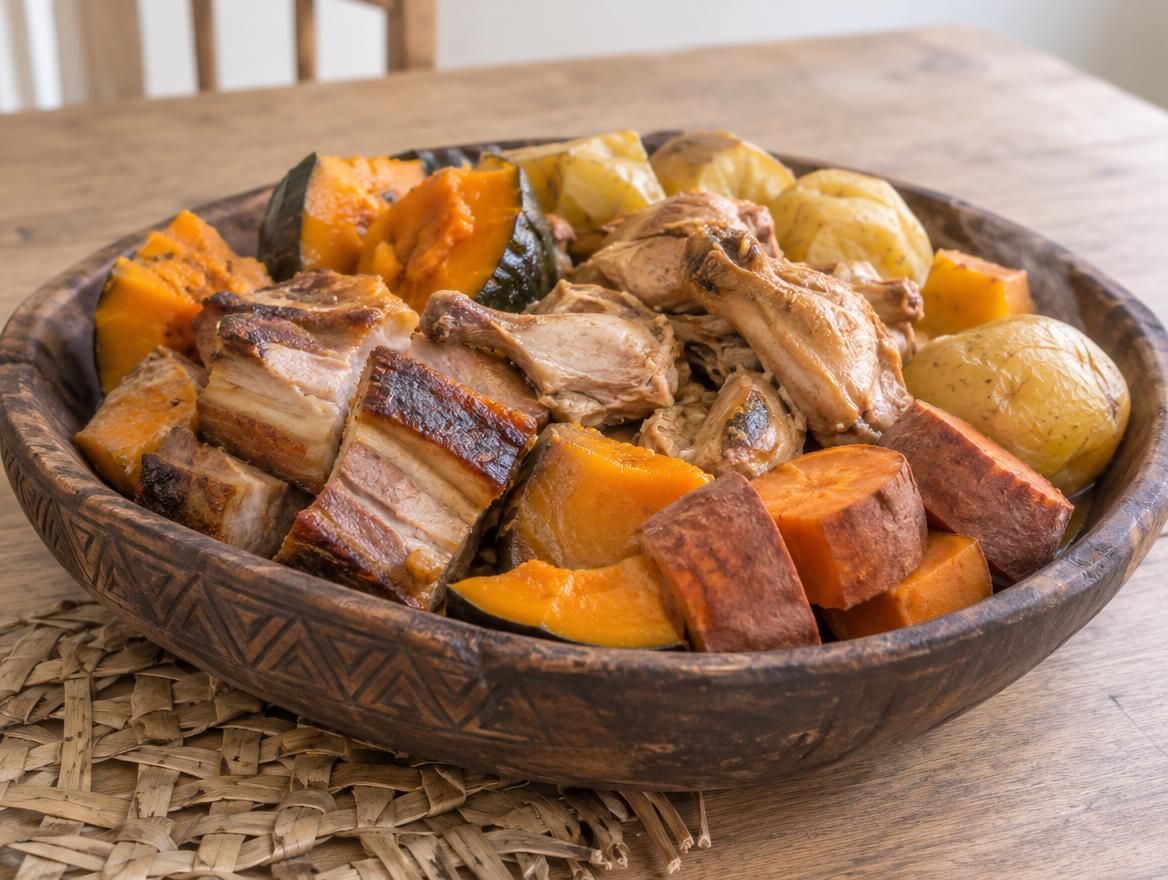
Oven hāngī
Hāngī
Meat, kūmara, potato and pumpkin steamed slowly under foil in a home oven — the flavours of a hāngī without the hole in the ground.
Easy
- 15 min

Whitebait fritters
Tiny whole fish bound with barely enough egg and fried in butter — the New Zealand spring treat eaten on white bread with lemon.
Easy
- 1 hr 5 min

Afghan biscuits
Afghans
Dense chocolate butter biscuits with crushed cornflakes for crunch, topped with chocolate icing and a walnut half.
Easy
- 2 hr 20 min

Lolly cake
A no-bake log of crushed malt biscuits, butter and condensed milk studded with chewy fruit puffs and rolled in coconut.
Very easy
- 8 hr 35 min

Hokey pokey ice cream
No-churn vanilla ice cream folded with shards of homemade honeycomb toffee — New Zealand's second-favourite flavour.
Easy
- 61 hr 30 min

Rēwena bread
Parāoa rēwena
Māori sourdough raised with a fermented potato starter — a dense, tangy, slightly sweet loaf that keeps for days.
Medium
- 2 hr 50 min

Boil-up
Pork bones simmered with potato, kūmara and watercress, finished with soft flour doughboys — the Māori one-pot dinner.
Easy
Regional cuisines
Think you know New Zealand food?
6 quiz dishes. Optional — Passport stamps still come from cooking.
Take the New Zealand food quizFood history
Polynesian settlers arrived around 1300 with kūmara, taro and the earth oven, and adapted to a cold country by eating birds, fern root, fish and shellfish. Europeans brought pigs, potatoes, wheat and sheep from the late 18th century, and Māori quickly folded them into the hāngī and the boil-up. A century of farming for the British market produced a plain, meat-heavy cuisine with a serious baking tradition. Refrigerated shipping, then immigration and a wine industry, changed the picture after the 1970s.
Common ingredients
Techniques
- earth-oven steaming (hāngī)
- slow boiling with doughboys
- wild-starter bread
- butter-based baking
- no-bake slices
- pan-frying in butter