

 Taste Philippines
Pilipinas
Sour, salty, garlicky cooking from an archipelago that never cooked in isolation. Adobo is a method more than a single recipe.
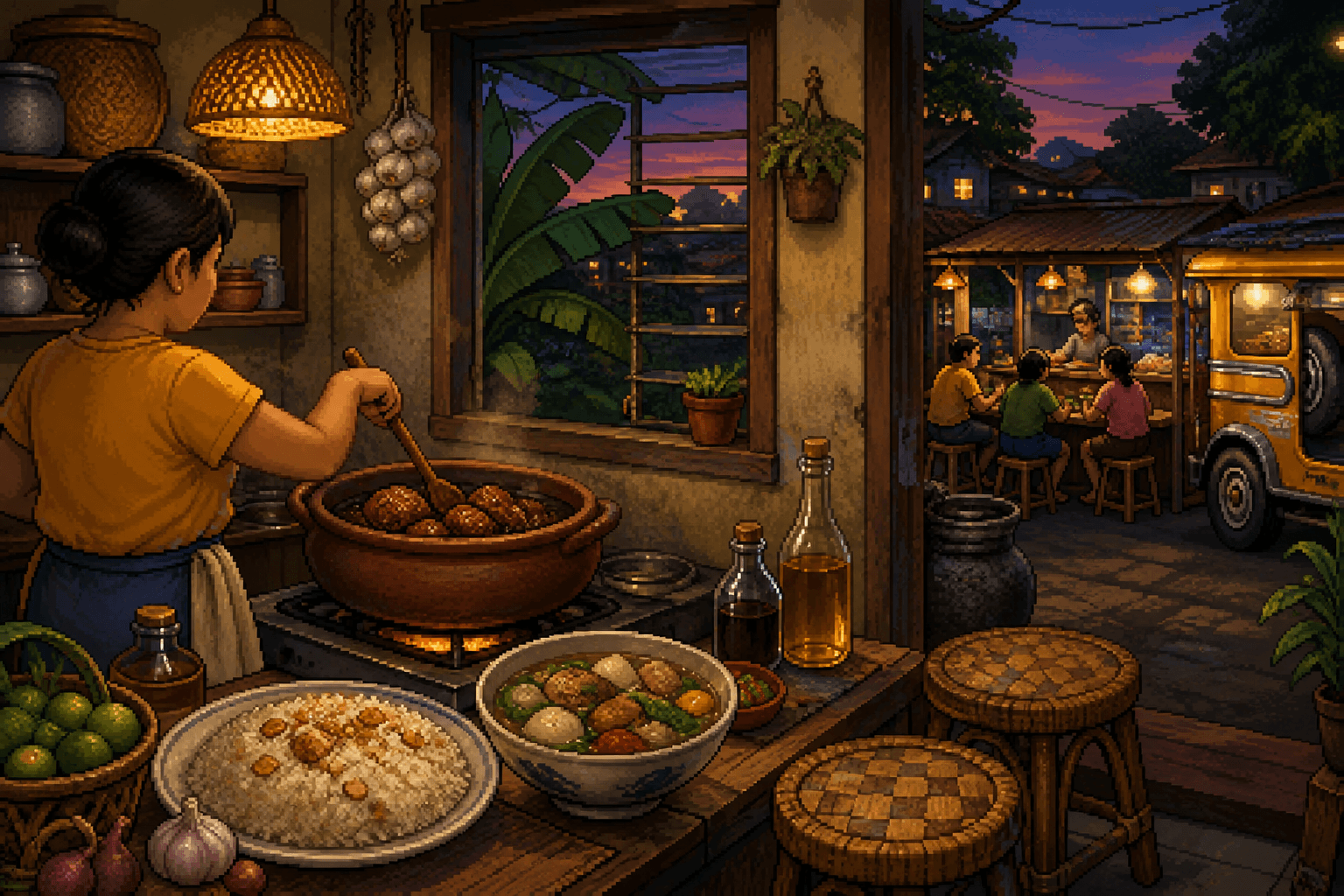
Ilocos is vinegar and bagoong; Bicol is chilli and coconut; the Visayas and Mindanao keep pork, fish and souring agents that Manila restaurants only sometimes name. Chicken adobo is braised in vinegar and garlic, often with soy, until the sauce clings to rice. Kare-kare is a peanut stew, usually oxtail, with bagoong on the side because the cook refuses to sweeten the whole pot. Tortang talong is eggplant smashed and fried in egg. Sisig is sizzling chopped pork, a Kapampangan plate that bars made famous. Garlic fried rice is breakfast architecture. Halo-halo and ube belong to the sweet counter, not to a tropical cliché.
19 recipes · 1 cuisine
Essential dishes
Checking your allergy settings…
More dishes
Further Philippines listings, including shorter editorial recipes and imported methods.
Checking your allergy settings…
Regional cuisines
Think you know Philippines food?
18 quiz dishes. Optional — Passport stamps still come from cooking.
Take the Philippines food quizFood history
Austronesian, Chinese, Spanish and American histories layered onto island produce. Adobo predates Spanish naming — vinegar and salt preservation is older than the colony — even if soy sauce in many modern versions is a later Chinese-influenced habit. Home cooks still treat 'adobo' as a family verb: pork, chicken, squid, even vegetables. Sinigang's souring fruit changes by region and season. The honest story is an archipelago of methods, not one national stew. Breakfast garlic rice is how a lot of that method reaches the table.